
When first using the contraceptive patch, it is common to experience side effects as your body adjusts to the hormones. The most frequently reported issues include bleeding between periods (spotting), headaches, nausea, and breast tenderness. These effects are typically mild and often resolve on their own within the first two or three months of use.
The key is to understand that while most initial side effects are temporary signs of your body adjusting, you must also be aware of the rare but serious risks. Differentiating between the two is crucial for using the patch safely and effectively.

What to Expect in the First Few Months
When you begin using the patch, your body needs time to adapt to the consistent dose of hormones. This adjustment period is when most side effects occur.
Changes to Your Menstrual Cycle
The most common side effect is breakthrough bleeding or spotting between your expected periods.
Your periods themselves may also become lighter, heavier, or more irregular during the initial adjustment phase. This is a normal response and usually settles after a few cycles.
Hormonal Adjustment Symptoms
Many users report mild, temporary symptoms related to the introduction of estrogen and progestin.
These can include headaches, nausea, breast soreness, and mood changes. These symptoms are most pronounced in the first few weeks and typically improve significantly after the second month.
Skin Reactions at the Patch Site
Because the patch adheres to your skin, localized reactions are possible.
You might experience skin irritation, redness, itching, or soreness where the patch is applied. This reaction is a primary reason some users (about 2 in 100) decide to stop using this method.
Understanding the More Serious Risks
While less common, the contraceptive patch carries serious risks similar to those of other combined hormonal contraceptives, like the pill. It is vital to be aware of the warning signs.
The Risk of Blood Clots (Thrombosis)
The most significant serious risk is an increased chance of developing blood clots in your veins or arteries.
A blood clot can be life-threatening if it leads to a pulmonary embolism (a clot in the lungs), heart attack, or stroke. The risk is low for most healthy individuals but is a critical factor to discuss with your doctor.
Long-Term Cancer Risks
Long-term use of combined hormonal contraception is associated with a slightly increased risk of breast cancer and cervical cancer.
However, it is also important to note that the patch may simultaneously offer a protective effect, slightly reducing the long-term risk of developing ovarian, uterine, and bowel cancers.
Common Pitfalls and Trade-offs
Making an informed decision requires weighing the benefits against the potential downsides and understanding how to use the patch correctly.
Side Effects Are Not Guaranteed
Many people use the patch with no negative side effects at all. The experiences described here are possibilities, not certainties.
Most Side Effects are Temporary
The most important takeaway for common side effects like spotting or headaches is that they are usually temporary. Giving your body two to three full cycles to adjust is a reasonable timeframe before deciding if the patch is right for you.
Effectiveness Depends on Perfect Use
The patch offers convenience, but its effectiveness can be reduced if you forget to change it on schedule. Forgetting to apply a new patch each week lowers its ability to prevent pregnancy, making it slightly less effective in typical use compared to the pill.
Making the Right Choice for Your Health
Your experience with the contraceptive patch will be unique. Understanding how to respond to potential side effects is key to using it safely.
- If your primary concern is mild side effects like spotting or nausea: Give your body at least two to three months to adjust, as these issues often resolve on their own.
- If you are experiencing skin irritation: Be sure to rotate the location of your patch with each new application to give your skin a break.
- If you notice any signs of a serious issue (like severe leg pain, sudden shortness of breath, or chest pain): Seek immediate medical attention, as these can be symptoms of a dangerous blood clot.
Ultimately, choosing the right contraceptive is a personal decision made in partnership with your healthcare provider.
Summary Table:
| Common Initial Side Effects | Duration | Serious Risks (Rare) |
|---|---|---|
| Breakthrough bleeding/spotting | Usually resolves in 2-3 months | Blood clots (thrombosis) |
| Headaches, nausea, breast tenderness | Often improve after 1-2 months | Increased risk of breast/cervical cancer |
| Skin irritation at the application site | May persist; rotate patch location | Heart attack or stroke |
Looking for a reliable manufacturer for your contraceptive patch or other transdermal products?
As Enokon, a bulk manufacturer of reliable transdermal patches and pain plasters, we partner with healthcare and pharma distributors and brands. Benefit from our technical expertise for custom R&D and development to create safe, effective products for your customers.
Contact our experts today to discuss your project needs and how we can support your brand.
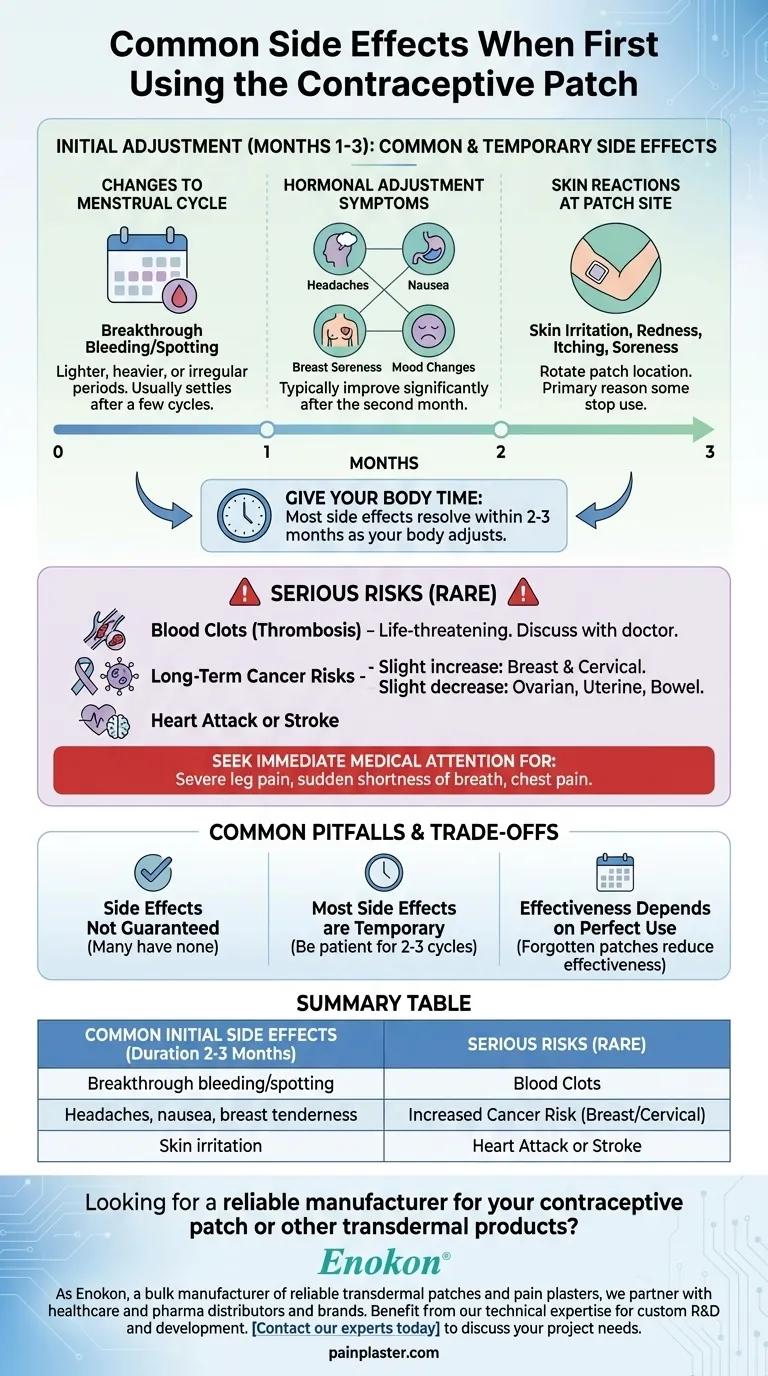
Visual Guide
Related Products
- Heating Pain Relief Patches for Menstrual Cramps
- Prostate Pain Kidney Health Care Patch for Men
- Silicone Scar Sheets Patch Transdermal Drug Patch
- Lidocaine Hydrogel Pain Relief Patch for Pain Relief
- Menthol Gel Pain Relief Patch
People Also Ask
- What are the benefits of Period Pain Heat Patches? Drug-Free, On-the-Go Relief
- What are the key benefits of heating patches for elderly individuals? Relieve Pain & Improve Mobility
- What percentage of people with back pain use heat patches for relief? Discover the Popular Choice for Pain Management
- What are the common uses of heat patches? Soothe Muscle Pain, Joint Stiffness & More
- Can heat patches be used for fresh injuries? Avoid This Common Mistake for Faster Recovery












