
At their core, heat patches are a form of targeted heat therapy used to relieve a wide range of common aches and pains. They are most frequently applied to soothe muscle discomfort from stress or exercise, ease joint stiffness associated with arthritis, alleviate menstrual cramps, and provide relief for backaches caused by prolonged sitting or minor injuries.
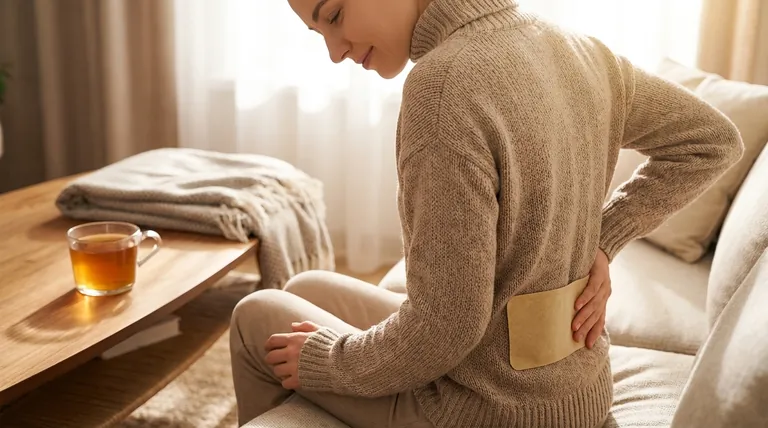
The fundamental purpose of a heat patch is to deliver continuous, localized warmth to a specific area of the body. This targeted heat increases blood circulation and relaxes muscle tension, which in turn helps to reduce pain and promote healing.
The Core Principle: How Heat Therapy Provides Relief
Heat patches operate on the simple but effective principle of thermotherapy, or heat therapy. Applying controlled warmth to a painful area triggers several beneficial physiological responses.
Increasing Blood Circulation
The localized heat causes blood vessels in the treated area to widen, a process called vasodilation. This increased blood flow delivers more oxygen and nutrients to the damaged or tense tissues, helping them to repair more efficiently.
Easing Muscle Tension
Warmth has a direct relaxing effect on muscle fibers. For muscles that are tight, knotted, or in spasm, a heat patch can provide significant relief by helping them release tension and become more pliable.
Targeted Pain Relief
Unlike oral pain relievers that affect your entire system, a heat patch provides relief directly at the source of the pain. This makes it a non-invasive option for managing localized discomfort without systemic side effects.
Key Applications for Heat Patches
While versatile, heat patches are most effective for specific types of pain. Their design is tailored to address aches rooted in muscle and joint issues.
Muscle Pain and Soreness
This is the most common use. Patches are ideal for general soreness in the back, neck, and shoulders, whether caused by stress, poor posture, or overexertion during a workout.
Joint Stiffness and Arthritis
For non-inflammatory joint pain like osteoarthritis, the warmth from a heat patch can help reduce stiffness and improve mobility. The gentle heat soothes the tissues surrounding the joint.
Menstrual Pain
Many find significant relief from menstrual cramps by applying a heat patch to the lower abdomen or lower back. The warmth helps to relax the contracting uterine muscles that cause the pain.
Minor Sports Injuries
For injuries like sprains or strains, heat therapy is typically used after the initial 48-72 hour period of inflammation has subsided. Once swelling has gone down, heat can help with ongoing stiffness and recovery.
Understanding the Trade-offs and Best Practices
To use heat patches safely and effectively, it's critical to understand their limitations and follow proper guidelines.
Duration of Use is Key
Most disposable heat patches are designed to provide warmth for 8 to 12 hours. It is crucial not to exceed the recommended time on the packaging to prevent skin irritation or low-grade burns.
Protect Your Skin
Never apply a heat patch to broken, inflamed, or severely burned skin. Always allow your skin to recover between applications, especially if you are using them daily for chronic pain.
Know When Not to Use Them
Heat patches are for external, localized pain. They are not effective for issues like headaches and should not be used to treat conditions that are not skin or muscle-related.
Heat vs. Medicated Patches
It's important to distinguish between simple heat patches and medicated pain patches. While they look similar, medicated patches contain active ingredients (like capsaicin or lidocaine) that are absorbed through the skin. Heat patches work purely by providing warmth.
Making the Right Choice for Your Goal
Selecting the right approach depends entirely on the nature of your discomfort and your lifestyle needs.
- If your primary focus is convenience for on-the-go relief: A disposable, air-activated heat patch is your best option for all-day, low-level warmth.
- If your primary focus is chronic pain like arthritis or backaches: Patches specifically shaped for the back or knees offer a more targeted and ergonomic fit for sustained comfort.
- If your primary focus is post-workout recovery: Applying a standard muscle patch to the affected area for several hours can significantly ease delayed onset muscle soreness.
Ultimately, understanding how heat patches work empowers you to use them as an effective tool for managing targeted aches and pains.
Summary Table:
| Common Use Case | Primary Benefit |
|---|---|
| Muscle Pain & Soreness | Relieves tension from stress, exercise, or poor posture |
| Joint Stiffness & Arthritis | Eases stiffness and improves mobility in non-inflammatory pain |
| Menstrual Cramps | Soothes uterine muscle contractions for abdominal and back pain relief |
| Minor Sports Injuries | Aids recovery by increasing blood flow after initial inflammation subsides |
Need a reliable partner for your heat patch or pain relief plaster business?
As Enokon, a bulk manufacturer of reliable transdermal patches and pain plasters, we specialize in custom R&D and development for healthcare and pharmaceutical distributors and brands. Our technical expertise ensures you get high-quality, effective products tailored to your market's needs.
Contact our experts today to discuss your project and discover how we can support your product development.
Visual Guide

Related Products
- Far Infrared Heat Pain Relief Patches Transdermal Patches
- Heating Pain Relief Patches for Menstrual Cramps
- Far Infrared Knee Pain Patch Heat Patches for Pain Relief
- Far Infrared Deep Heat Relief Patches Medicated Pain Relief Patches
- Heat Relief Capsicum Patch for Lower Back Pain Relief
People Also Ask
- Why is the selection of matrix materials critical when developing customized transdermal patches? Optimize Efficacy
- What role does a skin tolerance scoring system play in the safety evaluation of transdermal patches? Key Safety Metrics
- How does high-purity far-infrared ceramic powder contribute to the efficacy of far-infrared physical therapy patches?
- Why is an optical microscope used for the quality assessment of transdermal patches? Ensure Safety & Matrix Integrity
- How is sublingual administration different from transdermal? Key Differences & Clinical Uses



















