
The primary cons of the contraceptive patch are its potential for common side effects like skin irritation and irregular bleeding, its reduced effectiveness if not changed weekly, and a higher risk of serious issues like blood clots compared to some other hormonal methods. It also requires a prescription, offers no protection against STIs, and can interact with other medications.
The core trade-off with the contraceptive patch involves balancing its weekly convenience against the need for perfect user diligence and its specific risk profile. The patch's higher estrogen exposure is a key factor that underpins its more serious potential downsides.

Common Side Effects and Practical Annoyances
The most frequent drawbacks are those that directly impact your day-to-day experience, especially during the first few months of use.
Skin Irritation at the Application Site
The most common side effect specific to the patch is skin irritation. You may experience itching, redness, or soreness where the patch is applied.
This irritation is significant enough that it causes about 2% of users to stop using the method.
Irregular Bleeding and Spotting
Breakthrough bleeding or spotting between periods is very common, particularly in the first few cycles as your body adjusts.
Your periods may also change, becoming lighter, heavier, or more irregular initially. These effects usually settle down within a few months.
Other Initial Side Effects
Some users report other mild side effects that tend to diminish over time. These can include sore breasts, headaches, nausea, and mood changes.
Lifestyle and Practical Considerations
The patch is a visible form of contraception that can be seen by others or felt by a partner, which may be a concern for some users.
It also requires a prescription from a healthcare provider, meaning you cannot get it over the counter.
Factors That Reduce Effectiveness
The patch is highly effective, but its protection can be compromised by a few key factors.
The Critical Weekly Change
The patch's effectiveness hinges on remembering to change it on the same day each week. Forgetting to change it on time significantly reduces its ability to prevent pregnancy.
This makes it slightly less effective in typical use compared to methods that don't require weekly user action.
Medication and Supplement Interactions
Certain medications and supplements can interfere with the patch and reduce its effectiveness.
These include the antibiotic rifampin, some anticonvulsants, corticosteroids, and the herbal supplement St. John's Wort.
Understanding the More Serious Health Risks
While rare, the contraceptive patch carries serious risks that must be weighed carefully with a healthcare provider.
Elevated Estrogen Exposure
The patch delivers a higher total level of estrogen to the bloodstream compared to most combination birth control pills.
This increased estrogen exposure is directly linked to a higher risk of certain serious side effects.
The Risk of Blood Clots, Heart Attack, and Stroke
Due to its estrogen levels, the patch may increase the risk of developing dangerous blood clots, which can lead to a heart attack or stroke.
This risk, while still low for healthy individuals, is a critical consideration, especially for those with pre-existing risk factors like smoking or a history of cardiovascular issues.
A Note on Cancer Risk
Combined hormonal contraceptives can have complex effects on cancer risk. Studies show a potential for a slight increase in the risk of breast, cervical, and liver cancer.
It is important to discuss your personal and family medical history with your doctor to understand these risks in your specific context.
Lack of STI Protection
A crucial limitation is that the patch offers no protection against sexually transmitted infections (STIs), including HIV. Condoms are still necessary to protect against STIs.
How to Apply This to Your Decision
Choosing a contraceptive method is a personal decision based on your health, lifestyle, and priorities.
- If your primary focus is avoiding a daily pill: The patch offers convenience but requires strict adherence to a weekly schedule to remain effective.
- If you are sensitive to hormonal side effects: Be prepared for an adjustment period of a few months where you may experience spotting, nausea, or breast tenderness.
- If you have risk factors for blood clots (like smoking or high blood pressure): The patch is likely not a safe option due to its higher estrogen exposure, and another method should be considered.
Ultimately, the best way to determine if the patch is right for you is through a thorough discussion with your healthcare provider.
Summary Table:
| Potential Disadvantage | Key Details |
|---|---|
| Common Side Effects | Skin irritation, irregular bleeding, headaches, nausea (often improve after a few months). |
| Effectiveness Risks | Requires a weekly change; can be less effective if forgotten or with certain medications. |
| Serious Health Risks | Higher estrogen exposure increases risk of blood clots, heart attack, and stroke. |
| Other Limitations | No protection against STIs; requires a prescription; visible on the skin. |
Need a reliable, custom-formulated transdermal patch?
As you evaluate the pros and cons of transdermal delivery for your product line, partner with a manufacturer you can trust. Enokon is a bulk manufacturer of reliable transdermal patches and pain plasters for healthcare and pharmaceutical distributors and brands.
We understand the critical balance of efficacy, safety, and user experience. Benefit from our technical expertise for custom R&D and development to create a product that meets your exact specifications and market needs.
Contact our experts today to discuss your project and discover how we can support your success.
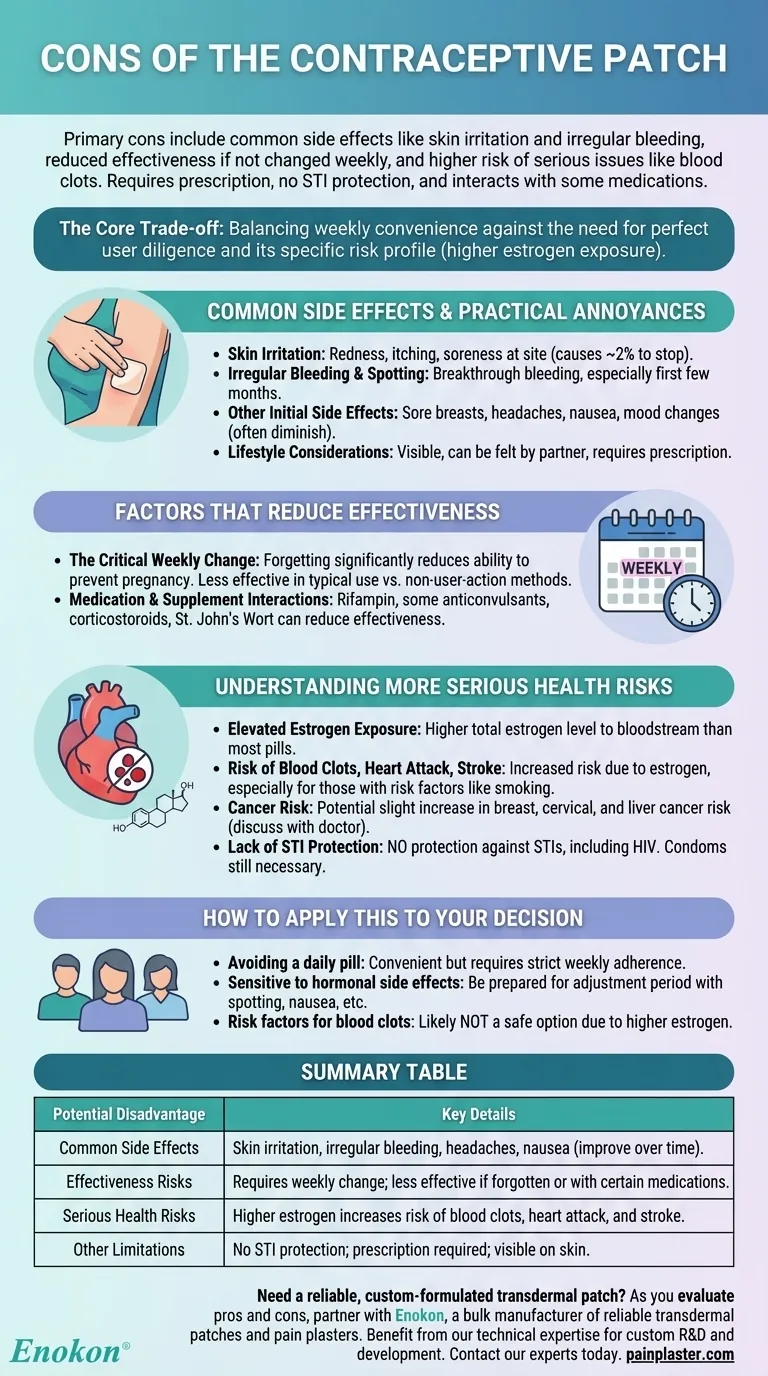
Visual Guide
Related Products
- Heating Pain Relief Patches for Menstrual Cramps
- Prostate Pain Kidney Health Care Patch for Men
- Silicone Scar Sheets Patch Transdermal Drug Patch
- Lidocaine Hydrogel Pain Relief Patch for Pain Relief
- Menthol Gel Pain Relief Patch
People Also Ask
- What are the benefits of Period Pain Heat Patches? Drug-Free, On-the-Go Relief
- What are the key benefits of heating patches for elderly individuals? Relieve Pain & Improve Mobility
- What are the different types of heat patches? Find the Right Pain Relief for Your Needs
- What are the key differences between conventional heat patches and deep heat devices? Choosing the Right Pain Relief Solution
- What percentage of people with back pain use heat patches for relief? Discover the Popular Choice for Pain Management













