
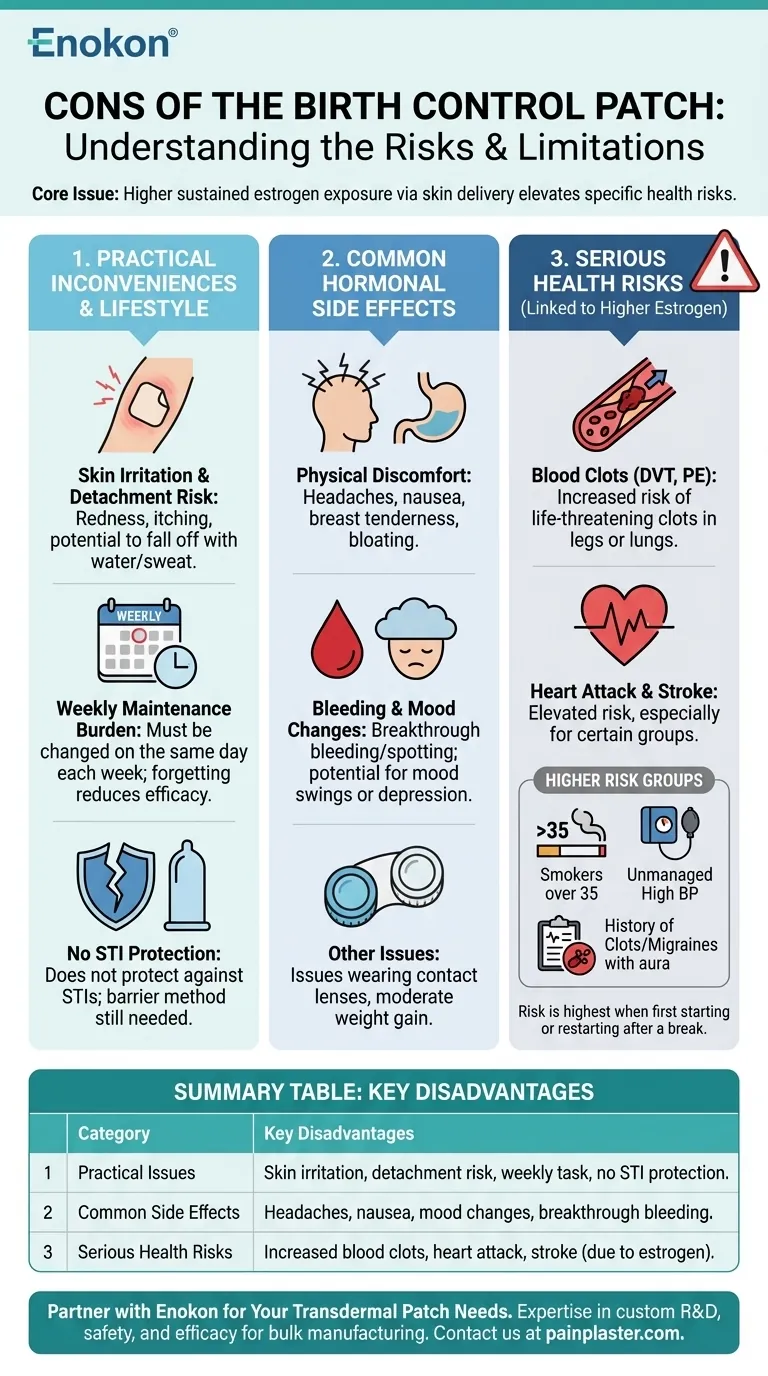
The primary cons of the birth control patch fall into three distinct categories: practical inconveniences related to its use on the skin, common hormonal side effects, and a number of serious health risks, most notably an increased potential for blood clots due to higher estrogen exposure compared to some other hormonal methods. It also offers no protection against sexually transmitted infections (STIs).
The core issue to understand is that the patch is not simply a "sticky birth control pill." Its method of delivering hormones through the skin results in higher overall estrogen exposure, which elevates specific health risks, particularly for individuals with pre-existing conditions like high blood pressure or a history of smoking.
Practical Inconveniences and Lifestyle Factors
For many users, the most immediate drawbacks are related to the daily reality of wearing a patch on their skin. These factors can impact convenience, effectiveness, and comfort.
Skin Adhesion and Irritation
The most common complaint is skin irritation, redness, or itching at the application site. There is also a persistent risk that the patch could partially or completely detach, especially with exposure to water or sweat, which would compromise its effectiveness.
The Weekly Maintenance Burden
While not a daily task, the patch must be changed on the same day each week for three consecutive weeks. Forgetting to change it on the correct day can reduce its efficacy and increase the risk of an unplanned pregnancy.
Lack of STI Protection
It is critical to remember that the birth control patch provides no protection against sexually transmitted infections, including HIV. A barrier method, such as a condom, is still necessary to reduce the risk of STIs.
Visibility and Prescription Access
The patch is a visible medication that some users may find cosmetically unappealing, particularly on darker skin tones. Like most hormonal contraceptives, it also requires a prescription from a healthcare provider.
Common Hormonal Side Effects
Because the patch releases synthetic estrogen and progestin into the body, it can cause side effects similar to those of oral contraceptives. These are typically most pronounced when first starting the method.
Physical Discomfort
Users may experience headaches, breast tenderness, nausea, or bloating. Some also report moderate weight gain or issues with wearing contact lenses.
Changes in Bleeding and Mood
Breakthrough bleeding or spotting between periods is a common side effect. Some individuals may also experience mood changes or, in some cases, feelings of depression.
Understanding the Serious Health Risks
While rare, the birth control patch carries serious risks that must be carefully weighed, especially for certain populations. These risks are primarily linked to the effects of synthetic hormones on the cardiovascular system.
The Impact of Higher Estrogen Exposure
The patch exposes a user to higher sustained levels of estrogen than many combination birth control pills. This elevated estrogen is the primary driver behind the increased risk of serious side effects.
The Risk of Blood Clots
The most serious potential risk is the formation of blood clots. A clot can lead to life-threatening conditions such as deep vein thrombosis (DVT), pulmonary embolism (a clot in the lungs), stroke, or heart attack. This risk, while low for healthy individuals, is highest when first starting the patch or restarting after a break of a month or more.
Who Is at Higher Risk?
The patch is not considered safe for everyone. The risk of serious complications is significantly higher for individuals who:
- Smoke, especially over the age of 35
- Have unmanaged high blood pressure
- Have a personal or family history of blood clots, heart attack, or stroke
- Have certain cancers, such as breast or uterine cancer
- Experience migraines with aura
- Have uncontrolled diabetes or liver disease
Making the Right Choice for Your Goal
Evaluating these disadvantages against your personal health profile and lifestyle is key to making a safe decision.
- If your primary focus is convenience over a daily pill: The patch is a viable option, but you must be diligent with the weekly change and accept the potential for skin irritation and side effects.
- If you have any cardiovascular risk factors (like smoking, high BMI, or high blood pressure): The increased estrogen exposure makes the patch a significantly riskier choice, and you should discuss safer alternatives with your doctor.
- If your primary focus is minimizing hormonal side effects or health risks: You should explore lower-dose hormonal methods or non-hormonal contraceptives that do not carry the same estrogen-related risks.
Ultimately, a thorough discussion with your healthcare provider is the only way to determine if the benefits of the birth control patch outweigh its potential risks for you.
Summary Table:
| Category | Key Disadvantages |
|---|---|
| Practical Issues | Skin irritation/redness, risk of detachment, weekly maintenance, no STI protection, visible on skin |
| Common Side Effects | Headaches, breast tenderness, nausea, bloating, breakthrough bleeding, mood changes |
| Serious Health Risks | Increased risk of blood clots (DVT, stroke, heart attack) due to higher estrogen exposure |
| Higher Risk Groups | Smokers (especially over 35), individuals with high blood pressure, history of blood clots, or migraines with aura |
Partner with Enokon for Your Transdermal Patch Needs
As a bulk manufacturer of reliable transdermal patches and pain plasters, Enokon understands the critical balance between efficacy, safety, and user experience. Our technical expertise in custom R&D and development ensures that every patch is designed with precision and reliability in mind.
If you are a healthcare or pharmaceutical distributor or brand looking to develop a safe and effective transdermal product, let's collaborate. Contact our team today to discuss how we can support your project with our manufacturing excellence and innovative solutions.
Visual Guide
Related Products
- Heating Pain Relief Patches for Menstrual Cramps
- Prostate Pain Kidney Health Care Patch for Men
- Silicone Scar Sheets Patch Transdermal Drug Patch
- Cooling Fever Patches Color Change Cold Fever Patch
- Mugwort Wormwood Pain Relief Patch for Neck Pain
People Also Ask
- What are the benefits of Period Pain Heat Patches? Drug-Free, On-the-Go Relief
- What are the key benefits of heating patches for elderly individuals? Relieve Pain & Improve Mobility
- What are the different types of heat patches? Find the Right Pain Relief for Your Needs
- Can heat patches be used for fresh injuries? Avoid This Common Mistake for Faster Recovery
- What are the key differences between conventional heat patches and deep heat devices? Choosing the Right Pain Relief Solution




