
Capsicum plaster, a topical analgesic containing capsaicin from chili peppers, has specific contraindications that users must be aware of to avoid adverse effects. These include allergic reactions to ingredients, application on damaged skin, and restrictions for certain populations like pregnant women and pacemaker users. Proper precautions regarding usage timing, application areas, and storage are equally important for safe use. Medical consultation is advised for specific health conditions or when combining with other treatments.
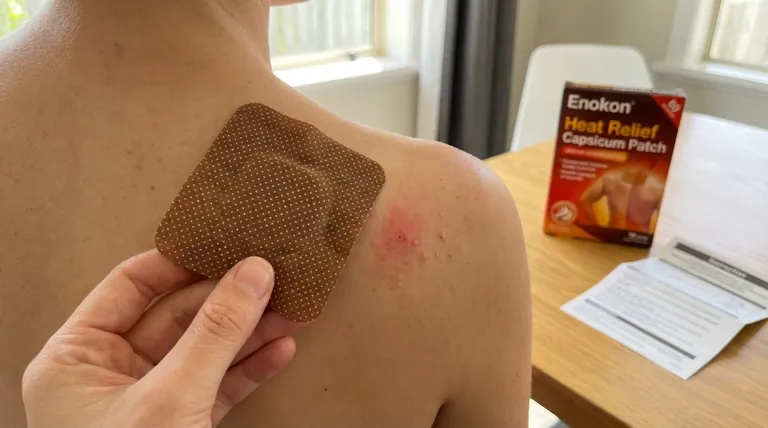
Key Points Explained:
-
Allergic Reactions
- The primary contraindication is hypersensitivity to any components of the capsicum plaster. Symptoms may include skin redness, itching, or swelling. A patch test is recommended before full application.
-
Damaged Skin Conditions
- Avoid use on:
- Open wounds or broken skin (risk of irritation or delayed healing).
- Eczema or dermatitis (may exacerbate inflammation).
- Mucous membranes (eyes, mouth) due to intense burning sensation.
- Avoid use on:
-
High-Risk Populations
- Pregnant women: Potential systemic absorption of capsaicin could affect fetal development (limited safety data).
- Pacemaker patients: Heat-generating effects might interfere with device function.
- Children under 12: Thinner skin increases absorption risks; pediatric use requires medical supervision.
-
Precautions for Application
- Timing: Discontinue at least 1 hour before bathing to prevent heat amplification. Avoid post-bath application when pores are open.
- Heat exposure: Do not combine with heating pads or hot water bottles (risk of burns).
- Behavioral: Discourage scratching to prevent capsaicin spread to unintended areas.
-
Special Medical Scenarios Requiring Consultation
- Seek professional advice for:
- Joint-related symptoms (redness/swelling/fever).
- Radiating back pain with neurological involvement (e.g., sciatica).
- Concurrent medication use (potential interactions with blood thinners or topical steroids).
- Seek professional advice for:
-
Storage & Safety
- Keep away from children to prevent accidental ingestion or eye contact.
- Store at room temperature to maintain adhesive integrity and drug stability.
Have you considered how these guidelines balance pain relief with user safety? The restrictions highlight how even natural-derived therapies like capsaicin require careful handling to harness their benefits without unintended harm.
Summary Table:
| Contraindication | Details |
|---|---|
| Allergic Reactions | Hypersensitivity to ingredients; patch test recommended. |
| Damaged Skin | Avoid on wounds, eczema, or mucous membranes (eyes/mouth). |
| High-Risk Populations | Pregnant women, pacemaker users, children under 12 (requires supervision). |
| Application Precautions | Avoid heat exposure (bathing/heating pads), scratching, or prolonged use. |
| Medical Consultation | Required for joint/neurological symptoms or medication interactions. |
Need custom pain relief solutions? Partner with Enokon, a trusted bulk manufacturer of transdermal patches and pain plasters for healthcare brands and distributors. Our technical expertise ensures safe, effective formulations tailored to your needs. Contact us today for R&D support or OEM collaborations!
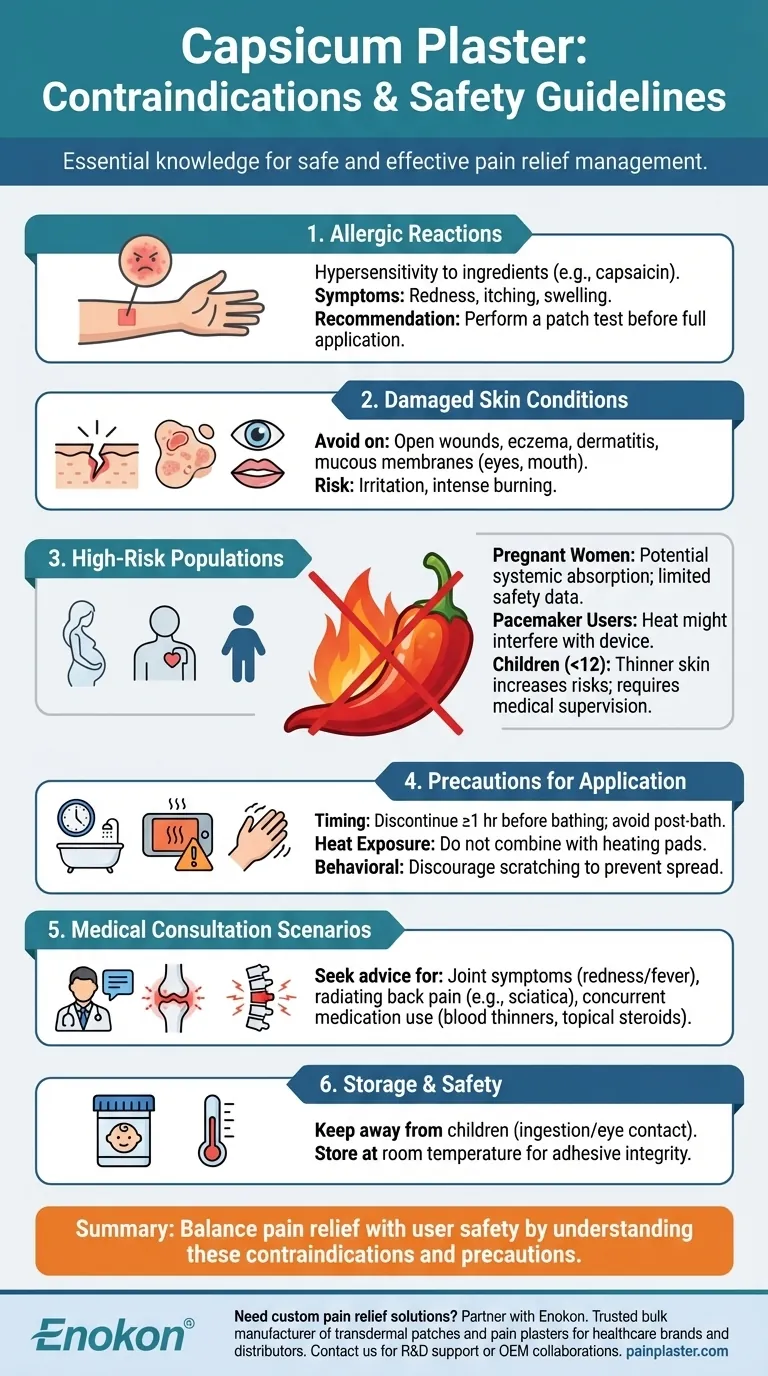
Visual Guide
Related Products
- Heat Relief Capsicum Patch for Lower Back Pain Relief
- Capsaicin Chili Medicated Pain Relief Patches
- Natural Herbal Wormwood Patch Pain Plaster
People Also Ask
- What were the inclusion criteria for the study on capsicum plaster for back pain? Key Requirements Explained
- What is Capsicum Plaster used for? Targeted Pain Relief for Musculoskeletal Discomfort
- What are some alternatives to lidocaine patches for lower back pain? Explore 5 Effective Options
- How does the active ingredient Capsicum in the Heat Patch work? A Dual-Action Path to Pain Relief
- What conditions can capsicum plasters be used for? Natural Pain Relief for Muscles & Joints


