
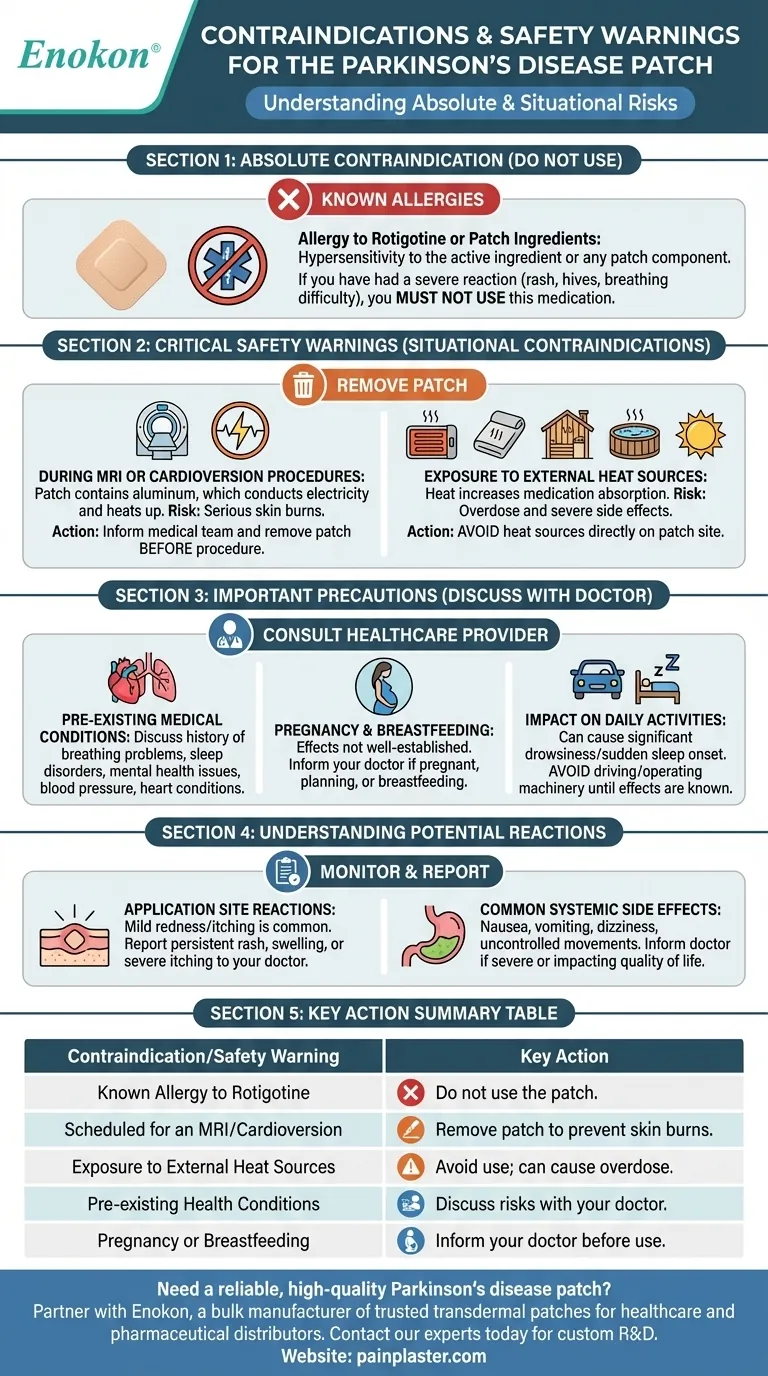
The primary contraindication for the Parkinson's disease patch is a known allergy to the active ingredient, rotigotine, or any other component in the patch itself. However, several critical safety warnings and precautions exist that function as situational contraindications, meaning the patch must not be used or must be removed under specific circumstances to avoid serious harm.
While a known allergy is the only absolute reason to never use the patch, the most significant daily risks come from situations that dangerously increase medication absorption, such as exposure to heat or wearing the patch during specific medical procedures like an MRI.
Absolute Contraindication: Known Allergies
Allergy to Rotigotine or Patch Ingredients
The only absolute contraindication is hypersensitivity. If you have ever had an allergic reaction to rotigotine or any of the other inactive ingredients used to make the patch, you must not use this medication.
An allergic reaction can manifest as a severe rash, hives, swelling, or difficulty breathing and requires immediate medical attention.
Critical Safety Warnings: When to Remove the Patch
Certain situations require the patch to be removed to prevent serious injury. These are effectively temporary, but critical, contraindications.
During MRI or Cardioversion Procedures
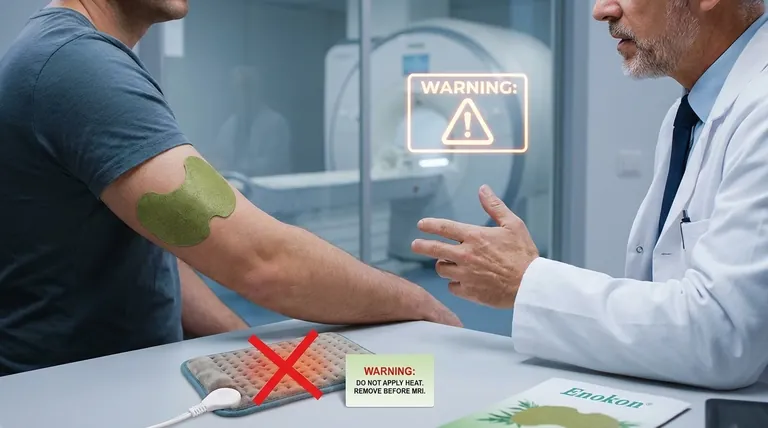
The patch contains aluminum in its backing layer. This metal can conduct electricity and heat up during a Magnetic Resonance Imaging (MRI) or cardioversion procedure, leading to serious skin burns at the application site.
You must inform the medical team and remove the patch before undergoing either of these procedures.
Exposure to External Heat Sources
Applying external heat to the patch can cause the medication to be absorbed into your bloodstream much faster than intended. This can lead to an overdose and a significant increase in side effects.
Avoid exposing the application site to heat from sources like heating pads, electric blankets, saunas, hot tubs, heat lamps, heated water beds, or direct, prolonged sunlight.
Important Precautions: Conditions to Discuss With Your Doctor
While not absolute contraindications, the following conditions require a careful risk-benefit discussion with your healthcare provider before starting or continuing treatment.
Pre-existing Medical Conditions
Your doctor needs a complete picture of your health to determine if the patch is a safe option for you. Be sure to discuss any history of:
- Breathing problems or sleep disorders (like sleep apnea)
- Mental health issues (like psychosis or impulse control disorders)
- Low or high blood pressure (especially orthostatic hypotension)
- Heart conditions
Pregnancy and Breastfeeding
The effects of the rotigotine patch during pregnancy or while breastfeeding are not well-established. It is crucial to inform your doctor if you are pregnant, planning to become pregnant, or are currently breastfeeding.
Impact on Daily Activities
The medication can cause significant drowsiness and sudden sleep onset. You should avoid driving or operating heavy machinery until you know how the patch affects you.
Understanding Potential Reactions
It is vital to distinguish between a side effect and a contraindication. While the side effects below are not reasons to avoid the medication initially, they require medical attention if they occur.
Application Site Reactions
It is common to experience mild redness or itching where the patch is applied. However, if you develop a persistent rash, swelling, or severe itching that doesn't go away, you should report it to your doctor.
Common Systemic Side Effects
The medication can cause side effects such as nausea, vomiting, dizziness, loss of appetite, and uncontrolled movements. Inform your doctor if these become severe or interfere with your quality of life.
Making the Right Choice for Your Safety
Proactively managing your treatment is key to minimizing risk. Use these guidelines to inform conversations with your healthcare team.
- If you have a known allergy to rotigotine: You must not use this medication under any circumstances.
- If you are scheduled for an MRI or cardioversion: You must remove the patch beforehand to prevent serious skin burns.
- If you regularly use saunas, hot tubs, or heating pads: You must find an alternative therapy, as this patch is not compatible with external heat application.
- If you have other health conditions (heart, breathing, mental health): You must have a thorough discussion with your doctor to weigh the benefits against the potential risks.
- If you experience a persistent skin reaction or concerning side effects: You should contact your healthcare provider immediately to re-evaluate the treatment.
Informed communication with your healthcare provider is the most effective tool for using this therapy safely.
Summary Table:
| Contraindication/Safety Warning | Key Action |
|---|---|
| Known Allergy to Rotigotine | Do not use the patch. |
| Scheduled for an MRI/Cardioversion | Remove patch to prevent skin burns. |
| Exposure to External Heat Sources | Avoid use; can cause overdose. |
| Pre-existing Health Conditions | Discuss risks with your doctor. |
| Pregnancy or Breastfeeding | Inform your doctor before use. |
Need a reliable, high-quality Parkinson's disease patch? Partner with Enokon, a bulk manufacturer of trusted transdermal patches for healthcare and pharmaceutical distributors and brands. Our technical expertise ensures custom R&D and development to meet your specific needs. Contact our experts today to discuss your requirements and benefit from our proven solutions.
Visual Guide
Related Products
- Natural Herbal Patch for Motion Sickness and Car Sickness Relief
- Far Infrared Deep Heat Relief Patches Medicated Pain Relief Patches
- Lidocaine Hydrogel Pain Relief Patch for Pain Relief
- Far Infrared Pain Patch Relief Pain Reliever for Back
- Icy Hot Menthol Medicine Pain Relief Patch
People Also Ask
- How should the patch be stored? Essential Tips for Preserving Herbal Patch Efficacy
- What activities should be avoided while using this patch? Key Precautions for Safe & Effective Use
- What should be avoided when using the patch? Key Safety Tips for Herbal Patch Users
- What should be done if a patch falls off or a dose is missed? Quick Fixes & Safety Tips
- What are the pharmacological effects of multi-target herbal patches in relieving joint inflammation? Science-Backed OEM



















