
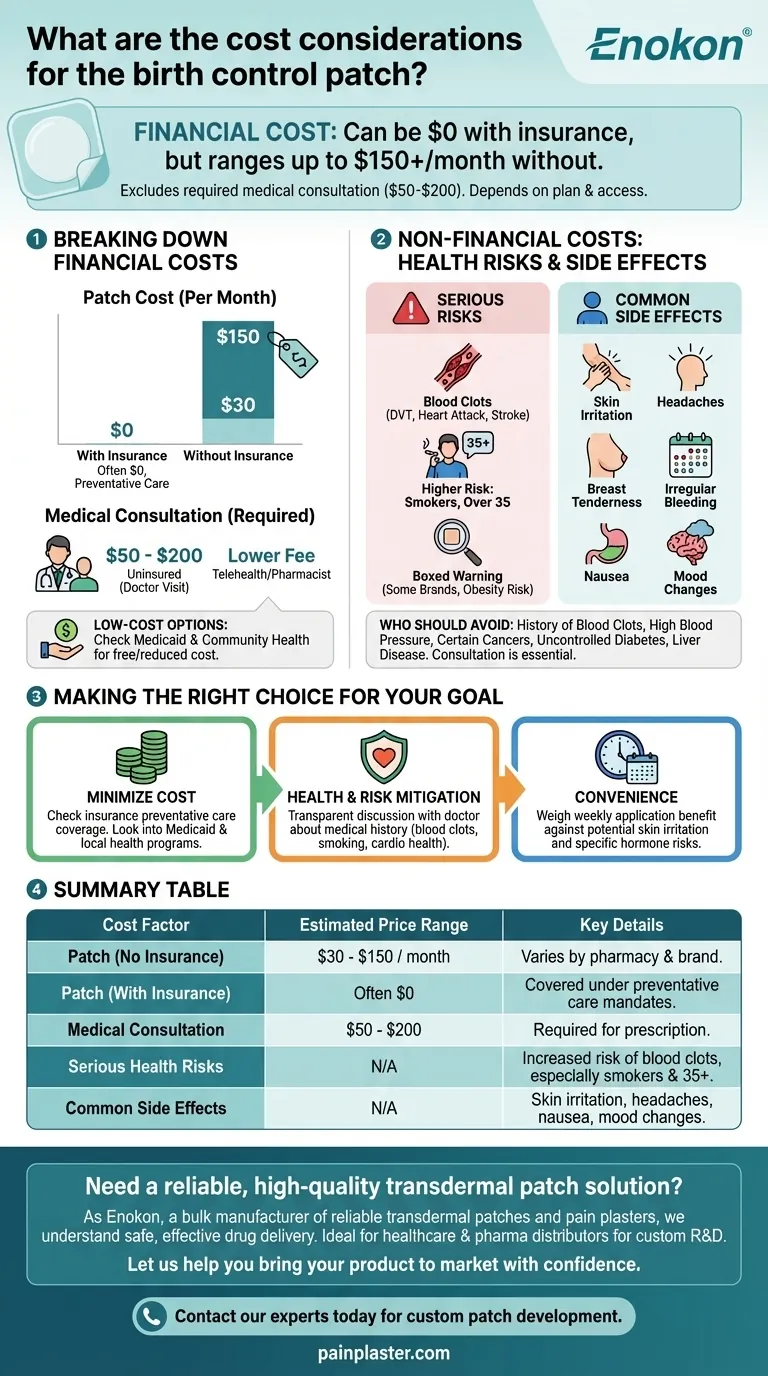
The cost of the birth control patch can be zero dollars with insurance but can range up to $150 per month without it. This price doesn't include the necessary medical consultation to get a prescription, which can add another $50 to $200. The final price depends heavily on your insurance plan, access to health programs, and where you obtain your prescription.
While the financial price is a key factor, the true "cost" of the birth control patch also includes understanding its health risks and side effects, which are critical for making an informed decision.

Breaking Down the Financial Costs
To understand the full financial picture, you must consider both the price of the patch itself and the cost of the required medical oversight.
The Cost With and Without Insurance
Without insurance, a one-month supply of birth control patches can cost between $30 and $150. The exact price varies by pharmacy and brand.
With most insurance plans and Medicaid, the patch may be completely free due to preventative care coverage mandates. Always check with your specific insurance provider to confirm your benefits.
The Required Medical Consultation
The birth control patch is a prescription medication, so you cannot buy it over the counter. You will need a prescription from a licensed clinician.
An office visit with a doctor for this purpose typically ranges from $50 to $200 if you are uninsured. Some services, including online telehealth platforms or local pharmacists, may offer consultations for a lower fee.
Accessing Low-Cost Options
If you have a low income or are uninsured, you may qualify for free or reduced-cost birth control through programs like Medicaid or other community health organizations.
Understanding the Non-Financial Costs: Health Risks
Choosing a contraceptive method involves weighing more than just the price tag. The patch, like other hormonal birth control, has associated health risks and side effects that represent a different kind of cost.
Serious Health Risks
The risks associated with the patch are similar to those of combination birth control pills. While rare, serious complications can occur.
These include an increased risk of blood clots, which can lead to deep vein thrombosis, heart attack, or stroke. One patch brand carries a specific boxed warning about this risk, especially for individuals with obesity.
The risk of serious complications is highest when first starting the patch and is significantly elevated for smokers and individuals over the age of 35.
Common Side Effects
More common, less severe side effects can also be a factor in your decision.
Users may experience skin irritation at the application site, headaches, breast tenderness, irregular bleeding between periods, nausea, or mood changes.
Who Should Avoid the Patch
The patch is not a safe option for everyone. You should not use it if you smoke, have a history of blood clots, high blood pressure, certain cancers (breast or uterine), uncontrolled diabetes, or liver disease. A full consultation with a healthcare provider is essential.
Making the Right Choice for Your Goal
Evaluating the birth control patch requires looking at its financial, health, and practical implications together.
- If your primary focus is minimizing out-of-pocket costs: Check your insurance plan's preventative care coverage or look into local health programs like Medicaid, as the patch can often be obtained for free.
- If your primary focus is health and risk mitigation: Have a transparent discussion with your doctor about your personal and family medical history, especially concerning blood clots, smoking, and cardiovascular health.
- If your primary focus is convenience: The patch's weekly application is a major benefit, but you must weigh this against the potential for skin irritation and the specific health risks tied to its hormone levels.
Ultimately, understanding every type of cost is the key to choosing the contraceptive method that aligns with your health, budget, and lifestyle.
Summary Table:
| Cost Factor | Estimated Price Range | Key Details |
|---|---|---|
| Patch (No Insurance) | $30 - $150 / month | Price varies by pharmacy and brand. |
| Patch (With Insurance) | Often $0 | Covered under preventative care mandates. |
| Medical Consultation | $50 - $200 | Required to get a prescription. |
| Serious Health Risks | N/A | Increased risk of blood clots, especially for smokers and those over 35. |
| Common Side Effects | N/A | Skin irritation, headaches, nausea, mood changes. |
Need a reliable, high-quality transdermal patch solution?
As Enokon, a bulk manufacturer of reliable transdermal patches and pain plasters, we understand the importance of safe, effective, and consistent drug delivery. Our technical expertise is ideal for healthcare and pharma distributors and brands looking for custom R&D and development of transdermal products.
Let us help you bring your product to market with confidence.
Contact our experts today to discuss your custom patch development needs.
Visual Guide
Related Products
- Prostate Pain Kidney Health Care Patch for Men
- Heating Pain Relief Patches for Menstrual Cramps
- Silicone Scar Sheets Patch Transdermal Drug Patch
- Menthol Gel Pain Relief Patch
- Icy Hot Menthol Medicine Pain Relief Patch
People Also Ask
- What are the key components of Chinese herbal pain patches? Discover the Science Behind Natural Pain Relief
- How can Chinese pain patches help with back pain? Natural Relief & Healing Benefits
- What role do Chinese pain patches play in arthritis relief? Discover Natural Pain Management Solutions
- What additional practices can enhance the effectiveness of Chinese pain patches? Boost Relief with Holistic Strategies
- What are Chinese pain patches used for? Natural Relief for Joint & Muscle Pain








