
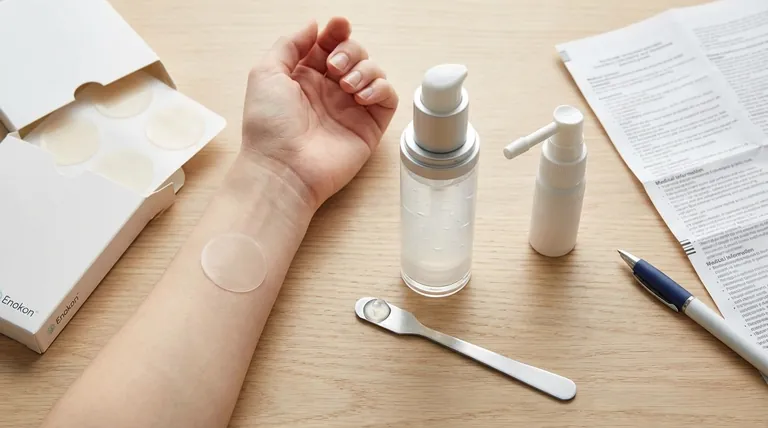
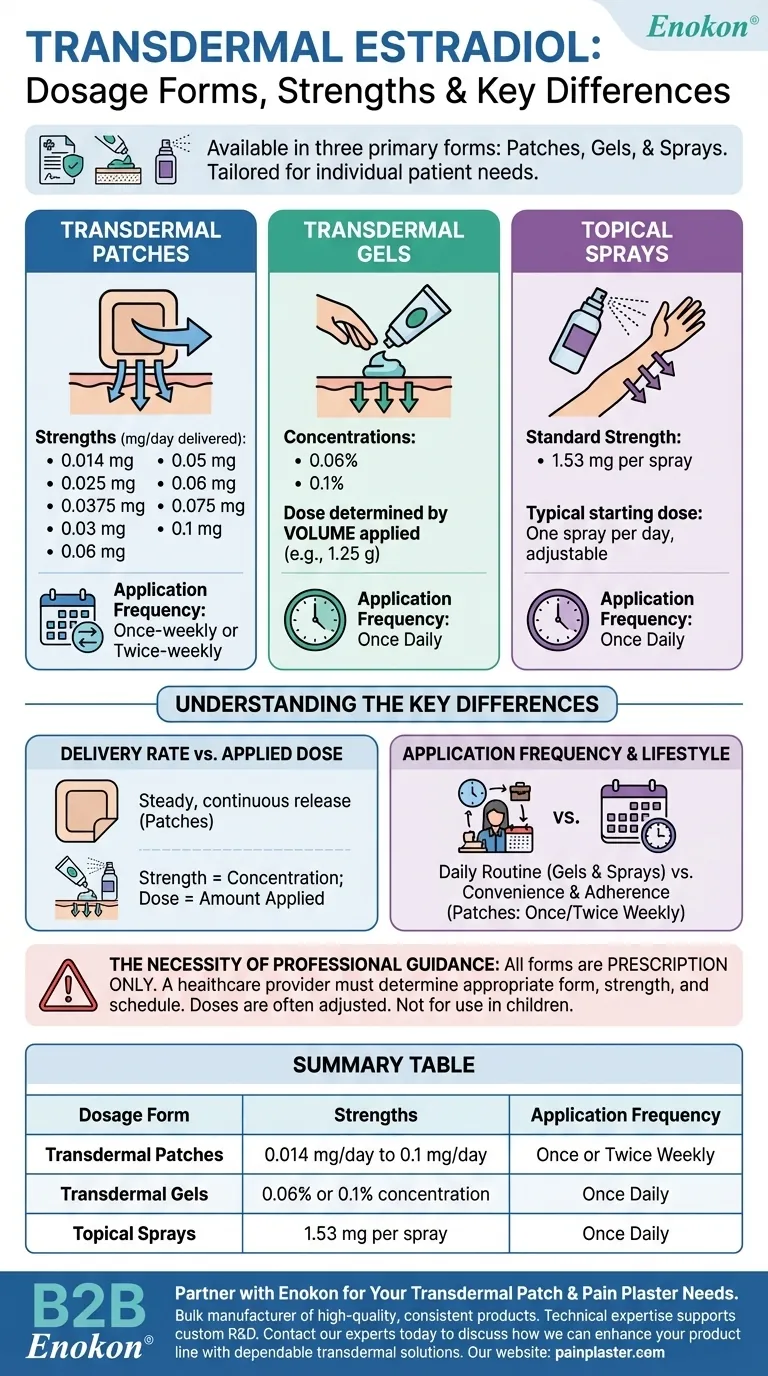
Transdermal estradiol is available in three primary forms: transdermal patches, topical gels, and a topical spray. Each of these delivery systems comes in a variety of strengths, allowing clinicians to tailor hormone therapy to individual patient needs. The patches deliver a set dose per day, while gels and sprays are measured by the amount applied.
The critical distinction among transdermal estradiol options is not just the strength, but the delivery method itself. Whether a patch, gel, or spray is chosen determines the application frequency, how the dose is measured, and key lifestyle considerations for the user.
A Breakdown of Transdermal Estradiol Forms
Understanding the specifics of each dosage form is key to appreciating their clinical applications. The choice between them involves balancing efficacy, patient preference, and ease of use.
Transdermal Patches
Transdermal patches are adhesive systems applied directly to the skin. They are designed to release a consistent, controlled amount of estradiol into the bloodstream over a set period.
The available strengths for patches are measured in the milligrams (mg) delivered per day:
- 0.014 mg
- 0.025 mg
- 0.0375 mg
- 0.05 mg
- 0.06 mg
- 0.075 mg
- 0.1 mg
Application frequency varies by brand, with some patches designed for twice-weekly application and others for once-weekly use.
Transdermal Gels
Transdermal gels are applied to the skin, typically once daily. The estradiol is absorbed through the skin from the applied amount of gel.
Gels are available in two primary concentrations:
- 0.06%
- 0.1%
The actual dose a patient receives is determined by the volume of gel applied (e.g., 1.25 grams), not just the percentage concentration.
Topical Sprays
The topical spray is another method of applying estradiol to the skin for absorption. It is typically applied once daily to the forearm.
The standard strength is 1.53 mg of estradiol per spray. A typical starting dose is one spray per day, which can be adjusted by a healthcare provider.
Understanding the Key Differences
While all these forms deliver estradiol through the skin, their practical differences have significant implications for treatment.
Delivery Rate vs. Applied Dose
Patches are unique in that their strength is defined by the rate of delivery (e.g., 0.05 mg/day). This provides a steady, continuous release.
For gels and sprays, the "strength" refers to the concentration of the product itself. The final absorbed dose depends on the amount applied and individual absorption factors.
Application Frequency and Lifestyle
The most significant difference for patients is often the application schedule.
Gels and sprays require daily application, making them part of a daily routine. Patches offer a more "set it and forget it" approach with once or twice-weekly applications, which can improve convenience and adherence for some users.
The Necessity of Professional Guidance
All forms and strengths of transdermal estradiol are available by prescription only.
A healthcare provider must determine the appropriate starting form, strength, and schedule. Doses are often adjusted over time based on patient response and clinical goals. These products are not intended for use in children.
Making the Right Choice for Your Goal
Selecting the appropriate form of transdermal estradiol depends on clinical needs, lifestyle factors, and patient preference.
- If your primary focus is convenience and infrequent application: Transdermal patches, applied once or twice per week, are often the most suitable option.
- If your primary focus is daily dose flexibility or you have sensitive skin: Gels or sprays may be preferred, as they avoid adhesives and allow for more granular dose adjustments by a clinician.
- If your primary focus is a consistent daily routine: Gels and sprays integrate easily into a daily regimen, similar to applying a lotion.
Ultimately, a thorough discussion with a healthcare provider is essential to determine the most effective and appropriate transdermal estradiol therapy for your specific situation.
Summary Table:
| Dosage Form | Strengths | Application Frequency |
|---|---|---|
| Transdermal Patches | 0.014 mg/day to 0.1 mg/day | Once or Twice Weekly |
| Transdermal Gels | 0.06% or 0.1% concentration | Once Daily |
| Topical Sprays | 1.53 mg per spray | Once Daily |
Partner with Enokon for Your Transdermal Patch & Pain Plaster Needs
As a bulk manufacturer of reliable transdermal patches and pain plasters, Enokon provides healthcare and pharmaceutical distributors and brands with high-quality, consistent products. Our technical expertise supports custom R&D and development to meet your specific formulation and delivery requirements.
Contact our experts today to discuss how we can enhance your product line with dependable transdermal solutions.
Visual Guide
Related Products
- Far Infrared Heat Pain Relief Patches Transdermal Patches
- Silicone Scar Sheets Patch Transdermal Drug Patch
- Menthol Gel Pain Relief Patch
- Icy Hot Menthol Medicine Pain Relief Patch
- Mugwort Wormwood Pain Relief Patch for Neck Pain
People Also Ask
- Why is the selection of matrix materials critical when developing customized transdermal patches? Optimize Efficacy
- What are the physical impacts of external heat exposure on the performance and safety of transdermal patches? - Guide
- What are the clinical advantages of local transdermal delivery systems? Unlock Safer, More Effective Pain Relief Solutions
- What role does a skin tolerance scoring system play in the safety evaluation of transdermal patches? Key Safety Metrics
- How does high-purity far-infrared ceramic powder contribute to the efficacy of far-infrared physical therapy patches?



















