
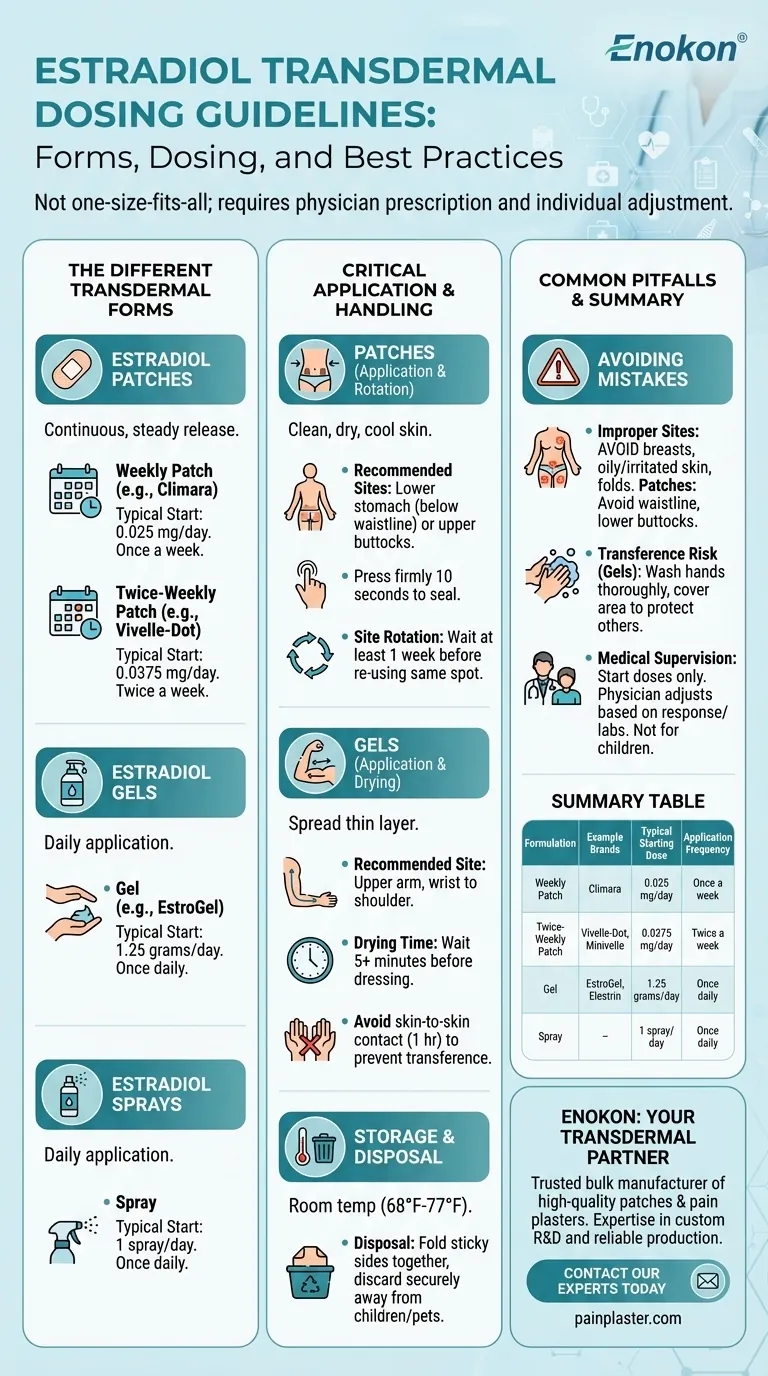
Dosing for transdermal estradiol is not one-size-fits-all; it varies significantly based on the specific product form you are using. Initial doses are typically 0.025 mg/day for a weekly patch like Climara, 0.0375 mg/day for a twice-weekly patch like Vivelle-Dot, 1.25g daily for EstroGel, or one spray daily for a transdermal spray. All dosages require a physician's prescription and are adjusted based on individual needs.
The specific dose of your transdermal estradiol is only the starting point. The true keys to effective and safe therapy are meticulous application technique, consistent site rotation, and strict adherence to handling instructions.
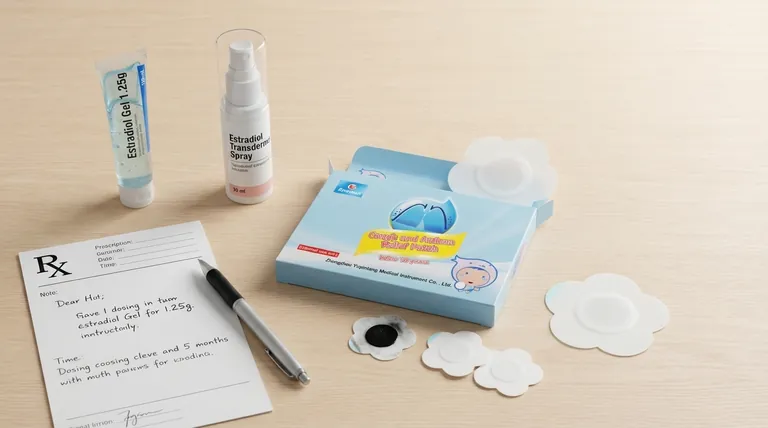
The Different Transdermal Formulations
Transdermal estradiol is delivered through the skin, but the method of delivery affects the dosing schedule and application process. Understanding the differences is the first step to proper use.
Estradiol Patches
Patches provide a continuous, steady release of hormones. They are typically prescribed on one of two schedules: once-weekly (e.g., Climara) or twice-weekly (e.g., Minivelle, Vivelle-Dot). The dose is measured in the amount of estradiol released per day (e.g., 0.025 mg/day).
Estradiol Gels
Gels, such as Elestrin and EstroGel, are applied daily. The dose is measured in the amount of gel dispensed, usually via a pump. For example, a common starting dose for EstroGel is 1.25 grams of gel applied once per day.
Estradiol Sprays
Transdermal sprays are also applied daily. An initial dose is typically one spray on the skin. This form requires careful attention to drying time and avoiding contact with others, similar to gels.
Critical Application and Handling Procedures
How and where you apply the medication is just as important as the dose itself. Improper application can lead to inconsistent absorption, skin irritation, or accidental exposure to others.
For Transdermal Patches
The patch must be applied to clean, dry, and cool skin. The recommended locations are the lower stomach (below your waistline) or the upper buttocks.
Press the patch firmly in place with your palm for about 10 seconds to ensure it is sealed well. When it is time to change the patch, apply the new one to a different spot. You should wait at least one week before using the same spot again to prevent skin irritation.
For Transdermal Gels
Gels are typically applied to the upper arm. You should spread a thin layer of the gel from your wrist to your shoulder.
It is critical to let the gel dry for at least 5 minutes before getting dressed. After application, avoid allowing others to have skin-to-skin contact with the application area for at least one hour to prevent accidental hormone transfer.
Proper Storage and Disposal
All forms should be stored at room temperature, generally between 68°F to 77°F (20°C to 25°C). Keep patches in their foil pouch until you are ready to apply one.
When disposing of a used patch, fold it in half with the sticky sides together and discard it securely, away from children and pets.
Common Pitfalls and Cautions to Avoid
Following the guidelines precisely is essential for safety and effectiveness. Deviating from the instructions can compromise your treatment.
Avoiding Improper Application Sites
Never apply patches or gels to certain areas. Avoid the breasts, oily or irritated skin, and skin with folds. For patches, specifically avoid the waistline, where clothing friction can loosen it, and the lower buttocks, where sitting can affect it.
The Risk of Transference with Gels
The primary risk with gels is accidental exposure to others, including children and pets. Always wash your hands thoroughly after application and ensure the area is completely dry and covered before coming into contact with anyone else.
The Importance of Medical Supervision
The doses mentioned here are standard starting points. Your physician will determine the right dose for you and may adjust it over time based on your response and lab results. This medication is not recommended for use in children.
Making the Right Choice for Your Treatment
Adherence to the correct procedure for your specific product is paramount for achieving the intended therapeutic benefit while minimizing risk.
- If your primary focus is consistent hormone delivery with less frequent application: A patch may be suitable, but success depends entirely on proper site rotation and adhesion.
- If your primary focus is a daily routine that avoids adhesives: A gel or spray is an option, but you must prioritize safety by preventing transference to others.
- For any transdermal form: Remember that these are typical starting doses that require a prescription and must be tailored to your specific needs by a healthcare provider.
Ultimately, successful hormone therapy relies on consistency and a precise understanding of your prescribed medication's unique requirements.
Summary Table:
| Formulation | Example Brands | Typical Starting Dose | Application Frequency |
|---|---|---|---|
| Weekly Patch | Climara | 0.025 mg/day | Once a week |
| Twice-Weekly Patch | Vivelle-Dot, Minivelle | 0.0375 mg/day | Twice a week |
| Gel | EstroGel, Elestrin | 1.25 grams/day | Once daily |
| Spray | Evamist | 1 spray/day | Once daily |
Need a Reliable Partner for Your Transdermal Patch Development?
As a trusted bulk manufacturer of high-quality transdermal patches and pain plasters, Enokon provides the technical expertise and reliable production capacity that healthcare and pharmaceutical distributors and brands depend on.
We specialize in custom R&D and development to bring your specific transdermal product vision to life, ensuring precise dosing, consistent delivery, and patient safety.
Let's discuss your project requirements. Contact our experts today to explore how we can support your product development and supply chain needs.
Visual Guide
Related Products
- Far Infrared Heat Pain Relief Patches Transdermal Patches
- Icy Hot Menthol Medicine Pain Relief Patch
- Menthol Gel Pain Relief Patch
- Silicone Scar Sheets Patch Transdermal Drug Patch
- Mugwort Wormwood Pain Relief Patch for Neck Pain
People Also Ask
- Why is the selection of matrix materials critical when developing customized transdermal patches? Optimize Efficacy
- What are the physical impacts of external heat exposure on the performance and safety of transdermal patches? - Guide
- What are the clinical advantages of local transdermal delivery systems? Unlock Safer, More Effective Pain Relief Solutions
- What role does a skin tolerance scoring system play in the safety evaluation of transdermal patches? Key Safety Metrics
- How does high-purity far-infrared ceramic powder contribute to the efficacy of far-infrared physical therapy patches?



















