
Recent research indicates that over-the-counter (OTC) lidocaine patches containing 3.6% lidocaine and 1.25% menthol demonstrate comparable efficacy to prescription 5% lidocaine patches. Both formulations were significantly more effective than placebo in reducing pain and enhancing patients' daily functioning, with similar safety profiles. This suggests OTC options may offer a viable alternative for pain management without compromising therapeutic outcomes.
Key Points Explained:
-
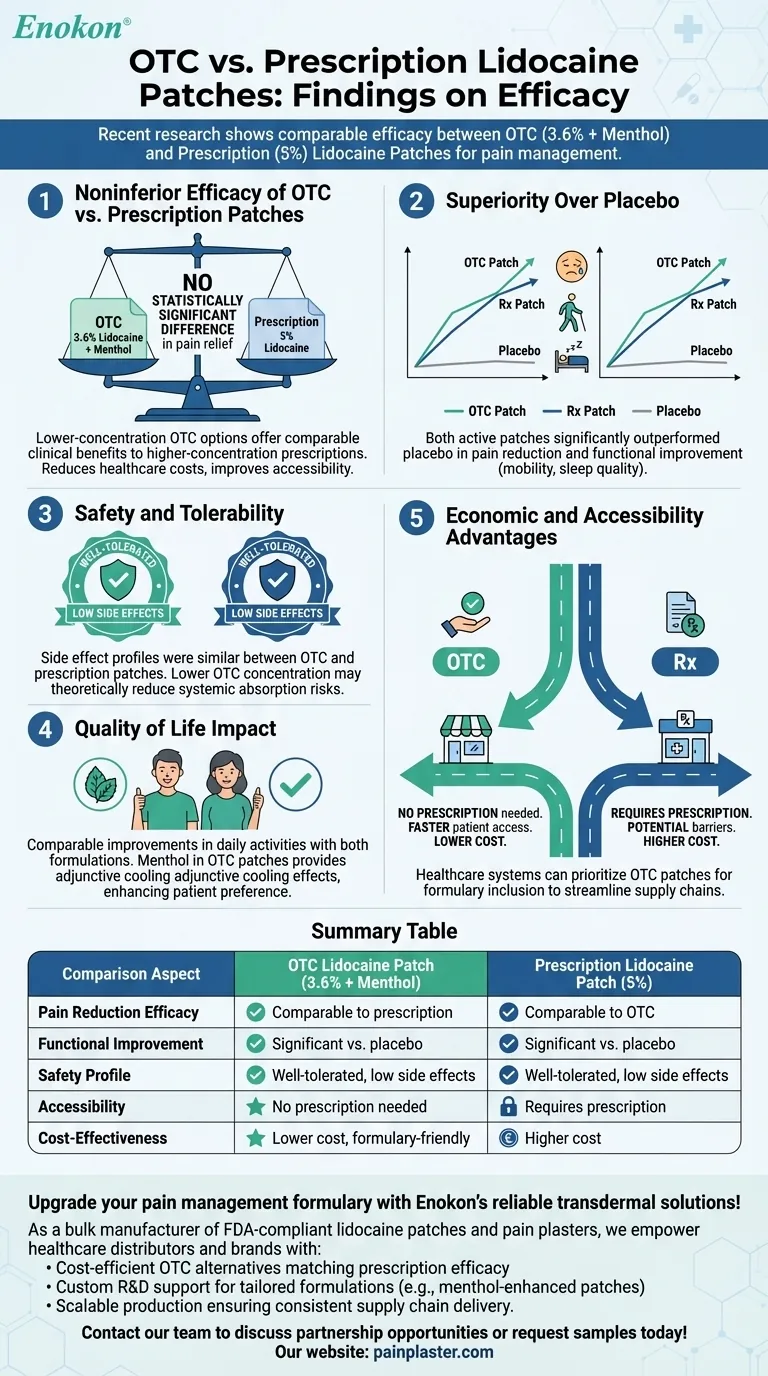
Noninferior Efficacy of OTC vs. Prescription Patches
- The study directly compared a 3.6% OTC Lidocaine Patch (with menthol) to a 5% prescription version, finding no statistically significant difference in pain relief.
- Why this matters: Lower-concentration OTC products could reduce healthcare costs and improve accessibility while maintaining clinical benefits.
-
Superiority Over Placebo
- Both active patches outperformed placebo in:
- Pain reduction (measured by standardized scales)
- Functional improvement (e.g., mobility, sleep quality)
- Practical implication: Validates lidocaine patches as an evidence-based option for localized pain.
- Both active patches outperformed placebo in:
-
Safety and Tolerability
- Side effect profiles were similar between OTC and prescription patches, with both being well-tolerated.
- Consideration for purchasers: Lower lidocaine concentration in OTC patches may theoretically reduce systemic absorption risks, though this wasn’t explicitly studied.
-
Quality of Life Impact
- Patients reported comparable improvements in daily activities and overall well-being with both formulations.
- User-centric insight: Menthol in the OTC patch may provide adjunctive cooling effects, potentially enhancing patient preference.
-
Economic and Accessibility Advantages
- OTC availability eliminates prescription barriers, enabling faster patient access.
- Procurement perspective: Healthcare systems could prioritize OTC patches for formulary inclusion to streamline supply chains.
This evidence supports OTC lidocaine patches as a pragmatic choice for purchasers balancing efficacy, safety, and cost-effectiveness in pain management formularies.
Summary Table:
| Comparison Aspect | OTC Lidocaine Patch (3.6% + Menthol) | Prescription Lidocaine Patch (5%) |
|---|---|---|
| Pain Reduction Efficacy | Comparable to prescription | Comparable to OTC |
| Functional Improvement | Significant vs. placebo | Significant vs. placebo |
| Safety Profile | Well-tolerated, low side effects | Well-tolerated, low side effects |
| Accessibility | No prescription needed | Requires prescription |
| Cost-Effectiveness | Lower cost, formulary-friendly | Higher cost |
Upgrade your pain management formulary with Enokon’s reliable transdermal solutions!
As a bulk manufacturer of FDA-compliant lidocaine patches and pain plasters, we empower healthcare distributors and brands with:
- Cost-efficient OTC alternatives matching prescription efficacy
- Custom R&D support for tailored formulations (e.g., menthol-enhanced patches)
- Scalable production ensuring consistent supply chain delivery
Contact our team to discuss partnership opportunities or request samples today!
Visual Guide
Related Products
- Lidocaine Hydrogel Pain Relief Patch for Pain Relief
- Menthol Gel Pain Relief Patch
- Herbal Medicated Anti Diarrhea Patch for Digestive Relief
- Icy Hot Menthol Medicine Pain Relief Patch
- Asthma Cough and Pain Relief Patch for Adults and Kids
People Also Ask
- How does the aqueous base in a lidocaine patch contribute to drug delivery? Unlocking Sustained Pain Relief Technology
- What are the advantages of topical anesthetics over invasive Lidocaine infiltration? Discover Safer, Scalable Relief
- Which pain patch is most effective for arthritis? Find the Best Relief for Your Joint Pain
- Will a GP routinely continue prescribing lidocaine patches after the initial period? Understanding Short-Term Pain Relief
- Why are lidocaine patches preferred over oral medications? Targeted Relief & Scale Your Brand with OEM R&D Solutions



















