
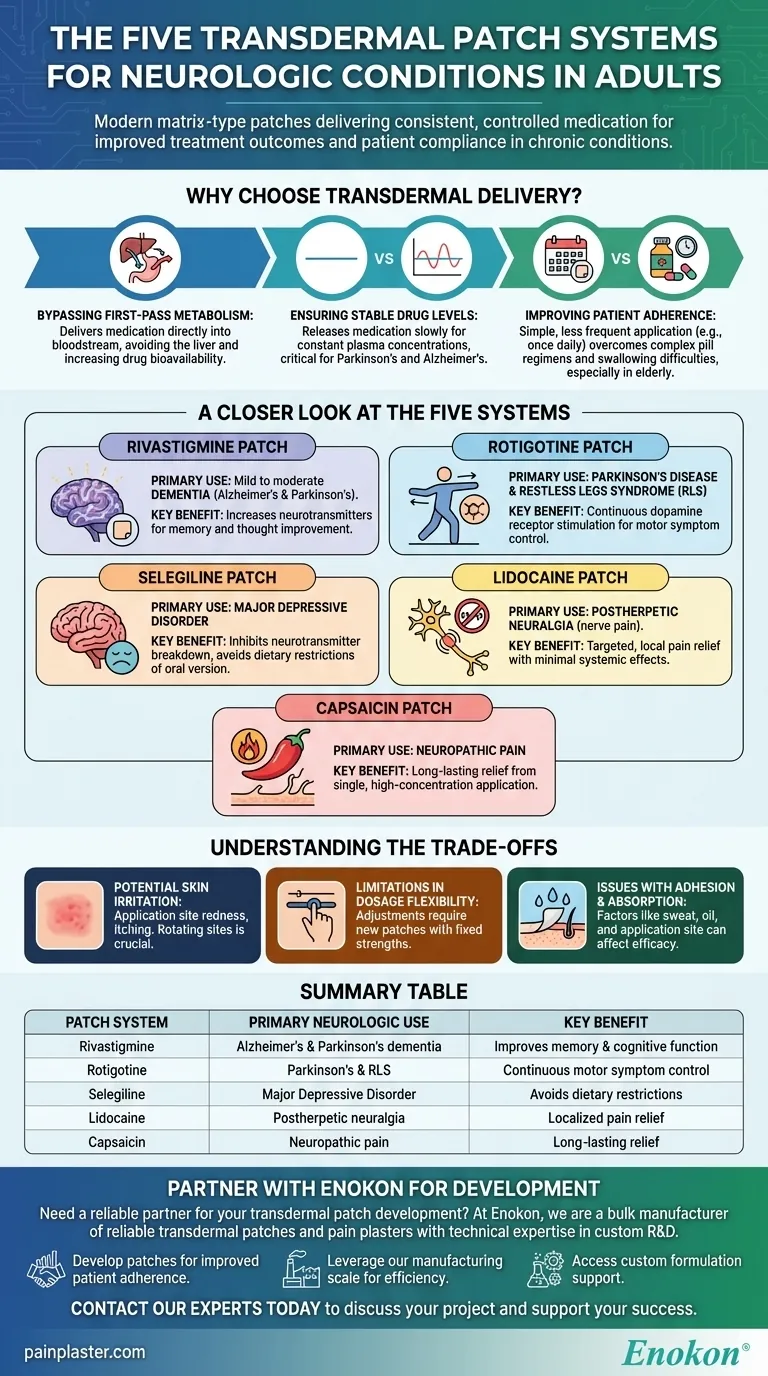
The five primary transdermal patch systems approved for neurologic conditions in adults are rivastigmine, rotigotine, selegiline, lidocaine, and capsaicin. These modern matrix-type patches are specifically designed to deliver a consistent, controlled dose of medication through the skin over an extended period.
The core advantage of transdermal systems in neurology is their ability to improve treatment outcomes for chronic conditions. By providing steady drug delivery and simplifying administration, they directly address the significant challenge of low patient compliance, especially in elderly populations.
Why Choose Transdermal Delivery?
Transdermal patches offer a unique set of benefits that are particularly valuable for managing long-term neurologic disorders. The delivery mechanism itself is a key part of the therapeutic strategy.
Bypassing First-Pass Metabolism
When a medication is taken orally, it passes through the digestive system and liver before entering the bloodstream. This "first-pass effect" can significantly reduce the amount of active drug available, requiring higher initial doses.
Transdermal patches deliver medication directly into the bloodstream through the skin, bypassing the liver and ensuring more of the drug reaches its target.
Ensuring Stable Drug Levels
Oral medications often create peaks and troughs in drug concentration, which can lead to fluctuating effectiveness and an increased risk of side effects.
Patches release medication slowly and continuously. This maintains stable and predictable plasma concentrations, which is critical for conditions like Parkinson's disease or Alzheimer's disease that require consistent symptom control.
Improving Patient Adherence
Adherence is a major obstacle in chronic disease management, particularly for patients with cognitive impairment or difficulty swallowing (dysphagia).
A patch that is applied once a day or every few days is far simpler to manage than a regimen of multiple daily pills. This ease of use dramatically improves the likelihood that patients will stick to their treatment plan.
A Closer Look at the Five Systems
Each of the five available patch systems targets a different aspect of neurologic health, from cognitive function to motor control and pain management.
Rivastigmine Patch
This patch is primarily used to treat mild to moderate dementia associated with Alzheimer's and Parkinson's diseases. It works by increasing the levels of a key neurotransmitter involved in memory and thought.
Rotigotine Patch
The rotigotine patch provides continuous stimulation of dopamine receptors. It is a cornerstone therapy for managing the motor symptoms of Parkinson's disease and is also used to treat Restless Legs Syndrome (RLS).
Selegiline Patch
While primarily known as an antidepressant for Major Depressive Disorder, selegiline's mechanism involves inhibiting the breakdown of neurotransmitters like dopamine. The transdermal form avoids dietary restrictions associated with the oral version.
Lidocaine Patch
This patch provides targeted, local pain relief for conditions like postherpetic neuralgia (nerve pain after shingles). It works by numbing the affected area without causing significant systemic effects.
Capsaicin Patch
Used for neuropathic pain, the capsaicin patch works differently from lidocaine. It initially activates and then desensitizes local pain receptors, providing long-lasting relief from a single, high-concentration application administered in a clinical setting.
Understanding the Trade-offs
While beneficial, transdermal systems are not without limitations. Acknowledging these trade-offs is crucial for setting realistic expectations.
Potential for Skin Irritation
The most common side effect is application site reaction. Redness, itching, and irritation can occur, sometimes requiring discontinuation of the patch. Rotating the application site is a standard recommendation to minimize this risk.
Limitations in Dosage Flexibility
Adjusting a dose with a transdermal patch is less straightforward than with oral medication. Changes require applying a new patch with a different strength, which may not offer the same level of granular control as splitting a tablet.
Issues with Adhesion and Absorption
Proper adhesion is critical for effective drug delivery. Factors like sweat, skin oils, hair, and the specific application site can affect how well a patch sticks and how efficiently the medication is absorbed.
Making the Right Choice for Your Goal
Selecting the appropriate transdermal system depends entirely on the specific clinical objective for the patient.
- If your primary focus is managing dementia symptoms: The rivastigmine patch offers a simple, effective way to ensure consistent medication for patients with cognitive impairment.
- If your primary focus is stable motor control for Parkinson's: The rotigotine patch provides the continuous dopaminergic stimulation needed to smooth out motor fluctuations.
- If your primary focus is localized neuropathic pain: The lidocaine patch is ideal for daily, non-invasive relief, while the capsaicin patch is suited for longer-term relief after a single application.
- If your primary focus is maximizing treatment adherence: The transdermal route itself is the solution, overcoming barriers like complex pill schedules and swallowing difficulties.
Ultimately, transdermal patches represent a powerful tool in modern neurology, turning the delivery system into an active part of the therapeutic solution.
Summary Table:
| Patch System | Primary Neurologic Use | Key Benefit |
|---|---|---|
| Rivastigmine | Alzheimer's & Parkinson's dementia | Improves memory & cognitive function |
| Rotigotine | Parkinson's disease & Restless Legs Syndrome | Provides continuous motor symptom control |
| Selegiline | Major Depressive Disorder | Avoids dietary restrictions of oral version |
| Lidocaine | Postherpetic neuralgia | Localized pain relief with minimal systemic effects |
| Capsaicin | Neuropathic pain | Long-lasting relief from single application |
Need a reliable partner for your transdermal patch development?
At Enokon, we are a bulk manufacturer of reliable transdermal patches and pain plasters for healthcare and pharmaceutical distributors and brands. Our technical expertise in custom R&D and development ensures you get a high-quality, consistent product that meets your specific clinical goals.
Benefit from our experience to:
- Develop patches that improve patient adherence for chronic neurologic conditions.
- Leverage our manufacturing scale for efficient, cost-effective production.
- Access custom formulation support to optimize drug delivery.
Contact our experts today to discuss your project and how we can support your success.
Visual Guide
Related Products
- Far Infrared Heat Pain Relief Patches Transdermal Patches
- Icy Hot Menthol Medicine Pain Relief Patch
- Silicone Scar Sheets Patch Transdermal Drug Patch
- Menthol Gel Pain Relief Patch
- Mugwort Wormwood Pain Relief Patch for Neck Pain
People Also Ask
- Why is the selection of matrix materials critical when developing customized transdermal patches? Optimize Efficacy
- What are the physical impacts of external heat exposure on the performance and safety of transdermal patches? - Guide
- What are the clinical advantages of local transdermal delivery systems? Unlock Safer, More Effective Pain Relief Solutions
- What role does a skin tolerance scoring system play in the safety evaluation of transdermal patches? Key Safety Metrics
- How does high-purity far-infrared ceramic powder contribute to the efficacy of far-infrared physical therapy patches?










