
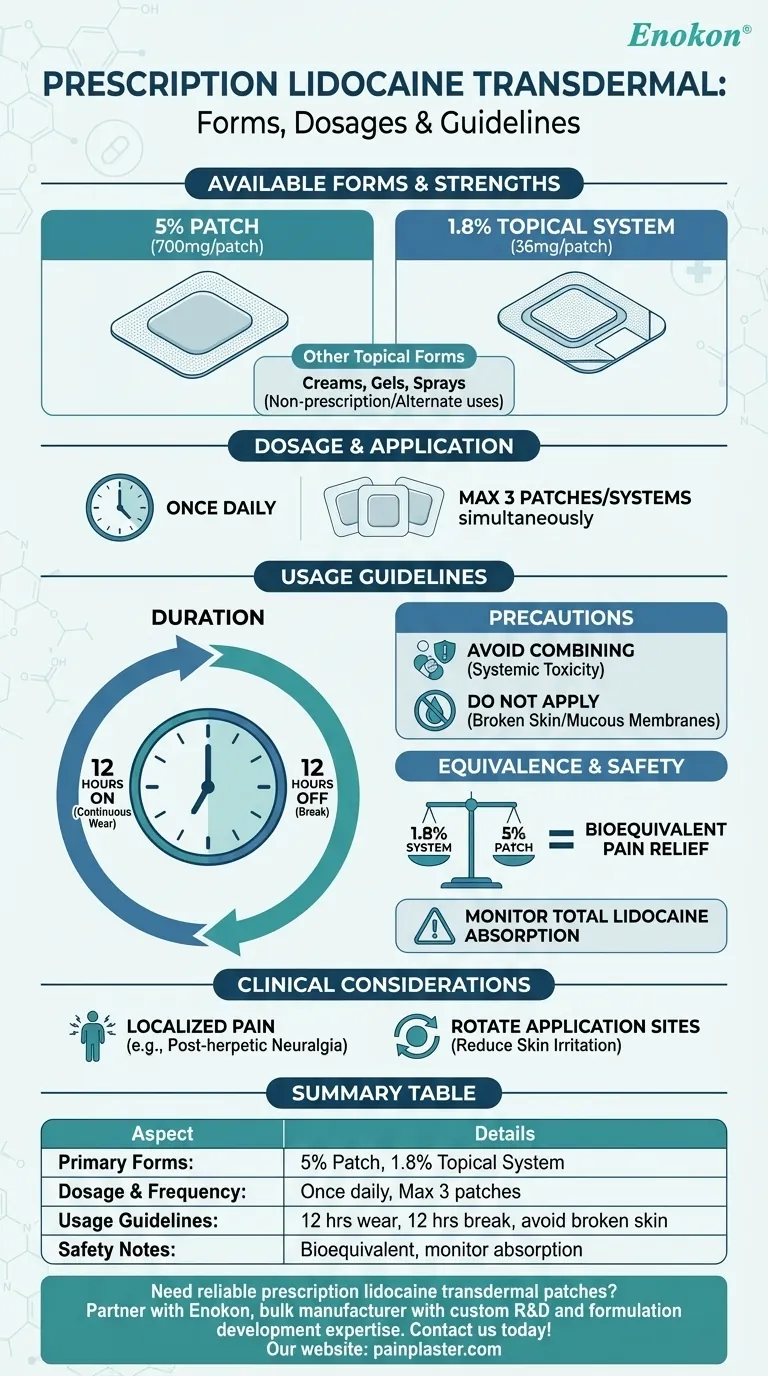
Prescription lidocaine transdermal is primarily available in patch and topical system forms, with standardized dosages and application protocols to ensure safety and efficacy. The most common formulations are 5% (700mg/patch) and 1.8% (36mg/patch) strengths, applied once daily for localized pain relief. Key usage guidelines include a maximum of 3 patches/topical systems at once, limited to 12 hours of wear per day, followed by a 12-hour break. These products are designed for targeted delivery while minimizing systemic absorption risks.
Key Points Explained:
-
Available Forms and Strengths
-
Primary Forms:
- Lidocaine Transdermal Patch (5% or 700mg/patch, 1.8% or 36mg/patch, and 4% variants).
- Topical system (1.8% strength).
- Other Topical Forms: While not transdermal, lidocaine also comes in creams, gels, sprays, and more for non-prescription or alternate uses.
-
Primary Forms:
-
Dosage and Application
-
Standard Dosage:
- 5% Patch: Delivers 700mg lidocaine per patch.
- 1.8% Topical System: Provides 36mg/patch, with equivalent exposure to the 5% patch due to optimized delivery.
- Frequency: Applied once daily as needed, with a maximum of 3 patches/systems simultaneously.
-
Standard Dosage:
-
Usage Guidelines
- Duration: Patches should not exceed 12 hours of continuous wear per 24-hour period (e.g., 12 hours on, 12 hours off).
-
Precautions:
- Avoid combining with other local anesthetics to prevent systemic toxicity.
- Do not apply to broken skin or mucous membranes.
-
Equivalence and Safety
- The 1.8% system is bioequivalent to the 5% patch, offering similar pain relief with adjusted formulation.
- Total lidocaine absorption must be monitored if used alongside other anesthetic products.
-
Clinical Considerations
- Designed for localized pain (e.g., post-herpetic neuralgia), not systemic conditions.
- Patients should rotate application sites to reduce skin irritation.
These protocols balance efficacy with safety, ensuring controlled drug delivery while mitigating risks like skin reactions or systemic absorption. For purchasers, understanding these specifics ensures appropriate procurement and patient counseling.
Summary Table:
| Aspect | Details |
|---|---|
| Primary Forms | - 5% Lidocaine Patch (700mg/patch) - 1.8% Topical System (36mg/patch) |
| Dosage & Frequency | - Once daily application - Max 3 patches/systems at once |
| Usage Guidelines | - 12 hours wear, 12 hours break - Avoid broken skin/mucous membranes |
| Safety Notes | - Bioequivalent pain relief (1.8% = 5%) - Monitor systemic absorption |
Need reliable prescription lidocaine transdermal patches? Partner with Enokon, a bulk manufacturer of high-quality transdermal patches and pain plasters for healthcare distributors and pharmaceutical brands. Benefit from our technical expertise in custom R&D and formulation development to meet your specific needs. Contact us today to discuss your requirements!
Visual Guide
Related Products
- Lidocaine Hydrogel Pain Relief Patch for Pain Relief
- Far Infrared Heat Pain Relief Patches Transdermal Patches
- Menthol Gel Pain Relief Patch
- Icy Hot Menthol Medicine Pain Relief Patch
- Mugwort Wormwood Pain Relief Patch for Neck Pain
People Also Ask
- How does the aqueous base in a lidocaine patch contribute to drug delivery? Unlocking Sustained Pain Relief Technology
- What are the advantages of topical anesthetics over invasive Lidocaine infiltration? Discover Safer, Scalable Relief
- Which pain patch is most effective for arthritis? Find the Best Relief for Your Joint Pain
- Will a GP routinely continue prescribing lidocaine patches after the initial period? Understanding Short-Term Pain Relief
- Why are lidocaine patches preferred over oral medications? Targeted Relief & Scale Your Brand with OEM R&D Solutions







