To apply a pain relief patch correctly, you must start with clean, dry skin in a hairless area free of irritation. Press the patch firmly onto the affected area, ensuring it adheres completely, and leave it on only for the duration specified by the manufacturer. Proper application is crucial for both the effectiveness of the medication and your safety.
The guidelines for using a pain relief patch are not merely suggestions—they are a critical protocol designed to maximize targeted relief while minimizing the risks of skin irritation, allergic reactions, and unintended systemic side effects.

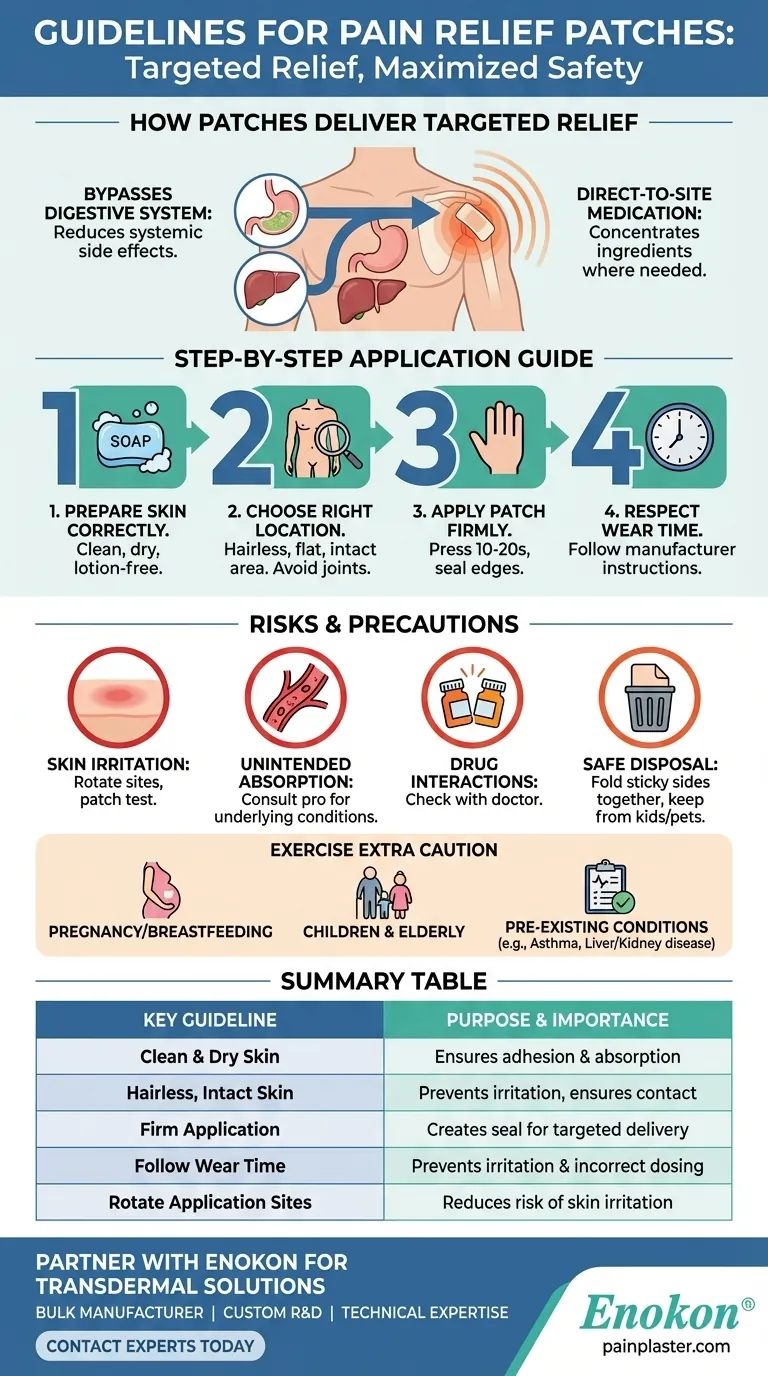
How Patches Deliver Targeted Relief
Pain relief patches are a form of topical medication designed to deliver active ingredients directly through the skin to the site of pain. This method offers distinct advantages over oral medications.
Bypassing the Digestive System
By applying the medication directly to the skin, patches bypass the stomach and liver. This can significantly reduce the systemic side effects, such as stomach upset, that are often associated with oral pain relievers.
Direct-to-Site Medication
The primary benefit of a patch is its ability to concentrate the active ingredients where you need them most. This provides targeted relief to a specific muscle or joint without affecting the entire body.
Common Active Ingredients
Patches come in many forms. Some contain prescription or over-the-counter medications, while others use natural or herbal ingredients like capsaicin (from chili peppers), menthol, or turmeric to create heating or cooling sensations that block pain signals.
The Step-by-Step Guide to Proper Application
Following a precise application process ensures the patch works as intended and prevents common problems. Each step is essential for safety and efficacy.
1. Prepare the Skin Correctly
The single most important step is preparing the skin. Thoroughly clean the area with soap and water, then dry it completely. Do not apply any lotions, oils, or creams, as they can prevent the patch from sticking and interfere with medication absorption.
2. Choose the Right Location
Select a flat area of skin directly over the pain that is as hairless as possible. Avoid joints that bend frequently, as this can cause the patch to peel off. Never apply a patch to broken, cut, or irritated skin.
3. Apply the Patch Firmly
After removing the backing, place the patch on the skin and press down firmly for at least 10-20 seconds. Run your fingers over the entire surface, especially the edges, to ensure it is completely sealed against the skin.
4. Respect the Recommended Wear Time
Always follow the manufacturer's instructions for how long to wear the patch. Leaving a patch on for too long can lead to significant skin irritation or deliver an incorrect dose of medication. Overuse does not increase the benefit and can increase the risk.
Understanding the Risks and Necessary Precautions
While generally safe when used correctly, pain relief patches are not without potential downsides. Understanding these trade-offs is key to using them responsibly.
Potential for Skin Irritation
The most common side effect is skin irritation, redness, or itching at the application site. If this occurs, remove the patch. To prevent this, rotate the application site each time you use a new patch. A preliminary patch test on a small area is wise for those with sensitive skin.
Risk of Unintended Absorption
Some medication from the patch can be absorbed into the bloodstream. While this is usually minimal, it is a critical consideration for certain individuals. Always consult a healthcare professional if you have underlying medical conditions.
Checking for Drug Interactions
If you are taking other medications, especially other pain relievers, consult your doctor or pharmacist before using a medicated patch. This helps prevent potentially harmful interactions.
The Importance of Safe Disposal
Used patches still contain residual medication. Fold the used patch in half with the sticky sides together and dispose of it where children or pets cannot access it. Accidental exposure can be extremely dangerous.
When to Exercise Extra Caution
Certain individuals should only use pain relief patches under the direct supervision of a healthcare provider due to heightened risks.
Use During Pregnancy or Breastfeeding
Pregnant or breastfeeding women should always consult their doctor before using any type of pain relief patch, as the active ingredients may affect the child.
Considerations for Children and the Elderly
The skin of children and the elderly can be more sensitive and absorb medication differently. Medical guidance is essential to ensure proper dosing and avoid adverse reactions.
Pre-existing Medical Conditions
Individuals with conditions like asthma, liver disease, or kidney disease must seek medical advice before using medicated patches, as their bodies may process the ingredients differently.
Making the Right Choice for Your Pain
To use patches effectively, align your choice with your specific need and health profile.
- If your primary focus is minor muscle soreness or a temporary ache: A non-medicated patch with natural ingredients like menthol or capsaicin may provide sufficient, low-risk relief.
- If your primary focus is persistent or moderate pain: Consult a healthcare professional to ensure you are using the correct type of medicated patch and to rule out any underlying conditions.
- If you have sensitive skin or known allergies: Always perform a patch test on a small, discreet area of skin for a few hours before applying it fully to the affected area.
Ultimately, using a pain relief patch correctly transforms it from a simple product into a precise and effective tool for managing your pain.
Summary Table:
| Key Guideline | Purpose & Importance |
|---|---|
| Clean & Dry Skin | Ensures proper adhesion and medication absorption. |
| Hairless, Intact Skin | Prevents irritation and ensures contact with the skin. |
| Firm Application | Creates a complete seal for consistent, targeted drug delivery. |
| Follow Wear Time | Prevents skin irritation and incorrect dosing. |
| Rotate Application Sites | Reduces the risk of skin irritation from repeated use. |
Need a reliable partner for your pain relief patch supply?
As Enokon, a leading bulk manufacturer of transdermal patches and pain plasters, we provide more than just products. We offer technical expertise for custom R&D and development to healthcare and pharma distributors and brands.
Partner with us to:
- Access high-quality, reliable patches manufactured to the highest standards.
- Develop custom formulations tailored to your specific market needs.
- Leverage our deep technical knowledge for successful product development.
Contact our experts today to discuss how we can support your business with effective transdermal solutions.
Visual Guide
Related Products
- Mugwort Wormwood Pain Relief Patch for Neck Pain
- Menthol Gel Pain Relief Patch
- Lidocaine Hydrogel Pain Relief Patch for Pain Relief
- Icy Hot Menthol Medicine Pain Relief Patch
- Far Infrared Pain Patch Relief Pain Reliever for Back
People Also Ask
- What safety considerations should be kept in mind when using pain relief patches? Ensure Safe & Effective Pain Management
- What is the purpose of pain relief patches? Get Targeted Relief with Fewer Side Effects
- How do pain relief patches provide targeted relief? Discover the Science Behind Effective Pain Management
- How should pain relief patches be applied and used? A Guide to Safe & Effective Targeted Relief
- Are pain relief pills and patches available without a prescription? Choose the Right OTC Pain Relief