
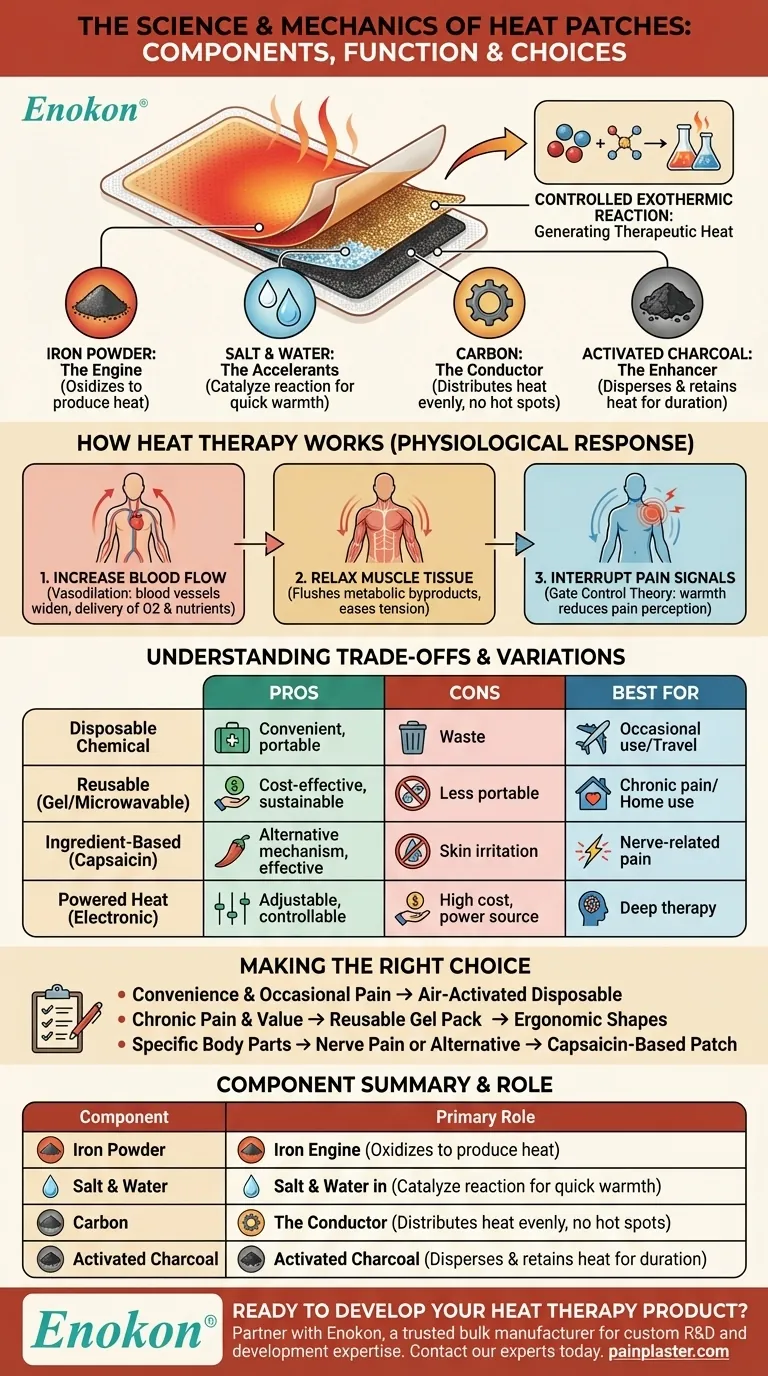
At the heart of a modern heat patch is a simple, controlled chemical reaction. The key components are iron powder, which oxidizes (rusts) to produce heat; salt, which acts as a catalyst to accelerate the reaction; carbon, which helps distribute the heat evenly; water, which initiates the oxidation process; and activated charcoal, which helps maintain the heat for an extended period.
The core function of a heat patch is to harness a controlled exothermic (heat-releasing) chemical reaction. This process is designed to increase local blood circulation, which in turn relaxes muscle tissue and helps to alleviate pain signals.

How a Heat Patch Generates Heat: The Chemical Reaction
Understanding a heat patch begins with understanding the simple chemistry that powers it. The warmth you feel is the result of a carefully balanced and rapid oxidation process, essentially controlled rusting.
The Engine: Iron Powder
The primary active ingredient is finely ground iron powder. When this iron is exposed to oxygen in the air, it begins to oxidize, or rust. This chemical reaction is naturally exothermic, meaning it releases energy in the form of heat.
The Accelerants: Salt and Water
While iron will rust on its own, the process is far too slow to be useful for therapeutic heat. The inclusion of salt and water acts as a catalyst, dramatically speeding up the oxidation reaction to generate noticeable warmth quickly and consistently.
The Conductor: Carbon
A small amount of powdered carbon is mixed in to serve as a heat conductor. Its role is to spread the heat generated by the iron powder evenly across the surface of the patch, preventing uncomfortable "hot spots" and ensuring a uniform temperature.
The Enhancer: Activated Charcoal
Activated charcoal is highly porous, which helps to both disperse the heat and retain it for a longer duration. It ensures the patch can provide steady, therapeutic warmth for several hours as specified on the packaging.
The Science of Heat Therapy: Why Warmth Works
Applying heat to an injury or a sore muscle is a time-tested remedy. The effectiveness of a heat patch lies in its ability to trigger specific physiological responses that promote healing and reduce pain.
Increasing Blood Flow
The primary mechanism of heat therapy is vasodilation, the widening of blood vessels. The warmth from the patch penetrates the skin, encouraging blood vessels in the underlying tissue to expand. This increases blood flow to the targeted area.
Relaxing Muscle Tissue
Increased blood flow delivers more oxygen and nutrients to sore, overworked muscles. This process helps flush out metabolic byproducts that can cause stiffness and pain, allowing the muscle fibers to relax and easing tension.
Interrupting Pain Signals
Heat can also provide relief by stimulating sensory receptors in the skin. According to the "Gate Control Theory" of pain, the sensation of warmth can effectively "close the gate" on pain signals traveling to the brain, reducing your perception of the discomfort.
Understanding the Trade-offs and Variations
Not all heat patches are created equal. The most common air-activated chemical patches are just one option among several, each with its own set of advantages and disadvantages.
Disposable vs. Reusable
Disposable chemical patches offer maximum convenience for travel or on-the-go use but contribute to waste. Reusable options, such as gel packs that can be microwaved, are more cost-effective and sustainable for chronic pain but are less portable.
Chemical vs. Ingredient-Based Patches
While most patches use the iron oxidation reaction, others achieve a warming sensation through active ingredients. Capsaicin, the compound found in chili peppers, creates a sensation of heat by interacting with nerve receptors and can be very effective for certain types of pain.
Passive Heat vs. Powered Heat
For more intense or deeper-reaching therapy, battery-operated electronic devices offer adjustable heat levels. These provide a higher degree of control but come at a significantly higher initial cost and require a power source.
Potential for Skin Irritation
A critical safety consideration is the risk of low-temperature burns. Never apply a heat patch directly to sensitive skin, wear it for longer than recommended, or fall asleep while wearing one. The continuous, prolonged exposure can cause skin damage even at temperatures that don't feel excessively hot.
Making the Right Choice for Your Goal
Selecting the appropriate heat therapy depends entirely on your specific type of pain, lifestyle, and frequency of use.
- If your primary focus is convenience for occasional backaches or muscle soreness: An air-activated, disposable chemical patch is an excellent and effective choice.
- If your primary focus is managing chronic pain from arthritis or frequent stiffness: A reusable gel pack or an electronic heating pad offers better long-term value.
- If your primary focus is targeting a specific joint like a knee or shoulder: Look for patches ergonomically shaped to fit those specific body parts for better contact and effectiveness.
- If your primary focus is nerve-related pain or you don't respond well to standard patches: A capsaicin-based patch provides an alternative mechanism for pain relief that may be more suitable.
By understanding the simple science inside a heat patch, you can make a more informed decision to effectively manage your pain and recovery.
Summary Table:
| Component | Primary Role in Heat Patch |
|---|---|
| Iron Powder | Oxidizes (rusts) to generate heat. |
| Salt & Water | Catalyze and accelerate the oxidation reaction. |
| Carbon | Distributes heat evenly, preventing hot spots. |
| Activated Charcoal | Maintains a steady temperature for hours. |
Ready to develop your own reliable, effective heat therapy product?
Partner with Enokon, a trusted bulk manufacturer of transdermal patches and pain plasters. We provide custom R&D and development expertise to healthcare and pharmaceutical distributors and brands, ensuring your product delivers safe, consistent, and targeted pain relief.
Contact our experts today to discuss your project requirements.
Visual Guide
Related Products
- Far Infrared Heat Pain Relief Patches Transdermal Patches
- Heat Relief Capsicum Patch for Lower Back Pain Relief
- Heating Pain Relief Patches for Menstrual Cramps
- Far Infrared Knee Pain Patch Heat Patches for Pain Relief
- Far Infrared Deep Heat Relief Patches Medicated Pain Relief Patches
People Also Ask
- Why is the selection of matrix materials critical when developing customized transdermal patches? Optimize Efficacy
- What are the physical impacts of external heat exposure on the performance and safety of transdermal patches? - Guide
- What role does a skin tolerance scoring system play in the safety evaluation of transdermal patches? Key Safety Metrics
- What are the clinical advantages of local transdermal delivery systems? Unlock Safer, More Effective Pain Relief Solutions
- How does high-purity far-infrared ceramic powder contribute to the efficacy of far-infrared physical therapy patches?



















