
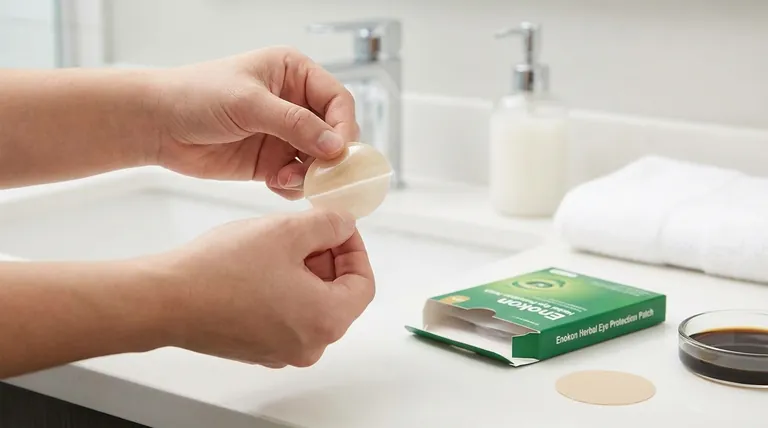
To apply a patch correctly, you must start with clean, dry, and intact skin. After washing and drying the area, carefully peel the backing from the patch, apply the sticky side to your skin, and press firmly to ensure it is secure. Always wash your hands thoroughly after handling the patch to avoid unintended contact with the medication.
The core principle behind any medicinal patch is ensuring consistent medication delivery through proper skin contact. This requires a strict routine for application, careful management during wear, and a clear understanding of safety precautions to maximize effectiveness and minimize risks.
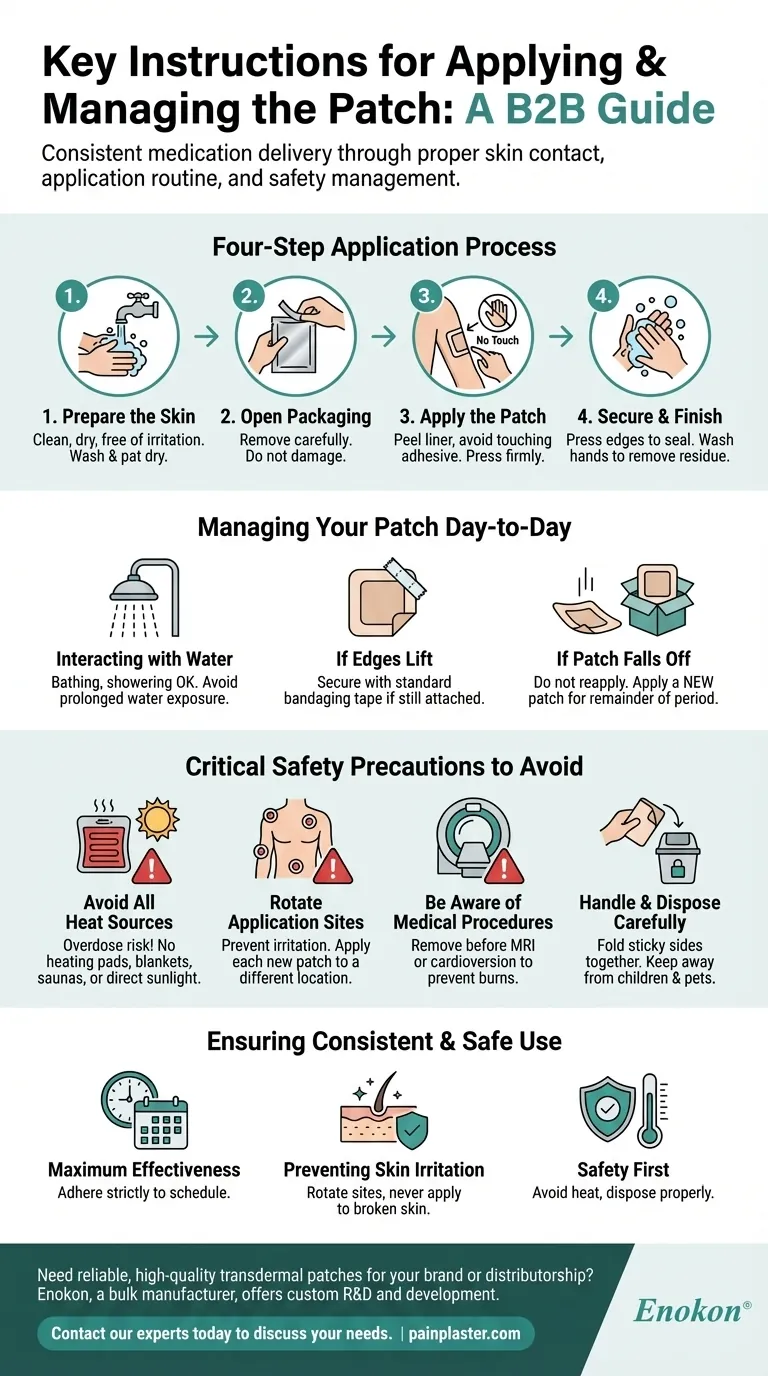
The Four-Step Application Process
Proper application is the foundation of effective patch therapy. Following a consistent method each time prevents errors and ensures the medication can be absorbed as intended.
Step 1: Prepare the Skin
The application site must be clean, dry, and free of irritation. Use soap and water to wash the area, then pat it completely dry before application. Do not apply the patch to skin that is red, cut, or otherwise injured.
Step 2: Open the Packaging
Open the pouch and carefully remove the patch. Be mindful not to damage the patch itself. Avoid using scissors in a way that could cut the patch.
Step 3: Apply the Patch
Peel the protective liner off to expose the sticky, medicated side. Avoid touching the sticky side with your fingers. Press the patch firmly onto the prepared area of your skin.
Step 4: Secure and Finish
Press down on the patch, especially around the edges, to ensure it is fully sealed against your skin. Once the patch is secure, wash your hands thoroughly with soap and water to remove any medication residue.
Managing Your Patch Day-to-Day
Once applied, the patch requires minor attention to ensure it continues to function correctly throughout its intended duration.
Interacting with Water
You can typically bathe, shower, or swim while wearing the patch. However, be aware that prolonged water exposure may loosen the adhesive.
If the Edges Lift
If the edges of the patch begin to lift but the patch is still mostly attached, you can secure them with standard bandaging tape.
If the Patch Falls Off
Should the patch fall off completely, do not attempt to reapply it. Apply a new patch for the remainder of the dosing period and return to your regular schedule the following day or week.
Critical Safety Precautions to Avoid
Improper handling or environmental exposure can alter medication absorption and pose significant safety risks. Understanding these limitations is non-negotiable.
Avoid All Heat Sources
Do not expose the patch to direct heat sources. This includes heating pads, electric blankets, saunas, hot tubs, or prolonged direct sunlight. Heat can accelerate the release of medication, leading to a dangerous overdose.
Rotate Application Sites
To prevent skin irritation, apply each new patch to a different location. Follow the recommended application areas for your specific medication and avoid using the same spot repeatedly.
Be Aware of Medical Procedures
The patch may contain metal components. It must be removed before certain medical procedures, such as an MRI or cardioversion, to prevent the risk of serious burns.
Handle and Dispose of Carefully
After removing a used patch, fold it in half with the sticky sides together. Dispose of it in a manner that keeps it away from children and pets, as even used patches contain active medication.
Ensuring Consistent and Safe Use
Your goal dictates which procedural details are most critical to remember.
- If your primary focus is maximum effectiveness: Adhere strictly to the schedule—applying the patch at the same time each day or on the same day each week is paramount.
- If your primary focus is preventing skin irritation: Make sure to rotate the application site with every new patch and never apply it to broken or red skin.
- If your primary focus is safety: Your top priority is to avoid exposing the patch to any external heat source and to dispose of used patches properly.
Following these guidelines is the best way to ensure your patch delivers its intended therapeutic benefit safely and reliably.
Summary Table:
| Key Aspect | Core Instruction |
|---|---|
| Preparation | Clean, dry, intact skin; wash hands before and after. |
| Application | Peel liner, avoid touching adhesive, press firmly to seal. |
| Daily Wear | Can bathe/shower; secure edges with tape if lifting. |
| Safety | Avoid heat sources; rotate application sites; dispose of carefully. |
Need reliable, high-quality transdermal patches for your brand or distributorship?
As Enokon, a bulk manufacturer of reliable transdermal patches and pain plasters, we provide more than just products. We offer technical expertise for custom R&D and development to create the perfect patch solution for your market. Benefit from our experience to ensure your products are safe, effective, and easy for end-users to apply correctly.
Contact our experts today to discuss your custom patch development needs.
Visual Guide
Related Products
- Far Infrared Heat Pain Relief Patches Transdermal Patches
- Prostate Pain Kidney Health Care Patch for Men
- Mugwort Wormwood Pain Relief Patch for Neck Pain
- Cooling Fever Patches Color Change Cold Fever Patch
- Far Infrared Deep Heat Relief Patches Medicated Pain Relief Patches
People Also Ask
- Why is the selection of matrix materials critical when developing customized transdermal patches? Optimize Efficacy
- What are the physical impacts of external heat exposure on the performance and safety of transdermal patches? - Guide
- What role does a skin tolerance scoring system play in the safety evaluation of transdermal patches? Key Safety Metrics
- What are the clinical advantages of local transdermal delivery systems? Unlock Safer, More Effective Pain Relief Solutions
- How does high-purity far-infrared ceramic powder contribute to the efficacy of far-infrared physical therapy patches?



















