
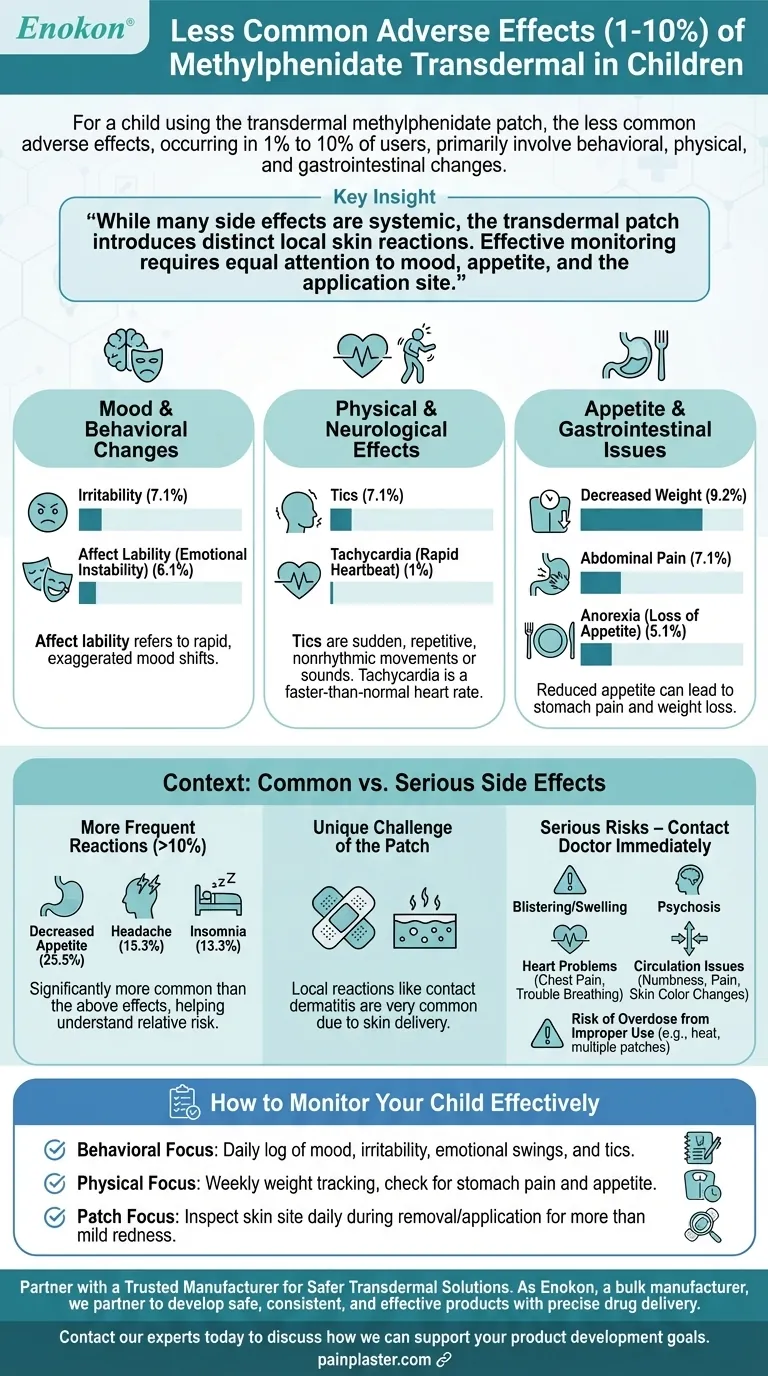
For a child using the transdermal methylphenidate patch, the less common adverse effects, occurring in 1% to 10% of users, primarily involve behavioral, physical, and gastrointestinal changes. These include decreased weight (9.2%), irritability (7.1%), tics (7.1%), abdominal pain (7.1%), emotional instability or "affect lability" (6.1%), anorexia (5.1%), and a rapid heartbeat or tachycardia (1%).
While many side effects of methylphenidate are systemic (affecting the whole body), the transdermal patch introduces a distinct and very common set of local skin reactions. Effective monitoring requires paying equal attention to your child's mood and appetite as well as the condition of their skin at the application site.

A Deeper Look at the Less Common Effects
To effectively monitor your child, it's helpful to understand what these less common effects look like in practice. They can be grouped into three main categories.
Mood and Behavioral Changes
The most frequent effects in this category are irritability (7.1%) and affect lability (6.1%). Affect lability refers to rapid and often exaggerated changes in mood, such as suddenly shifting from laughing to crying.
Physical and Neurological Effects
This group includes the emergence or worsening of tics (7.1%), which are sudden, repetitive, nonrhythmic movements or sounds. Also noted is tachycardia (1%), a faster-than-normal heart rate, which is a less frequent but important cardiovascular effect to be aware of.
Appetite and Gastrointestinal Issues
Many of the less common effects are related to digestion and nutrition. These include decreased weight (9.2%), abdominal pain (7.1%), and anorexia (5.1%), which is a clinical term for loss of appetite. These three are often linked, as a reduced appetite can lead to stomach pain and subsequent weight loss.
Context: Common vs. Serious Side Effects
Understanding the 1-10% incidence category is most useful when compared against what is more common and what is more dangerous.
The Most Frequent Reactions (>10%)
It's important to know that side effects like decreased appetite (25.5%), headache (15.3%), and insomnia (13.3%) are significantly more common than the effects listed above. This context helps in understanding the relative risk.
The Unique Challenge of the Patch
Because the medication is delivered through the skin, local reactions are very common. These can range from mild redness, itching, or bumps to more significant contact dermatitis at the application site.
Understanding the Trade-offs and Serious Risks
While most side effects are manageable, some require immediate medical attention. It's critical to distinguish between a common nuisance and a sign of a serious problem.
When to Contact a Doctor Immediately
Do not wait to seek medical advice if you observe signs of a serious reaction. These include severe skin reactions like blistering or swelling, signs of psychosis (hallucinations, paranoia), or symptoms of heart problems like chest pain or trouble breathing.
Signs of Circulation Issues
Pay close attention to your child's fingers and toes. Any numbness, pain, cold feeling, unexplained wounds, or changes in skin color can be signs of circulation problems and warrant a call to your doctor.
Risk of Overdose from Improper Use
A transdermal patch contains a large amount of medication designed to be released slowly. Improper use, such as applying a heat source over the patch or using more than one at a time, can cause the drug to be absorbed too quickly, leading to overdose toxicity.
How to Monitor Your Child Effectively
Your goal is to ensure the benefits of the medication outweigh the side effects. A systematic approach to observation is the best way to partner with your child's physician.
- If your primary focus is behavioral well-being: Keep a simple daily log of your child's mood, noting any unusual irritability, emotional swings, or the appearance of tics.
- If your primary focus is physical health: Track your child's weight weekly, ask about any stomach pain, and be aware of their appetite at mealtimes.
- If you are concerned about the patch itself: Inspect the skin site every day when removing the old patch and applying the new one, looking for anything more than mild, temporary redness.
Informed and consistent observation is the key to managing treatment safely and effectively.
Summary Table:
| Adverse Effect | Incidence Rate | Category |
|---|---|---|
| Decreased Weight | 9.2% | Appetite/GI |
| Irritability | 7.1% | Mood/Behavioral |
| Tics | 7.1% | Physical/Neurological |
| Abdominal Pain | 7.1% | Appetite/GI |
| Affect Lability | 6.1% | Mood/Behavioral |
| Anorexia (Loss of Appetite) | 5.1% | Appetite/GI |
| Tachycardia (Rapid Heartbeat) | 1% | Physical/Neurological |
Partner with a Trusted Manufacturer for Safer Transdermal Solutions
Effective ADHD treatment requires reliable medication delivery. As Enokon, a bulk manufacturer of high-quality transdermal patches, we partner with healthcare distributors and pharmaceutical brands to develop safe, consistent, and effective products. Our technical expertise ensures precise drug delivery, potentially minimizing side effects through superior patch design and controlled release.
Leverage our custom R&D capabilities to create or improve your transdermal treatments. Contact our experts today to discuss how we can support your product development goals.
Visual Guide
Related Products
- Menthol Gel Pain Relief Patch
- Silicone Scar Sheets Patch Transdermal Drug Patch
- Far Infrared Heat Pain Relief Patches Transdermal Patches
- Icy Hot Menthol Medicine Pain Relief Patch
- Mugwort Wormwood Pain Relief Patch for Neck Pain
People Also Ask
- How do pain relief patches compare to other pain relief methods? Discover Targeted, Long-Lasting Relief
- How effective are pain relief patches for muscle pain? Target Localized Pain with Transdermal Delivery
- Who should consult a healthcare professional before using pain relief patches? Ensure Your Safety with Medical Advice
- What are some common applications of pain relief patches? Effective Relief for Muscle & Joint Pain
- What are pain relief patches and how do they work? Discover Non-Invasive Pain Management














