
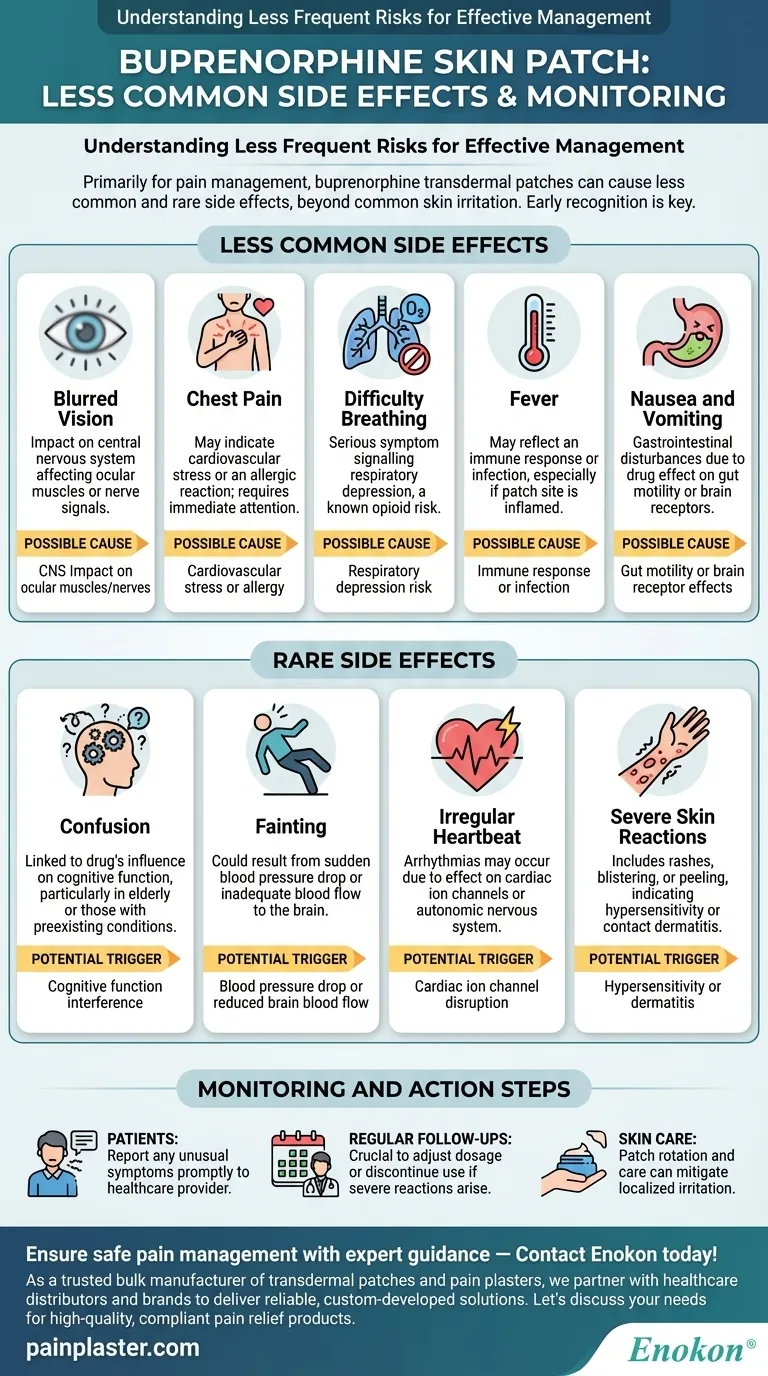
The buprenorphine skin patch, also known as the Buprenorphine Transdermal Patch, is primarily used for pain management but can cause a range of side effects. While common side effects like swelling and skin irritation are well-documented, less common and rare side effects are equally important to recognize. These include blurred vision, chest pain, difficulty breathing, fever, nausea, vomiting, confusion, fainting, irregular heartbeat, and severe skin reactions. Understanding these less frequent effects helps patients and healthcare providers monitor and manage potential risks effectively.

Key Points Explained:
-
Less Common Side Effects
- Blurred Vision: May occur due to the drug's impact on the central nervous system, affecting ocular muscles or nerve signals.
- Chest Pain: Could indicate cardiovascular stress or an allergic reaction, requiring immediate medical attention.
- Difficulty Breathing: A serious symptom that may signal respiratory depression, a known risk with opioid medications.
- Fever: May reflect an immune response or infection, especially if the patch site becomes inflamed.
- Nausea and Vomiting: Gastrointestinal disturbances are less frequent but can arise from the drug's effect on gut motility or brain receptors.
-
Rare Side Effects
- Confusion: Likely linked to the drug's influence on cognitive function, particularly in elderly patients or those with preexisting conditions.
- Fainting: Could result from a sudden drop in blood pressure or inadequate blood flow to the brain.
- Irregular Heartbeat: Arrhythmias may occur due to buprenorphine's effect on cardiac ion channels or autonomic nervous system.
- Severe Skin Reactions: Includes rashes, blistering, or peeling, which may indicate hypersensitivity or contact dermatitis.
-
Monitoring and Action Steps
- Patients should be advised to report any unusual symptoms promptly.
- Regular follow-ups with healthcare providers are crucial to adjust dosage or discontinue use if severe reactions arise.
- Patch rotation and skin care can mitigate localized irritation, but systemic side effects may require alternative pain management strategies.
By recognizing these less common and rare side effects, users of the Buprenorphine Transdermal Patch can better navigate its risks while benefiting from its therapeutic effects.
Summary Table:
| Less Common Side Effects | Possible Causes |
|---|---|
| Blurred Vision | CNS impact on ocular muscles/nerves |
| Chest Pain | Cardiovascular stress or allergy |
| Difficulty Breathing | Respiratory depression risk |
| Fever | Immune response or infection |
| Nausea/Vomiting | Gut motility or brain receptor effects |
| Rare Side Effects | Potential Triggers |
|---|---|
| Confusion | Cognitive function interference |
| Fainting | Blood pressure drop or reduced brain blood flow |
| Irregular Heartbeat | Cardiac ion channel disruption |
| Severe Skin Reactions | Hypersensitivity or dermatitis |
Ensure safe pain management with expert guidance — Contact Enokon today! As a trusted bulk manufacturer of transdermal patches and pain plasters, we partner with healthcare distributors and brands to deliver reliable, custom-developed solutions. Our technical expertise ensures optimal formulations while minimizing risks. Let’s discuss your needs for high-quality, compliant pain relief products.
Visual Guide
Related Products
- Menthol Gel Pain Relief Patch
- Icy Hot Menthol Medicine Pain Relief Patch
- Lidocaine Hydrogel Pain Relief Patch for Pain Relief
- Capsaicin Chili Medicated Pain Relief Patches
- Cooling Fever Patches Color Change Cold Fever Patch
People Also Ask
- How effective are pain relief patches for muscle pain? Target Localized Pain with Transdermal Delivery
- How do pain relief patches compare to other pain relief methods? Discover Targeted, Long-Lasting Relief
- Who should consult a healthcare professional before using pain relief patches? Ensure Your Safety with Medical Advice
- How do drug loading and permeation enhancers ensure patch efficacy? Achieve Superior Clinical-Grade Pain Relief.
- What are some common applications of pain relief patches? Effective Relief for Muscle & Joint Pain












