
The most common side effects associated with medicated patches are reactions at the application site, such as redness, itching, swelling, or a rash. Other general side effects can include headache, nausea, and trouble sleeping, but the specific symptoms you might experience depend almost entirely on the type of medication the patch delivers.
While nearly all patches can cause temporary skin irritation, the more significant side effects are determined by the active ingredient. Understanding whether your patch is for birth control, pain relief, or another purpose is critical to knowing what to expect.

The Universal Side Effect: Application Site Reactions
Almost any medication delivered through the skin has the potential to cause a local reaction. This is the body's response to the adhesive and the concentrated presence of the drug in one area.
Common and Mild Reactions
Most skin reactions are minor and temporary. You might notice mild itching, redness, burning, or soreness where the patch was placed. These symptoms typically resolve on their own within a few hours after the patch is removed.
When to Be Concerned
Pay closer attention if the skin reaction is severe. Blistering, significant swelling, unusual pain, or a rash that doesn't go away are signs that you should consult your doctor.
Side Effects Depend Entirely on the Medication
Beyond skin irritation, the side effects are specific to the drug family. It's crucial to identify what kind of patch you are using.
Hormonal Patches (e.g., Birth Control)
These patches release hormones like estrogen and progestin. Common side effects often mimic early pregnancy symptoms and tend to decrease after two or three months of use.
These may include:
- Nausea
- Headaches
- Breast soreness or discomfort
- Changes in your period, including spotting or irregular bleeding
- Mood changes
Stimulant Patches (e.g., for ADHD)
Often used for children and adolescents, these patches can affect appetite and sleep.
- For children (ages 6-12): Common effects are decreased appetite, trouble sleeping, nausea, weight loss, and mood changes.
- For teens (ages 13-17): Similar effects are seen, including decreased appetite, trouble sleeping, nausea, and dizziness.
Pain Relief Patches (e.g., NSAID, Lidocaine)
The side effects of pain relief patches vary significantly based on the active ingredient.
- NSAID patches (like diclofenac) can carry risks similar to oral NSAIDs, such as stomach bleeding or cardiovascular events, though the risk may be lower.
- Lidocaine patches are generally well-tolerated but can trigger allergic reactions in some individuals.
Understanding the Trade-offs and Serious Risks
It is vital to distinguish between common, manageable side effects and the signs of a serious problem.
High-Risk Medications (e.g., Fentanyl)
Some patches contain powerful opioids like fentanyl and carry severe risks. The most dangerous side effect is overdose, with symptoms including confusion, extreme drowsiness, and slowed or stopped breathing. These patches must be used exactly as prescribed.
Allergic Reactions
While rare, a serious allergic reaction is possible with any patch. Seek immediate medical help if you experience a widespread rash, severe dizziness, swelling of the face or throat, or have trouble breathing.
How to Manage and When to Act
Knowing how to respond to side effects is key to using a patch safely and effectively.
- If your primary focus is managing mild skin irritation: Rotate the application site with each new patch and ensure the skin is clean and dry before applying.
- If you are using a hormonal patch and experiencing nausea or headaches: Remember that these effects often fade after the first couple of months, but speak to your doctor if they persist or are severe.
- If you are concerned about a child's decreased appetite or sleep issues from a stimulant patch: Discuss these side effects with their pediatrician to find management strategies.
- If you experience any severe symptoms like blistering, unusual pain, vision changes, or signs of an allergic reaction: Remove the patch immediately and seek medical attention.
Being informed about potential side effects empowers you to use your medication safely and manage your health proactively.
Summary Table:
| Patch Type | Common Side Effects |
|---|---|
| All Patches | Redness, itching, rash at application site |
| Hormonal (e.g., Birth Control) | Nausea, headaches, breast soreness, mood changes |
| Stimulant (e.g., ADHD) | Decreased appetite, trouble sleeping, nausea |
| Pain Relief (e.g., NSAID, Lidocaine) | Stomach issues (NSAID), allergic reactions (Lidocaine) |
Partner with Enokon for Safe and Effective Transdermal Patch Solutions
Understanding potential side effects is a critical part of medication safety. As a bulk manufacturer of reliable transdermal patches and pain plasters, Enokon partners with healthcare and pharma distributors and brands to mitigate risks through superior product design and development.
Our technical expertise ensures precise drug delivery and high-quality materials to minimize common issues like skin irritation. We offer custom R&D to tailor formulations to your specific therapeutic needs and target patient populations.
Let’s develop a safer, more effective patch together. Contact our experts today to discuss your custom project requirements.
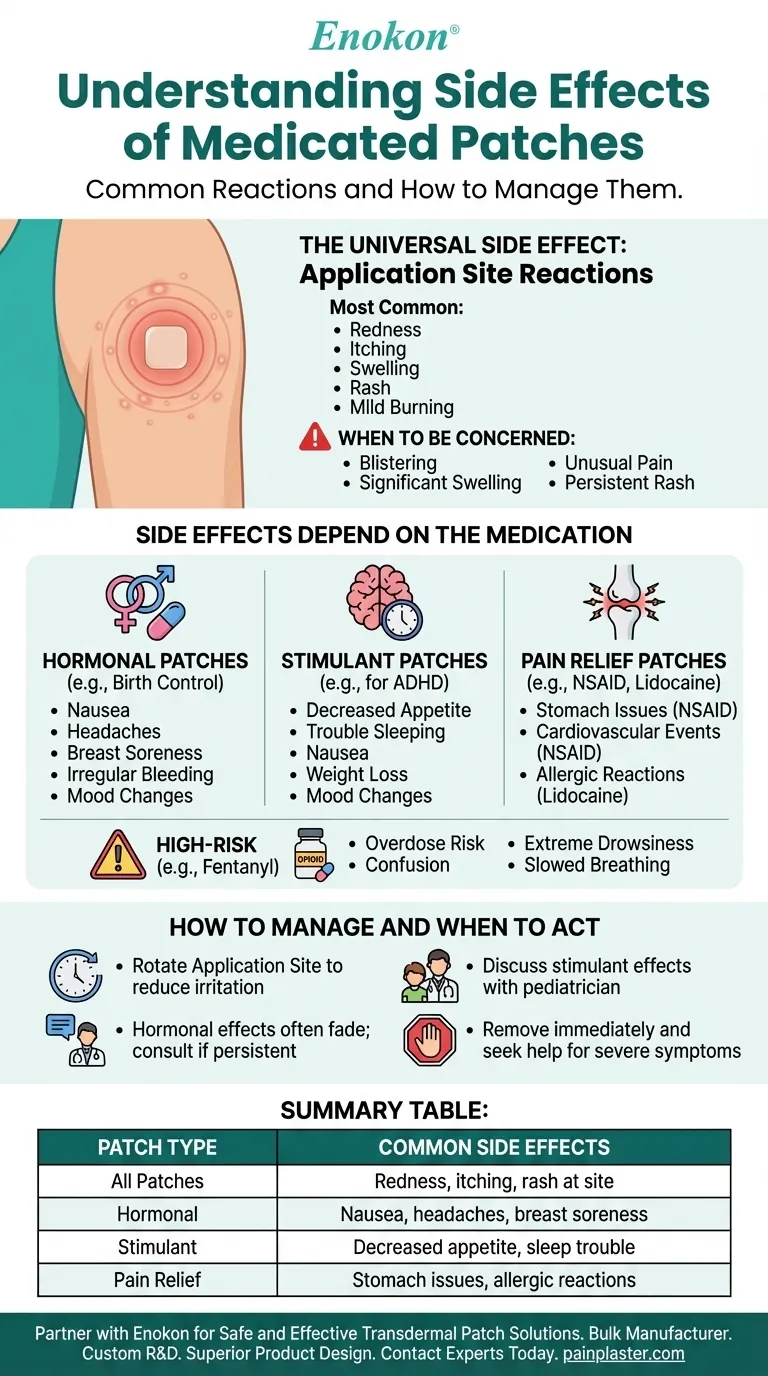
Visual Guide
Related Products
- Far Infrared Heat Pain Relief Patches Transdermal Patches
- Icy Hot Menthol Medicine Pain Relief Patch
- Silicone Scar Sheets Patch Transdermal Drug Patch
- Menthol Gel Pain Relief Patch
- Mugwort Wormwood Pain Relief Patch for Neck Pain
People Also Ask
- Why is the selection of matrix materials critical when developing customized transdermal patches? Optimize Efficacy
- What are the physical impacts of external heat exposure on the performance and safety of transdermal patches? - Guide
- What role does a skin tolerance scoring system play in the safety evaluation of transdermal patches? Key Safety Metrics
- What are the clinical advantages of local transdermal delivery systems? Unlock Safer, More Effective Pain Relief Solutions
- How does high-purity far-infrared ceramic powder contribute to the efficacy of far-infrared physical therapy patches?



















