
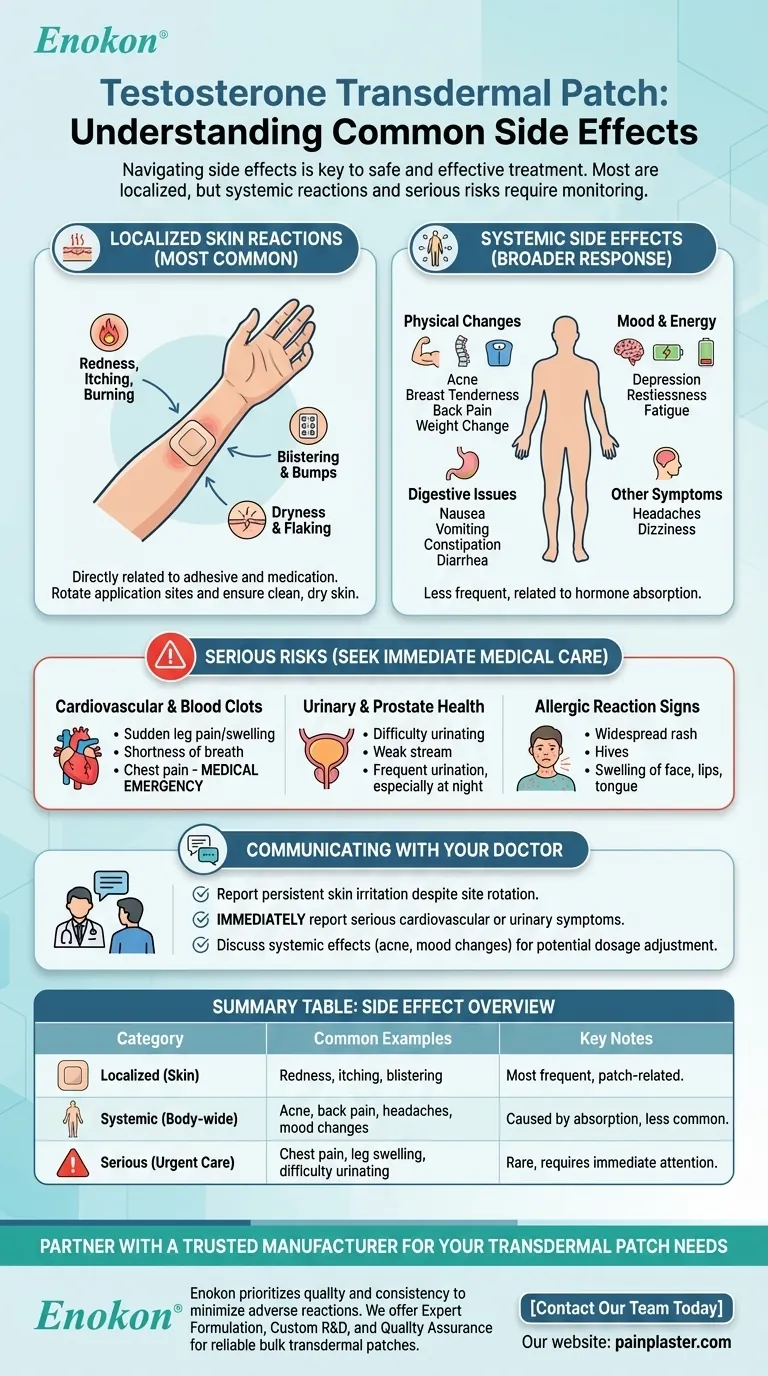
The most common side effects of the testosterone transdermal patch are overwhelmingly related to the application site. You can expect to experience some degree of redness, itching, irritation, burning, or even blistering where the patch is placed. Other frequently reported side effects include back pain, headaches, and acne.
While minor skin irritation is very common and often manageable, the core challenge is distinguishing these localized effects from less common but more serious systemic side effects that require a doctor's attention.

Unpacking the Two Types of Side Effects
When using a testosterone patch, your body can react in two distinct ways: locally at the patch site and systemically as the hormone enters your bloodstream. Understanding this difference is key to managing your treatment effectively.
Localized Skin Reactions: The Primary Concern
Because the patch adheres directly to your skin for an extended period, localized reactions are the most frequently reported issue. The adhesive and the medication can both cause irritation.
Common skin reactions include:
- Redness, itching, or a burning feeling
- Blistering or the formation of small bumps
- Dryness, flaking, or hardening of the skin
These effects are typically confined to the area directly under and around the patch.
Systemic Side Effects: The Body's Broader Response
Once testosterone is absorbed into your body, it can cause effects unrelated to the application site. These are less frequent than skin irritation but are important to monitor.
Common systemic effects may include:
- Physical Changes: Acne, enlarged or tender breasts, back pain, and changes in weight.
- Mood and Energy: Feelings of depression, restlessness, or fatigue.
- Digestive Issues: Nausea, vomiting, constipation, or diarrhea.
- Other Symptoms: Headaches and dizziness.
Understanding the Less Common but More Serious Risks
While most side effects are mild, it is critical to be aware of the signs of more severe complications. These are rare but require immediate medical intervention. Trust is built on understanding both the benefits and the potential downsides of any treatment.
Cardiovascular and Blood Clot Risks
Testosterone therapy can increase the risk of blood clots and cardiovascular events in some individuals.
Be alert for symptoms such as sudden leg pain or swelling (especially in one leg), shortness of breath, or chest pain. These are medical emergencies.
Urinary and Prostate Health
Testosterone can affect the prostate. Report any new or worsening urinary symptoms to your doctor.
Key signs to watch for include difficulty urinating, a weak stream, or frequent urination, especially at night.
Signs of an Allergic Reaction
A true allergic reaction goes beyond simple irritation and requires immediate attention. Symptoms can include widespread rash, hives, or swelling of the face, lips, or tongue.
Making the Right Choice with Your Doctor
Navigating side effects is a crucial part of your treatment journey. Open communication with your healthcare provider ensures you can manage them safely.
- If your primary focus is managing minor skin irritation: Be diligent about rotating the application site with each new patch and ensure your skin is completely clean and dry beforehand.
- If your primary concern is monitoring for serious health risks: Immediately report any symptoms like chest pain, shortness of breath, sudden leg swelling, or difficulty urinating to your doctor.
- If you are experiencing systemic effects like acne or mood changes: Discuss these with your provider, as they may signal that your dosage or treatment plan needs adjustment.
Understanding these potential effects empowers you to use your treatment safely and effectively in partnership with your healthcare provider.
Summary Table:
| Side Effect Category | Common Examples | Key Notes |
|---|---|---|
| Localized (Skin) | Redness, itching, burning, blistering | Most frequent issue; related to patch adhesive/medication. |
| Systemic (Body-wide) | Acne, back pain, headaches, mood changes | Caused by hormone absorption; less common than skin reactions. |
| Serious (Seek Immediate Care) | Chest pain, shortness of breath, leg swelling, difficulty urinating | Rare but require urgent medical attention. |
Partner with a Trusted Manufacturer for Your Transdermal Patch Needs
Navigating side effects is crucial for patient safety and product success. At Enokon, we understand that the quality and consistency of the patch itself are fundamental to minimizing adverse reactions like skin irritation.
As a bulk manufacturer of reliable transdermal patches and pain plasters for healthcare and pharmaceutical distributors and brands, we offer:
- Expert Formulation: Our technical expertise ensures patches are designed for optimal drug delivery and skin compatibility.
- Custom R&D: We work with you to develop patches that meet specific therapeutic goals while prioritizing patient comfort and safety.
- Quality Assurance: Rigorous manufacturing standards to deliver consistent, high-quality products you can trust.
Let us help you develop a safer, more effective transdermal solution. Contact our team today to discuss your custom patch requirements.
Visual Guide
Related Products
- Silicone Scar Sheets Patch Transdermal Drug Patch
- Far Infrared Heat Pain Relief Patches Transdermal Patches
- Menthol Gel Pain Relief Patch
- Icy Hot Menthol Medicine Pain Relief Patch
- Cooling Fever Patches Color Change Cold Fever Patch
People Also Ask
- What role does a silicone-based transdermal delivery system play in Parkinson's? Enhancing Early-Stage Patient Care
- How is the long-term skin tolerance of silicone-based transdermal patches evaluated in clinical settings? R&D and Safety
- Why is a polarizing microscope used to evaluate the long-term stability of transdermal drug patches? Ensure Efficacy.
- What are common adverse effects of transdermal drug delivery? Risks & Prevention Tips
- What are the advantages of transdermal drug patches? Optimize Medication Delivery with Patches







