
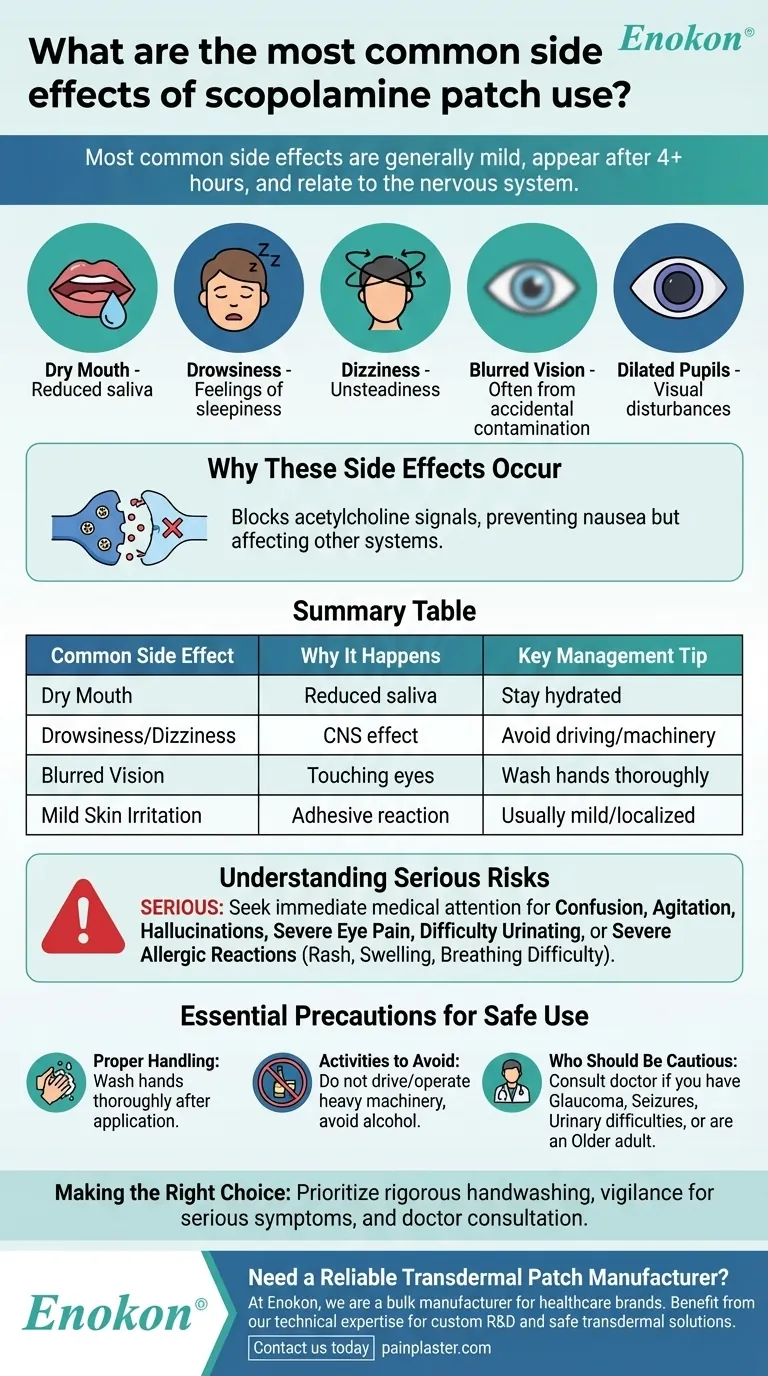
The most common side effects of the scopolamine patch are generally mild and relate to the medication's intended effect on the body's nervous system. These include dry mouth, drowsiness, dizziness, blurred vision, and dilated pupils. These symptoms typically appear at least four hours after application and can sometimes persist for a short period even after the patch is removed.
While the most prevalent side effects of the scopolamine patch are manageable, safe use hinges on understanding proper handling to prevent vision issues and recognizing the rare but serious symptoms that require immediate medical attention.

Why These Side Effects Occur
Scopolamine works by blocking signals from a neurotransmitter called acetylcholine. This action helps prevent the nausea and vomiting associated with motion sickness, but it also affects other systems in the body, leading to the common side effects.
Dry Mouth
Scopolamine reduces the production of saliva, leading to a sensation of dryness in the mouth. This is one ofthe most frequently reported side effects.
Drowsiness and Dizziness
By acting on the central nervous system, the medication can cause feelings of sleepiness and unsteadiness. This is why caution is advised with activities that require alertness.
Blurred Vision and Dilated Pupils
These visual disturbances are a direct effect of the medication. However, they are often caused or worsened by accidental contamination when you touch the patch and then touch your eyes without first washing your hands thoroughly.
Mild Skin Irritation
Some users may experience redness or itching at the application site. This is typically a mild and localized reaction to the patch adhesive or the medication itself.
Understanding the Trade-offs and Serious Risks
While most users experience only mild effects, it's critical to be aware of the potential for more severe reactions. Your ability to distinguish between a common inconvenience and a serious problem is key to using the patch safely.
Distinguishing Common from Serious Symptoms
Serious side effects are rare but require you to remove the patch and contact a doctor immediately.
Pay close attention to symptoms such as confusion, agitation, hallucinations, severe eye pain, or difficulty urinating.
When to Seek Immediate Medical Attention
An allergic reaction is also a serious risk. Seek emergency help if you experience a rash, severe itching, swelling (especially of the face or throat), or difficulty breathing.
Lingering Effects
Because scopolamine is absorbed into your bloodstream over time, its effects can last even after you remove the patch. Be aware that drowsiness or blurred vision may not resolve instantly.
Essential Precautions for Safe Use
Proper handling and an awareness of your activities are the most effective ways to minimize side effects and ensure your safety.
Proper Application and Handling
Always wash your hands thoroughly with soap and water after handling the patch. Apply it to a clean, dry, hairless area of skin behind the ear. Never cut the patch, and if it falls off, replace it with a fresh one behind the other ear.
Activities to Avoid
Do not drive or operate heavy machinery until you know how the patch affects you. You should also avoid or limit alcohol consumption, as it can significantly increase drowsiness and dizziness.
Who Should Be Cautious
Before using the patch, inform your doctor of any medical conditions, especially glaucoma, seizures, or urinary difficulties. Older adults may be more sensitive to the side effects and should consult their physician before use.
Making the Right Choice for Your Goal
Your approach to using the scopolamine patch should be guided by your primary concern, whether it's managing mild side effects or ensuring overall safety.
- If your primary focus is minimizing common side effects: Prioritize rigorous handwashing after application to prevent eye contamination and stay well-hydrated to manage dry mouth.
- If your primary focus is ensuring overall safety: Be vigilant for rare but serious symptoms like confusion or hallucinations, and completely avoid alcohol and driving while using the patch.
- If your primary focus is using the patch with a pre-existing condition: A thorough discussion with your doctor about your health history, particularly regarding glaucoma or urinary issues, is non-negotiable.
Understanding how to use the scopolamine patch correctly empowers you to manage its effects and benefit from its intended purpose safely.
Summary Table:
| Common Side Effect | Why It Happens | Key Management Tip |
|---|---|---|
| Dry Mouth | Reduced saliva production. | Stay hydrated. |
| Drowsiness/Dizziness | Effect on the central nervous system. | Avoid driving or operating machinery. |
| Blurred Vision | Medication effect; often from touching eyes after handling patch. | Wash hands thoroughly after application. |
| Mild Skin Irritation | Reaction to patch adhesive or medication. | Usually mild and localized to application site. |
Need a Reliable Transdermal Patch Manufacturer?
Understanding side effects is crucial for patient safety. At Enokon, we are a bulk manufacturer of reliable transdermal patches and pain plasters for healthcare and pharmaceutical distributors and brands.
Benefit from our technical expertise for custom R&D and development to create safe, effective transdermal solutions.
Contact us today to discuss your project requirements!
Visual Guide
Related Products
- Asthma Cough and Pain Relief Patch for Adults and Kids
- Lidocaine Hydrogel Pain Relief Patch for Pain Relief
- Menthol Gel Pain Relief Patch
- Icy Hot Menthol Medicine Pain Relief Patch
- Capsaicin Chili Medicated Pain Relief Patches
People Also Ask
- What role do natural ingredients and acupoint stimulation play in a cough relief patch? Synergistic Relief Explained
- What are the key benefits of using the cough relief patch? Soothe Your Cough with Targeted, Non-Oral Relief
- How does the cough relief patch provide targeted relief? Direct, Soothing Comfort for Coughs & Chest Congestion
- What makes the cough relief patch a convenient option for managing coughs? A Mess-Free, On-the-Go Solution
- Can pregnant women use pain relief patches? Your Essential Guide to Safe Pain Management



















