
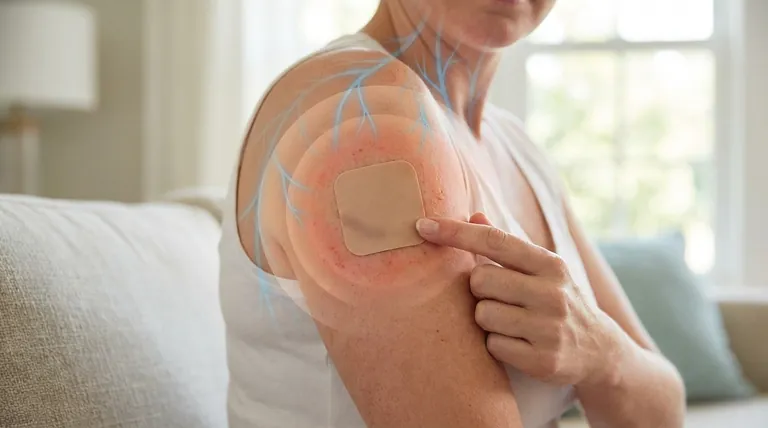
By far, the most common side effect of the transdermal patch is a localized skin reaction at the application site. This can include redness, itching, or general irritation. However, the patch is simply a delivery system, and the specific medication it contains will determine the other potential systemic side effects, which can range from nausea and headaches to weight changes and restlessness.
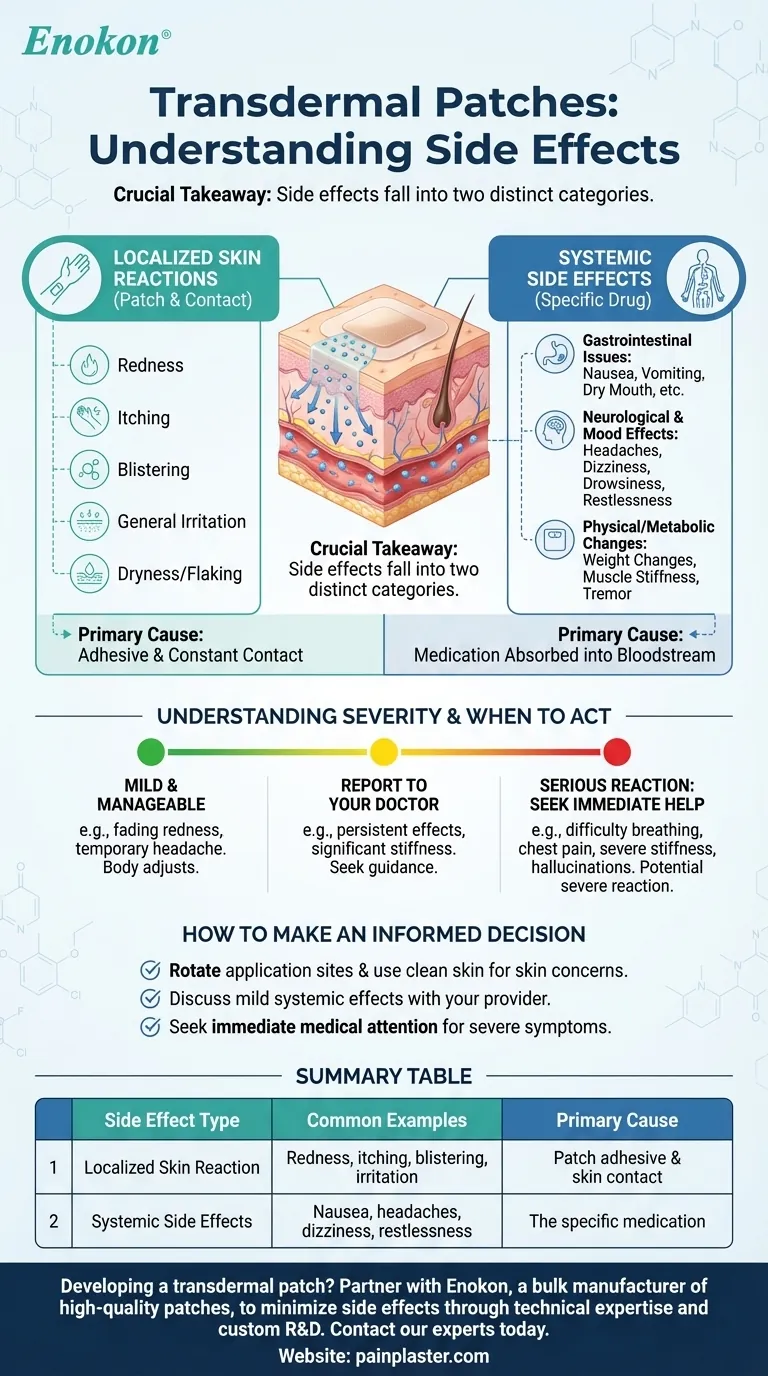
The crucial takeaway is that side effects fall into two distinct categories: localized reactions caused by the patch itself and systemic effects caused by the specific drug being absorbed into your bloodstream. Understanding this distinction is key to managing them effectively.
The Two Primary Types of Side Effects
When using a transdermal patch, it's helpful to separate the effects of the patch from the effects of the medication it delivers.
Localized Skin Reactions
The patch's adhesive and its constant contact with your skin are the primary causes of local side effects. These are typically mild and confined to the area where the patch is worn.
Common reactions include redness, itching, blistering, or general irritation. In some cases, you might notice dryness, flaking, or even a hardening of the skin after removing the patch.
Systemic Side Effects from the Medication
Once the medication passes through your skin and into your bloodstream, it circulates throughout your body. These systemic side effects are determined entirely by the type of drug in the patch.
Common systemic effects can be grouped into several categories:
- Gastrointestinal Issues: These frequently include nausea, vomiting, dry mouth, constipation, diarrhea, or heartburn.
- Neurological and Mood Effects: You may experience headaches, dizziness, drowsiness, restlessness, or difficulty sleeping.
- Physical or Metabolic Changes: Effects like weight gain or loss, muscle stiffness, tremor, and breast tenderness are also reported with certain medications.
Understanding the Severity and When to Act
Not all side effects are equal. It's critical to distinguish between what is a minor inconvenience and what requires medical attention.
Mild and Manageable Effects
Many common side effects, such as mild skin redness that fades after removing the patch or a temporary headache, are often not a cause for alarm. The body frequently adjusts to a new medication, and these effects may lessen over time.
Side Effects to Report to Your Doctor
If any side effect becomes persistent or particularly bothersome, you should contact your healthcare provider. This includes ongoing nausea, significant muscle stiffness, or skin irritation that doesn't resolve. Your doctor can provide guidance on management or determine if a change is needed.
Signs of a Serious Reaction
While rare, some side effects require immediate medical attention. These are signs of a potentially severe reaction to the medication.
Seek help immediately if you experience difficulty breathing or swallowing, chest pain, severe muscle stiffness, hallucinations, agitation, fever, or swelling of the face, throat, or tongue.
How to Make an Informed Decision
Your approach to managing side effects should be proactive and guided by your specific goals and concerns.
- If your primary concern is skin irritation: Ensure you are rotating application sites with each new patch and applying it to clean, dry, and lotion-free skin.
- If you are experiencing mild systemic effects (like nausea or dizziness): Discuss these with your healthcare provider, as they may subside over time or be manageable with simple adjustments.
- If you experience any severe or alarming symptoms: Do not wait. Seek immediate medical attention, as this could indicate a serious or allergic reaction.
Ultimately, open communication with your healthcare provider is the most effective tool for ensuring your treatment is both safe and successful.
Summary Table:
| Side Effect Type | Common Examples | Primary Cause |
|---|---|---|
| Localized Skin Reaction | Redness, itching, blistering, irritation | Patch adhesive & skin contact |
| Systemic Side Effects | Nausea, headaches, dizziness, restlessness | The specific medication in the patch |
Are you a healthcare or pharma brand developing a transdermal patch? Minimize side effects and maximize patient comfort with a reliable manufacturing partner. Enokon is a bulk manufacturer of high-quality, reliable transdermal patches and pain plasters. Benefit from our technical expertise for custom R&D and development to create a superior product. Contact our experts today to discuss your project.
Visual Guide
Related Products
- Far Infrared Heat Pain Relief Patches Transdermal Patches
- Silicone Scar Sheets Patch Transdermal Drug Patch
- Icy Hot Menthol Medicine Pain Relief Patch
- Menthol Gel Pain Relief Patch
- Mugwort Wormwood Pain Relief Patch for Neck Pain
People Also Ask
- Why is the selection of matrix materials critical when developing customized transdermal patches? Optimize Efficacy
- What are the physical impacts of external heat exposure on the performance and safety of transdermal patches? - Guide
- What role does a skin tolerance scoring system play in the safety evaluation of transdermal patches? Key Safety Metrics
- What are the clinical advantages of local transdermal delivery systems? Unlock Safer, More Effective Pain Relief Solutions
- How does high-purity far-infrared ceramic powder contribute to the efficacy of far-infrared physical therapy patches?



















