
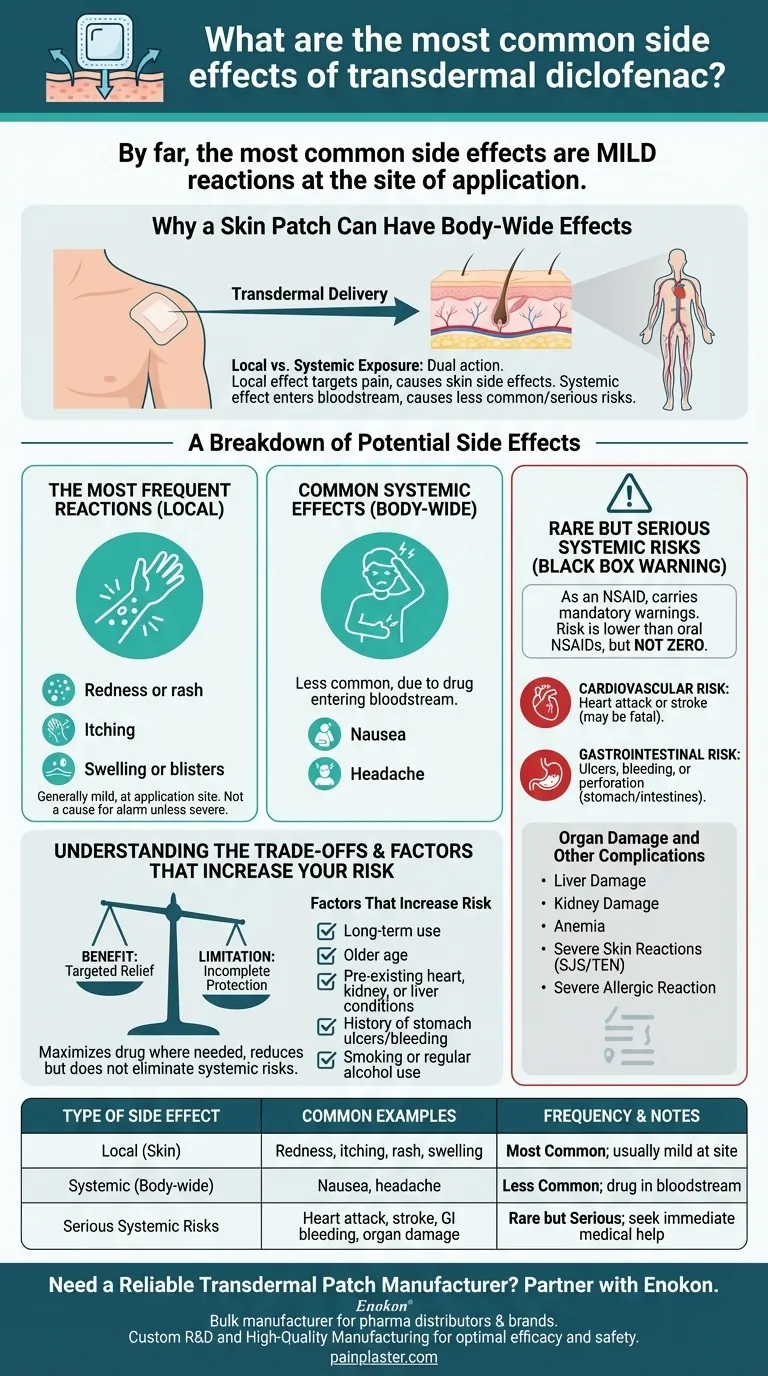
By far, the most common side effects of transdermal diclofenac are mild reactions at the site of application, such as redness, itching, or swelling. Some people may also experience systemic effects like nausea or a headache, as a small amount of the medication is absorbed into the bloodstream.
While most reactions are localized to the skin, it is critical to understand that transdermal diclofenac is a nonsteroidal anti-inflammatory drug (NSAID). Because it enters your bloodstream, it carries the same serious (though less frequent) risks as oral NSAIDs, including potential cardiovascular and gastrointestinal complications.

Why a Skin Patch Can Have Body-Wide Effects
Understanding Transdermal Delivery
The term transdermal means the medication is designed to pass through the skin barrier to treat the tissue directly beneath it. This allows for a high concentration of the drug at the site of pain.
However, the process doesn't stop there. A portion of the active ingredient is also absorbed by small blood vessels in the skin and enters your systemic circulation.
Local vs. Systemic Exposure
This dual action is key. The local effect is what provides targeted pain relief and causes the common skin-related side effects.
The systemic effect, caused by the drug circulating throughout your body, is responsible for less common side effects like headaches and the much rarer, serious risks associated with all NSAIDs.
A Breakdown of Potential Side Effects
The Most Frequent Reactions
The vast majority of side effects are mild and occur directly where the patch or gel was applied. These are generally not a cause for alarm unless they are severe or persistent.
Common application site reactions include:
- Redness or rash
- Itching
- Swelling or blisters
Common Systemic Effects
Once the drug is in your bloodstream, it can affect other parts of your body. These effects are less common than skin reactions but are still frequently reported.
These include:
- Nausea
- Headache
Rare but Serious Systemic Risks
As an NSAID, transdermal diclofenac carries mandatory "black box" warnings from regulators about serious health risks. While the risk is lower than with oral versions, it is not zero.
Cardiovascular Risk
All NSAIDs can increase the risk of heart attack or stroke, which can occur without warning and may be fatal. This risk may be higher for individuals with pre-existing heart conditions or with long-term use.
Gastrointestinal Risk
NSAIDs may cause ulcers, bleeding, or holes (perforation) in the stomach or intestines. This risk is higher in older adults, those with a history of ulcers, or those who smoke or drink alcohol regularly.
Organ Damage and Other Complications
In rare cases, systemic exposure can lead to other serious issues. Seek immediate medical attention if you experience symptoms related to:
- Liver Damage: Yellowing skin/eyes, extreme tiredness, upper stomach pain.
- Kidney Damage: Unexplained weight gain or swelling in the limbs.
- Anemia: Pale skin, fast heartbeat, or unusual bleeding/bruising.
- Severe Skin Reactions: A rash with blisters or fever (signs of SJS/TEN).
- Severe Allergic Reaction: Hives, difficulty swallowing, or swelling of the face/throat.
Understanding the Trade-offs
The Benefit: Targeted Relief
The primary advantage of a transdermal NSAID is its ability to deliver pain relief directly to the source. This maximizes the drug's concentration where you need it and minimizes its concentration throughout the rest of your body.
The Limitation: Incomplete Protection
This targeted approach reduces but does not eliminate the risk of systemic side effects. You are still being exposed to an NSAID, and the potential for serious complications, while lower, remains.
Factors That Increase Your Risk
Your personal risk of experiencing serious side effects is not the same as everyone else's. Risk is known to be higher for individuals who:
- Use the medication for a long period.
- Are older in age.
- Have pre-existing heart, kidney, or liver conditions.
- Have a history of stomach ulcers or bleeding.
- Smoke or regularly consume alcohol.
Making the Right Choice for Your Situation
Before using transdermal diclofenac, have an open discussion with your doctor about your health history and the balance of benefits and risks.
- If your primary focus is short-term relief for localized pain: Watch for application site reactions and be aware that the risk of serious complications is low, but not zero.
- If you have a history of heart, kidney, or stomach issues: A thorough risk assessment with your doctor is essential, as you are in a higher-risk category for serious complications.
- If you are using it and experience serious symptoms like chest pain, shortness of breath, or black stool: You must seek immediate medical attention as these can be signs of a life-threatening event.
Ultimately, using this medication safely depends on understanding that what you put on your skin can affect your entire body.
Summary Table:
| Type of Side Effect | Common Examples | Frequency & Notes |
|---|---|---|
| Local (Skin) | Redness, itching, rash, swelling, blisters | Most Common; usually mild and at application site |
| Systemic (Body-wide) | Nausea, headache | Less Common; due to drug entering bloodstream |
| Serious Systemic Risks | Heart attack, stroke, stomach/intestinal bleeding, kidney/liver damage | Rare but Serious; requires immediate medical attention |
Need a Reliable Transdermal Patch Manufacturer?
At Enokon, we are a bulk manufacturer of reliable transdermal patches and pain plasters for healthcare and pharma distributors and brands. We understand the critical balance between effective drug delivery and patient safety.
Partner with us to benefit from:
- Custom R&D and Development: Our technical expertise ensures your transdermal products are formulated for optimal efficacy and safety profiles.
- High-Quality Manufacturing: We produce patches with consistent, reliable drug release and minimal skin irritation.
Let's develop safe and effective transdermal solutions together. Contact our experts today to discuss your project requirements.
Visual Guide
Related Products
- Menthol Gel Pain Relief Patch
- Silicone Scar Sheets Patch Transdermal Drug Patch
- Icy Hot Menthol Medicine Pain Relief Patch
- Far Infrared Heat Pain Relief Patches Transdermal Patches
- Mugwort Wormwood Pain Relief Patch for Neck Pain
People Also Ask
- How effective are pain relief patches for muscle pain? Target Localized Pain with Transdermal Delivery
- How do pain relief patches compare to other pain relief methods? Discover Targeted, Long-Lasting Relief
- Who should consult a healthcare professional before using pain relief patches? Ensure Your Safety with Medical Advice
- What are pain relief patches and how do they work? Discover Non-Invasive Pain Management
- Can pregnant women use pain relief patches? Your Essential Guide to Safe Pain Management





