
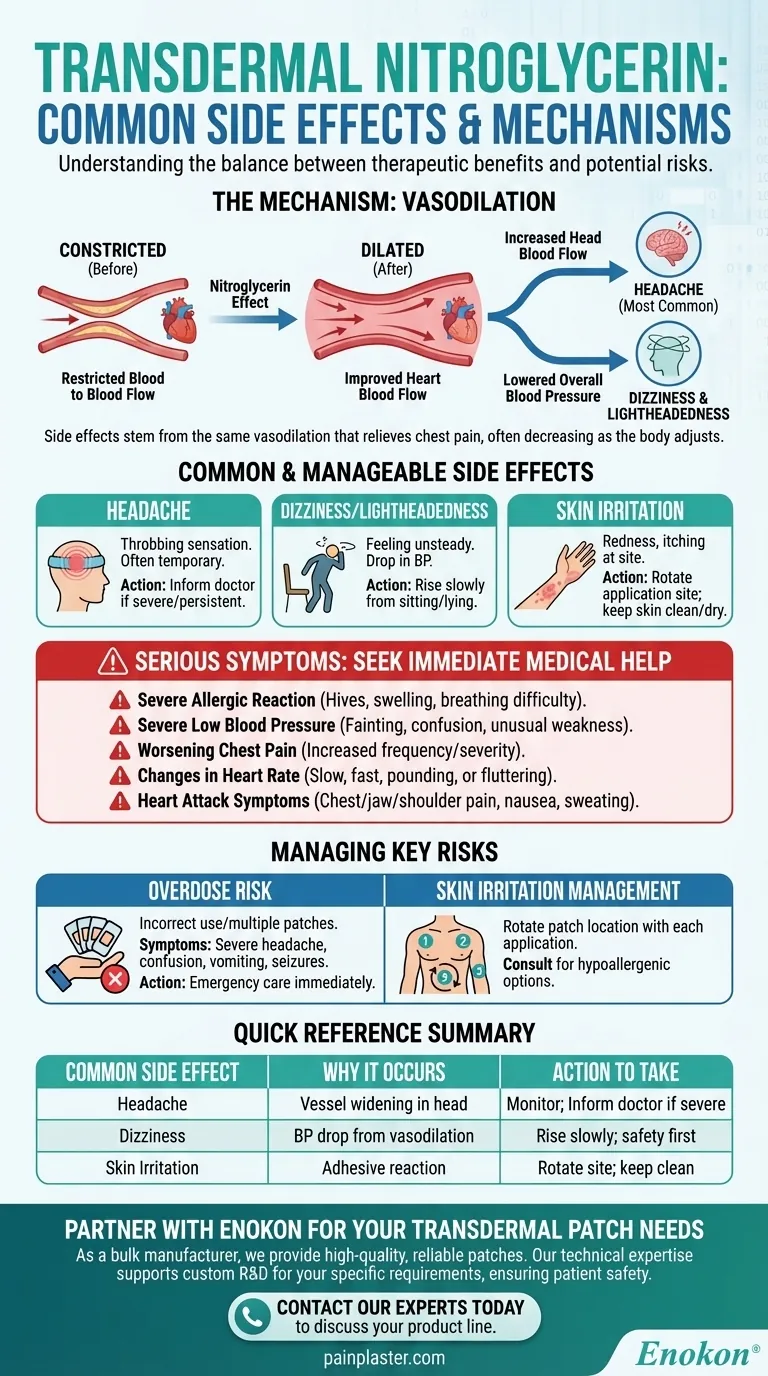
By far, the most common side effects of transdermal nitroglycerin are headache, lightheadedness, and dizziness. These effects are a direct result of the medication's primary function—widening your blood vessels to improve blood flow to the heart—and often decrease in intensity as your body adjusts to the treatment.
The key to understanding nitroglycerin side effects is recognizing they stem from the same mechanism that makes the medication effective. The widening of blood vessels that relieves chest pain can also lower overall blood pressure and increase blood flow in the head, leading directly to the most common reactions.

How Nitroglycerin Works and Why It Causes Side Effects
To understand the side effects, it is essential to first understand how the medication functions. This knowledge helps differentiate between an expected reaction and a sign of a more serious problem.
The Primary Effect: Vasodilation
Nitroglycerin is a vasodilator. Its job is to relax and widen the blood vessels throughout your body. This action reduces the workload on your heart and increases the supply of oxygen-rich blood to the heart muscle, which is how it prevents angina (chest pain).
The Direct Result: Headache and Dizziness
This system-wide vasodilation is not limited to the heart. When blood vessels in your head widen, it can cause a significant headache, which is the single most reported side effect.
Simultaneously, as vessels widen throughout your body, your overall blood pressure may drop. This decrease is what leads to feelings of dizziness or lightheadedness, especially when standing up too quickly.
Distinguishing Common vs. Serious Side Effects
While mild side effects are common, it is critical to recognize the signs of a more severe reaction that requires medical intervention.
Common and Generally Manageable Effects
These side effects are frequently experienced but are not typically a cause for alarm unless they are severe or persistent.
- Headache: Often described as a throbbing or pounding sensation.
- Mild Dizziness/Lightheadedness: A feeling of being unsteady or faint.
- Skin Irritation: Redness, itching, or a rash can occur at the patch application site.
Serious Symptoms Requiring Immediate Attention
If you experience any of the following, you should seek emergency medical help, as they can indicate a dangerous reaction.
- Severe Allergic Reaction: Symptoms include hives, difficulty breathing, or swelling of your face, lips, tongue, or throat.
- Signs of Severe Low Blood pressure: Fainting, unusual weakness or tiredness, and confusion.
- Worsening Chest Pain: An increase in the frequency or severity of your angina.
- Changes in Heart Rate: An unusually slow heart rate, or a fast, pounding, or fluttering heartbeat.
- Heart Attack Symptoms: Chest pain or pressure, pain spreading to your jaw or shoulder, nausea, and sweating.
Understanding the Key Trade-offs
Using transdermal nitroglycerin involves balancing its therapeutic benefits against potential risks and adverse effects. Awareness is key to using it safely.
The Risk of Overdose
An overdose can occur if a patch is not used correctly or if multiple patches are applied. Symptoms are severe and require immediate emergency care. They include:
- Severe, throbbing headache
- Confusion and fever
- Vision problems
- Vomiting or bloody diarrhea
- Cold, clammy skin
- Fainting or seizures
Managing Skin Irritation
The adhesive on the patch can irritate the skin. This is a common but manageable issue. Rotating the application site with each new patch and ensuring the skin is clean and dry can significantly minimize this problem.
How to Apply This to Your Situation
Navigating side effects is about understanding what is normal and knowing when to act. Always follow the specific guidance provided by your healthcare provider.
- If your primary issue is a mild headache or dizziness: This is often an expected side effect that may lessen over time, but you should inform your doctor if it is severe or does not go away.
- If you develop a skin rash or irritation: Rotate the patch location on your body with each application and consult your pharmacist or doctor about hypoallergenic options if it persists.
- If you experience any severe symptoms (like worsening chest pain, fainting, or swelling): Treat this as a medical emergency and seek immediate help.
Ultimately, using nitroglycerin safely and effectively relies on open communication with your healthcare provider about any and all side effects you experience.
Summary Table:
| Common Side Effects | Why They Occur | Action to Take |
|---|---|---|
| Headache | Widening of blood vessels in the head | Often decreases over time; inform doctor if severe. |
| Dizziness/Lightheadedness | Drop in blood pressure from vasodilation | Rise slowly from sitting/lying down. |
| Skin Irritation | Reaction to patch adhesive | Rotate application site; keep skin clean and dry. |
Partner with Enokon for Your Transdermal Patch Needs
As a bulk manufacturer of reliable transdermal patches and pain plasters, Enokon provides healthcare and pharmaceutical distributors and brands with high-quality, consistent products. Our technical expertise supports custom R&D and development to meet your specific requirements, ensuring patient safety and comfort.
Contact our experts today to discuss how we can support your product line with dependable transdermal solutions.
Visual Guide
Related Products
- Silicone Scar Sheets Patch Transdermal Drug Patch
- Far Infrared Heat Pain Relief Patches Transdermal Patches
- Menthol Gel Pain Relief Patch
- Icy Hot Menthol Medicine Pain Relief Patch
- Mugwort Wormwood Pain Relief Patch for Neck Pain
People Also Ask
- What role does a silicone-based transdermal delivery system play in Parkinson's? Enhancing Early-Stage Patient Care
- How is the long-term skin tolerance of silicone-based transdermal patches evaluated in clinical settings? R&D and Safety
- Why is a polarizing microscope used to evaluate the long-term stability of transdermal drug patches? Ensure Efficacy.
- What are common adverse effects of transdermal drug delivery? Risks & Prevention Tips
- What are the advantages of transdermal drug patches? Optimize Medication Delivery with Patches



















