
At their core, transdermal patches offer a superior method for delivering an Active Pharmaceutical Ingredient (API) by providing enhanced bioavailability, consistent dosing, and significantly improved patient convenience. This delivery system bypasses the digestive tract, allowing for a more direct and controlled release of medication into the bloodstream over an extended period.
The fundamental advantage of patch delivery is its ability to bypass the body's first-pass metabolism. This circumvents the digestive system and liver, leading to more predictable drug absorption and stable therapeutic levels that are difficult to achieve with oral medications.
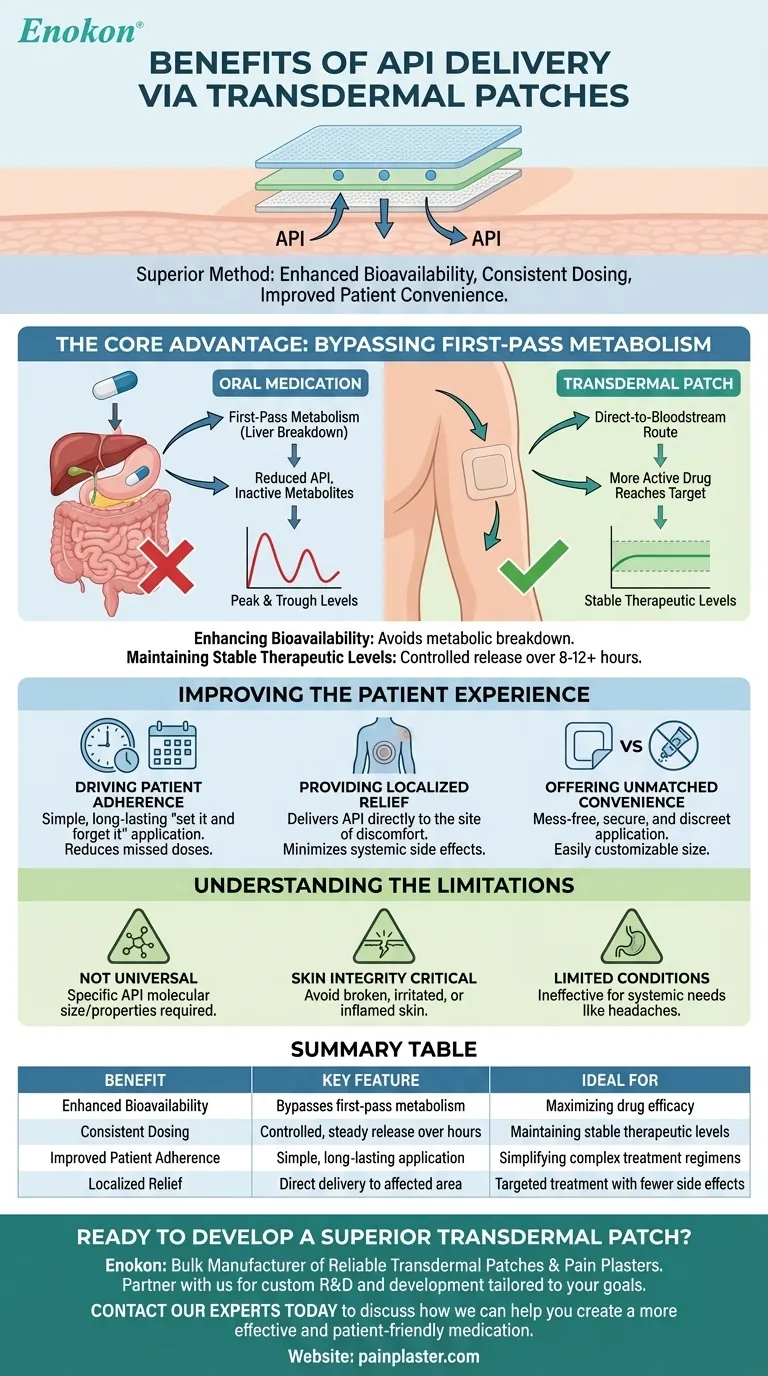
The Core Advantage: Bypassing First-Pass Metabolism
Enhancing Bioavailability
When a drug is taken orally, it must pass through the stomach and liver before entering the bloodstream. During this "first pass," a significant portion of the API is often metabolized and rendered inactive.
Transdermal patches apply the API directly to the skin, allowing it to be absorbed into the capillaries below. This direct-to-bloodstream route avoids the metabolic breakdown in the liver, meaning more of the active drug reaches its target.
Maintaining Stable Therapeutic Levels
Oral medications often create a "peak and trough" effect, where drug concentration spikes after a dose and falls before the next one is due.
Patches are engineered to release medication at a slow, controlled rate over many hours (e.g., 8-12 hours). This maintains a steady, consistent concentration of the drug in the body, keeping it within the optimal therapeutic window for longer periods.
Improving the Patient Experience
Driving Patient Adherence
Remembering to take multiple pills a day can be a significant challenge for many patients, leading to missed doses and suboptimal treatment outcomes.
A patch, which may only need to be applied once a day or even less frequently, dramatically simplifies the treatment regimen. This "set it and forget it" convenience leads to much higher rates of patient adherence.
Providing Localized Relief
For conditions like localized nerve pain, itching, or muscle soreness, flooding the entire system with medication is often inefficient.
Pain patches deliver the API directly to the site of discomfort. This provides targeted relief exactly where it's needed while minimizing systemic exposure and potential side effects.
Offering Unmatched Convenience
Unlike topical creams or gels, patches offer a mess-free application that is secure and discreet.
They adhere firmly to treatment areas like the back, arms, or legs and can often be cut to fit a specific size or shape, offering a highly practical and user-friendly experience.
Understanding the Limitations
Not a Universal Solution
Transdermal delivery is only suitable for certain types of APIs. The drug's molecular size and properties must allow it to penetrate the skin's outer layer effectively.
Skin Integrity is Critical
Patches should never be applied to broken skin, open wounds, severe burns, or inflamed areas. Doing so can lead to irritation, infection, or dangerously rapid absorption of the medication.
Limited to Specific Conditions
This delivery method is not appropriate for all ailments. For example, a patch is ineffective for treating an internal condition like a headache, where systemic circulation from an oral dose is required.
Making the Right Choice for Your Goal
When considering drug delivery systems, the choice of a transdermal patch is driven by specific therapeutic goals.
- If your primary focus is consistent dosing: A patch is ideal for maintaining stable drug levels and avoiding the peaks and troughs associated with oral medication.
- If your primary focus is patient adherence: A patch offers a simple, long-lasting application that significantly improves the likelihood a patient will follow their treatment plan.
- If your primary focus is localized treatment: A patch is an excellent choice for delivering targeted relief for pain or itching while minimizing systemic side effects.
Ultimately, choosing a transdermal patch empowers you to deliver medication more effectively, predictably, and conveniently.
Summary Table:
| Benefit | Key Feature | Ideal For |
|---|---|---|
| Enhanced Bioavailability | Bypasses first-pass metabolism | Maximizing drug efficacy |
| Consistent Dosing | Controlled, steady release over hours | Maintaining stable therapeutic levels |
| Improved Patient Adherence | Simple, long-lasting application | Simplifying complex treatment regimens |
| Localized Relief | Direct delivery to the affected area | Targeted treatment with fewer side effects |
Ready to develop a superior transdermal patch?
As Enokon, a bulk manufacturer of reliable transdermal patches and pain plasters, we partner with healthcare and pharma distributors and brands to bring these benefits to life. Our technical expertise ensures custom R&D and development tailored to your specific API and therapeutic goals.
Contact our experts today to discuss how we can help you create a more effective and patient-friendly medication.
Visual Guide
Related Products
- Far Infrared Heat Pain Relief Patches Transdermal Patches
- Silicone Scar Sheets Patch Transdermal Drug Patch
- Icy Hot Menthol Medicine Pain Relief Patch
- Menthol Gel Pain Relief Patch
- Mugwort Wormwood Pain Relief Patch for Neck Pain
People Also Ask
- Why is the selection of matrix materials critical when developing customized transdermal patches? Optimize Efficacy
- What are the physical impacts of external heat exposure on the performance and safety of transdermal patches? - Guide
- What role does a skin tolerance scoring system play in the safety evaluation of transdermal patches? Key Safety Metrics
- What are the clinical advantages of local transdermal delivery systems? Unlock Safer, More Effective Pain Relief Solutions
- How does high-purity far-infrared ceramic powder contribute to the efficacy of far-infrared physical therapy patches?



















