
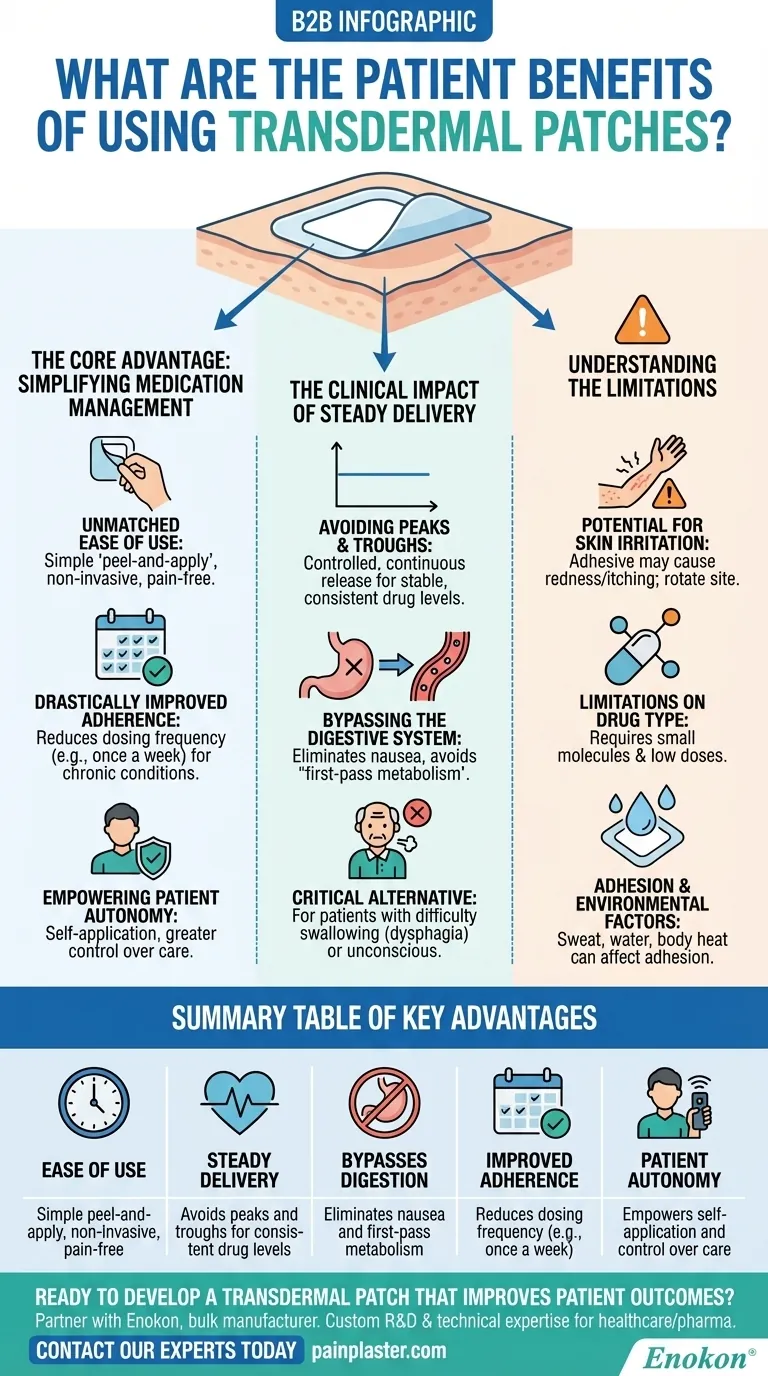
For patients, the primary benefits of transdermal patches are their exceptional ease of use, the steady and continuous delivery of medication, and the ability to bypass the digestive system. This unique combination makes them a non-invasive, pain-free alternative to injections or oral pills, significantly improving medication adherence for many chronic conditions.
The true value of a transdermal patch lies beyond simple convenience. By providing a stable, consistent dose of medication over days, it transforms treatment for chronic conditions, minimizing side effects and removing the daily burden of remembering to take a pill.
The Core Advantage: Simplifying Medication Management
The most immediate benefit of a transdermal patch is how seamlessly it integrates into a patient's life. This simplicity directly addresses one of the biggest challenges in medicine: patient adherence.
Unmatched Ease of Use
A transdermal patch is a simple "peel-and-apply" system. This makes it a non-invasive and completely pain-free method of drug delivery, ideal for patients with a fear of needles or challenges with dexterity.
Drastically Improved Adherence
Many patches are designed to be worn for several days, some for as long as a week. This significantly reduces the dosing frequency, making it far easier for patients to stick to their treatment plan, especially for chronic conditions like hypertension or hormone replacement therapy.
Empowering Patient Autonomy
Patients can typically apply the patches themselves without needing frequent visits to a healthcare provider. This user-friendly nature makes treatment accessible for people of all ages and promotes a greater sense of control over their own care.
The Clinical Impact of Steady Delivery
Transdermal delivery is not just about convenience; it fundamentally changes how a drug interacts with the body, leading to better clinical outcomes and fewer side effects.
Avoiding Peaks and Troughs
Oral medications often create a "peak and trough" effect, where drug levels in the blood spike after a dose and fall before the next one. A patch provides controlled, continuous release, maintaining a stable and consistent drug level for a more predictable therapeutic effect.
Bypassing the Digestive System
By absorbing medication through the skin, patches avoid the gastrointestinal tract entirely. This eliminates common side effects like nausea and stomach upset and prevents the drug from being broken down by the liver in a process called "first-pass metabolism," which can increase the drug's overall efficiency.
A Critical Alternative for Specific Patients
For patients who have difficulty swallowing pills (dysphagia), are unconscious, or are experiencing severe nausea, transdermal patches offer a vital alternative route for administering necessary medication.
Understanding the Limitations
While highly beneficial, transdermal patches are not a universal solution. It's important to recognize their inherent constraints.
Potential for Skin Irritation
The adhesive used to keep the patch in place can cause skin irritation, redness, or itching for some individuals. Rotating the application site is a common strategy to mitigate this.
Limitations on Drug Type
Only certain medications are suitable for transdermal delivery. The drug's molecules must be small enough to pass through the skin barrier effectively, and the required dose must be low enough to be delivered through a reasonably sized patch.
Adhesion and Environmental Factors
The patch must remain in full contact with the skin to work correctly. Excessive sweating, water from swimming or bathing, and body heat can sometimes affect adhesion and drug delivery rates.
Making the Right Choice for Your Treatment
Choosing a delivery method depends entirely on the medication, the condition being treated, and the patient's individual needs.
- If your primary focus is simplifying a complex daily regimen: The patch offers a "set-and-forget" approach that significantly improves long-term adherence.
- If your primary focus is avoiding digestive side effects or inconsistent dosing: The patch provides stable drug levels by delivering medication directly through the skin.
- If your primary focus is a non-invasive, pain-free delivery method: The patch is an excellent alternative for those with a fear of needles or difficulty swallowing pills.
Ultimately, transdermal technology empowers patients by making long-term treatment more manageable and effective.
Summary Table:
| Benefit | Key Advantage |
|---|---|
| Ease of Use | Simple peel-and-apply, non-invasive, pain-free application. |
| Improved Adherence | Reduces dosing frequency (e.g., once a week). |
| Steady Delivery | Avoids peaks and troughs for consistent drug levels. |
| Bypasses Digestion | Eliminates nausea and first-pass metabolism. |
| Patient Autonomy | Empowers self-application and control over care. |
Ready to develop a transdermal patch that improves patient outcomes? Partner with Enokon, a bulk manufacturer of reliable transdermal patches and pain plasters. We provide custom R&D and technical expertise for healthcare and pharma distributors and brands. Contact our experts today to discuss your project!
Visual Guide
Related Products
- Far Infrared Heat Pain Relief Patches Transdermal Patches
- Silicone Scar Sheets Patch Transdermal Drug Patch
- Icy Hot Menthol Medicine Pain Relief Patch
- Menthol Gel Pain Relief Patch
- Mugwort Wormwood Pain Relief Patch for Neck Pain
People Also Ask
- Why is the selection of matrix materials critical when developing customized transdermal patches? Optimize Efficacy
- What are the physical impacts of external heat exposure on the performance and safety of transdermal patches? - Guide
- What are the clinical advantages of local transdermal delivery systems? Unlock Safer, More Effective Pain Relief Solutions
- What role does a skin tolerance scoring system play in the safety evaluation of transdermal patches? Key Safety Metrics
- How does high-purity far-infrared ceramic powder contribute to the efficacy of far-infrared physical therapy patches?



















