
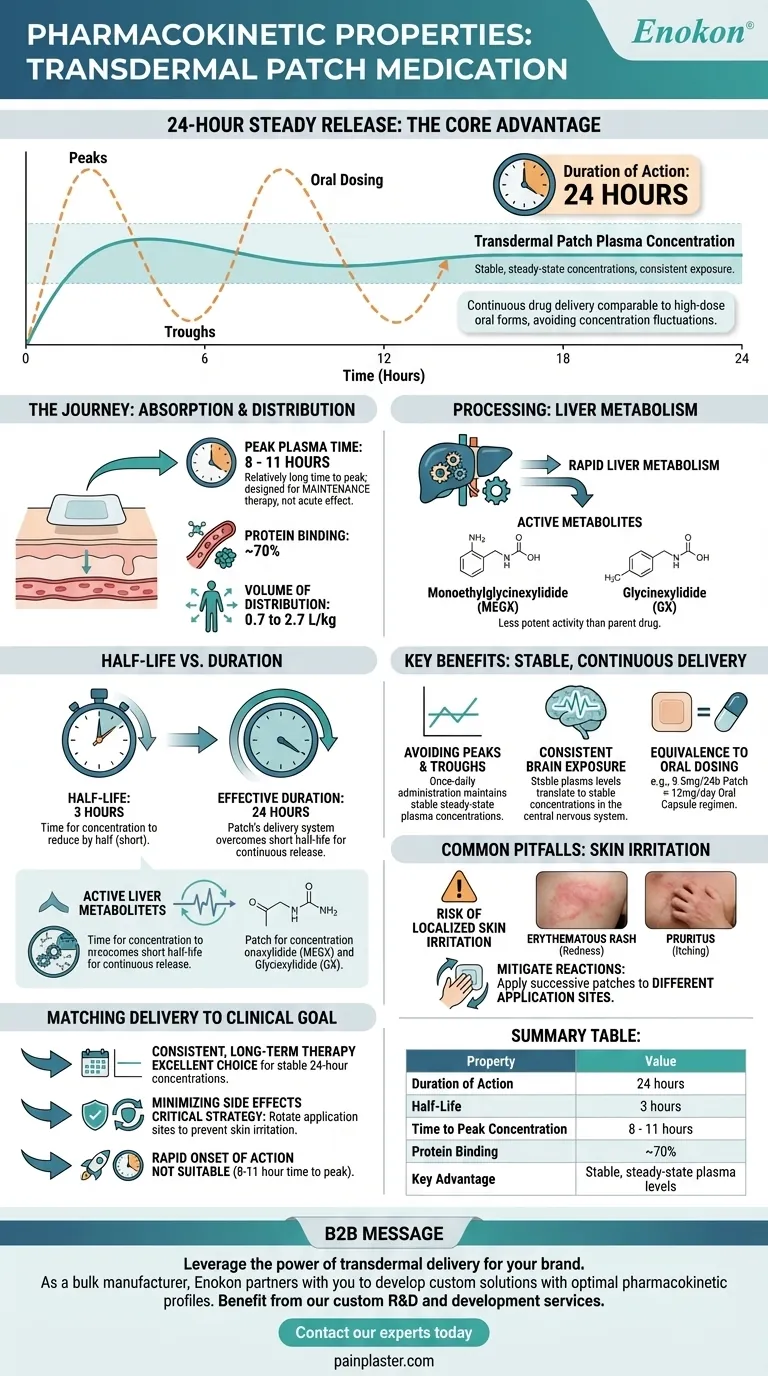
In its transdermal patch form, this medication is designed for prolonged, steady release. It has a duration of action of 24 hours, a half-life of 3 hours, and reaches its peak plasma concentration between 8 and 11 hours after application.
The core advantage of the transdermal patch is its ability to maintain stable, steady-state plasma concentrations over a 24-hour period, providing consistent drug exposure comparable to high-dose oral forms but without the same peaks and troughs.
The Journey of the Medication: Absorption and Distribution
Reaching Peak Concentration
The time it takes for the medication to reach its maximum concentration in the bloodstream (peak plasma time) is between 8 and 11 hours.
This relatively long time to peak indicates that the patch is designed for maintenance therapy, not for acute or immediate effect.
Binding and Distribution
Once absorbed, the drug is approximately 70% protein-bound in the plasma.
Its volume of distribution ranges from 0.7 to 2.7 L/kg, which describes how extensively the medication distributes throughout the body's tissues after absorption.
How the Body Processes the Medication
Liver Metabolism and Active Metabolites
The drug is metabolized rapidly by the liver.
This process creates active metabolites, such as monoethylglycinexylidide (MEGX) and glycinexylidide (GX). These metabolites have similar, though less potent, activity compared to the parent drug.
The Role of Half-Life vs. Duration
The medication has a relatively short half-life of 3 hours, which is the time it takes for the drug concentration in the body to reduce by half.
However, this short half-life is overcome by the patch's delivery system. The patch continuously releases the drug, which is what provides the effective 24-hour duration of action.
The Key Advantage: Stable, Continuous Delivery
Avoiding Peaks and Troughs
A key pharmacokinetic benefit of the patch is its ability to establish and maintain stable steady-state plasma concentrations throughout the day.
This continuous delivery, achieved with once-daily administration, avoids the concentration fluctuations often seen with oral dosing, which can be beneficial for both efficacy and tolerability.
Consistent Brain Exposure
Animal studies suggest that these stable plasma levels translate directly to stable concentrations in the brain.
For medications targeting the central nervous system, this consistent exposure is critical for a reliable therapeutic effect.
Equivalence to Oral Dosing
The transdermal patch can achieve a therapeutic exposure comparable to the maximum recommended oral doses. For example, a 9.5mg/24-hour patch provides a similar drug exposure over 24 hours as a 12mg/day oral capsule regimen.
Common Pitfalls to Avoid
Risk of Localized Skin Irritation
While generally well-tolerated, transdermal patches can cause localized side effects at the application site.
These effects can include an erythematous rash (redness) or pruritus (itching).
Mitigating Skin Reactions
These potential skin reactions can often be avoided. The key is to apply successive patches to different application sites, preventing continuous irritation to the same area of skin.
Matching the Delivery Method to the Clinical Goal
When considering the transdermal patch, its pharmacokinetic profile should align with your therapeutic objective.
- If your primary focus is consistent, long-term therapy: The patch is an excellent choice due to its ability to maintain stable 24-hour plasma concentrations.
- If your primary focus is minimizing side effects: Rotating the application site is a critical strategy to prevent localized skin irritation.
- If your primary focus is rapid onset of action: The patch is not suitable, as its 8-11 hour time to peak concentration is designed for steady maintenance, not acute needs.
Understanding this profile empowers you to leverage the unique advantages of transdermal delivery for the right clinical situation.
Summary Table:
| Property | Value |
|---|---|
| Duration of Action | 24 hours |
| Half-Life | 3 hours |
| Time to Peak Concentration | 8 - 11 hours |
| Protein Binding | ~70% |
| Key Advantage | Stable, steady-state plasma levels |
Leverage the power of transdermal delivery for your brand.
As a bulk manufacturer of reliable transdermal patches and pain plasters, Enokon partners with healthcare and pharmaceutical distributors and brands to develop custom solutions. Our technical expertise ensures your product achieves optimal pharmacokinetic profiles, like the stable 24-hour delivery described here.
Benefit from our custom R&D and development services to create a patch that meets your specific clinical goals.
Contact our experts today to discuss your project requirements.
Visual Guide
Related Products
- Far Infrared Heat Pain Relief Patches Transdermal Patches
- Icy Hot Menthol Medicine Pain Relief Patch
- Silicone Scar Sheets Patch Transdermal Drug Patch
- Menthol Gel Pain Relief Patch
- Mugwort Wormwood Pain Relief Patch for Neck Pain
People Also Ask
- Why is the selection of matrix materials critical when developing customized transdermal patches? Optimize Efficacy
- What are the physical impacts of external heat exposure on the performance and safety of transdermal patches? - Guide
- What are the clinical advantages of local transdermal delivery systems? Unlock Safer, More Effective Pain Relief Solutions
- What role does a skin tolerance scoring system play in the safety evaluation of transdermal patches? Key Safety Metrics
- How does high-purity far-infrared ceramic powder contribute to the efficacy of far-infrared physical therapy patches?



















