
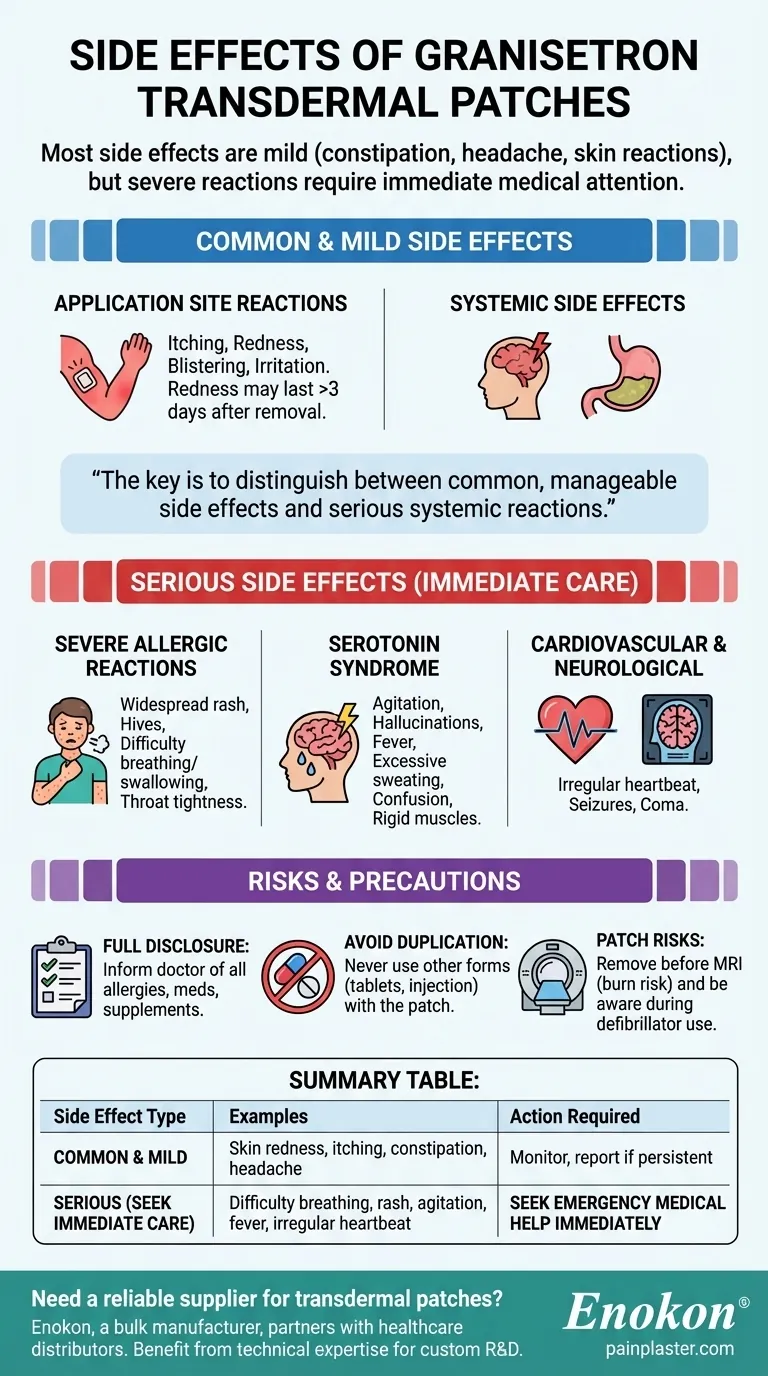
The most common side effects of the granisetron transdermal patch are constipation, headache, and skin reactions at the application site, such as redness or itching. While most side effects are mild, the patch can cause severe reactions, including signs of an allergic reaction or a rare condition called Serotonin Syndrome, which require immediate medical attention.
The key is to distinguish between common, manageable side effects like localized skin irritation and the warning signs of a serious systemic reaction. Understanding this difference is critical for using the patch safely and effectively.

Common and Expected Side Effects
The majority of side effects associated with the granisetron patch are mild and either resolve on their own or are easily managed. They typically fall into two categories.
Application Site Reactions
The most frequently reported issues occur directly where the patch is applied to the skin. These reactions are generally not severe.
You may experience itching, redness, blistering, or irritation. In some cases, redness may last for more than three days after the patch has been removed.
Systemic Side Effects
Because the medication is absorbed into your bloodstream, it can cause effects throughout the body.
The most common systemic side effects are constipation and headache. These are well-documented and should be discussed with your doctor if they become bothersome.
Serious Side Effects Requiring Immediate Attention
While rare, the granisetron patch can cause severe adverse reactions that demand immediate medical evaluation. Recognizing these symptoms is crucial for your safety.
Severe Allergic Reactions
An allergic reaction to the patch or its adhesive can be dangerous. Seek emergency help if you experience any of the following.
Symptoms include a widespread rash, hives, difficulty breathing or swallowing, tightness in the throat, or hoarseness.
Serotonin Syndrome Symptoms
Granisetron can increase serotonin levels, which can lead to a rare but life-threatening condition called Serotonin Syndrome, especially when taken with other specific medications.
Watch for a combination of symptoms like agitation, hallucinations, fever, excessive sweating, confusion, nausea, loss of coordination, or rigid, twitching muscles.
Cardiovascular and Neurological Events
The most severe potential side effects affect the heart and brain. These are medical emergencies.
Seek immediate help for an irregular heartbeat, seizures, or coma.
Understanding the Broader Risks and Precautions
Beyond the direct side effects of the medication, using a transdermal patch of any kind carries its own set of considerations. Being aware of these helps ensure safe and proper use.
The Importance of Full Disclosure
Before you even apply the first patch, your doctor needs a complete picture of your health to minimize risks.
Inform your doctor of any allergies to granisetron, other medications, or adhesives. You must also disclose all other drugs, supplements, and herbal products you are taking.
Avoiding Medication Duplication
It is critical to avoid taking too much of the active ingredient.
You should never use other forms of granisetron (tablets, liquid, or injection) while you are wearing the patch.
General Risks of Medicated Patches
The delivery system itself can pose risks in certain medical situations.
Patches with metallic backings have been known to cause burns during an MRI scan. There is also a risk of skin burns if a defibrillator is used over the patch site.
Making the Right Choice for Your Health
Your primary responsibility is to monitor your body's response and communicate clearly with your healthcare provider.
- If your primary concern is mild skin redness or constipation: These are common side effects; monitor them and report them to your doctor if they persist or worsen.
- If you develop a widespread rash, hives, or trouble breathing: This signals a potential allergic reaction, and you must seek emergency medical help immediately.
- If you suddenly feel confused, agitated, and have a high fever: These are potential signs of the rare but dangerous Serotonin Syndrome, which requires urgent medical care.
- Before you begin treatment: Ensure your doctor has a complete list of your allergies, medical conditions, and all medications you take to prevent dangerous interactions.
Being an informed and vigilant partner in your own healthcare is the most effective way to ensure a safe treatment outcome.
Summary Table:
| Side Effect Type | Common Examples | Action Required |
|---|---|---|
| Common & Mild | Skin redness, itching, constipation, headache | Monitor and report if persistent |
| Serious (Seek Immediate Care) | Difficulty breathing, widespread rash, agitation, fever, irregular heartbeat | Seek emergency medical help immediately |
Need a reliable supplier for granisetron or other transdermal patches?
As Enokon, a bulk manufacturer of reliable transdermal patches and pain plasters, we partner with healthcare and pharma distributors and brands. Benefit from our technical expertise for custom R&D and development to ensure the highest quality and safety standards for your products.
Contact our experts today to discuss your manufacturing needs.
Visual Guide
Related Products
- Far Infrared Heat Pain Relief Patches Transdermal Patches
- Silicone Scar Sheets Patch Transdermal Drug Patch
- Icy Hot Menthol Medicine Pain Relief Patch
- Menthol Gel Pain Relief Patch
- Mugwort Wormwood Pain Relief Patch for Neck Pain
People Also Ask
- Why is the selection of matrix materials critical when developing customized transdermal patches? Optimize Efficacy
- What are the physical impacts of external heat exposure on the performance and safety of transdermal patches? - Guide
- What role does a skin tolerance scoring system play in the safety evaluation of transdermal patches? Key Safety Metrics
- What are the clinical advantages of local transdermal delivery systems? Unlock Safer, More Effective Pain Relief Solutions
- How does high-purity far-infrared ceramic powder contribute to the efficacy of far-infrared physical therapy patches?











