
From a clinical standpoint, transdermal patches offer elderly patients significant advantages by improving medication adherence, providing steadier and more tolerable drug concentrations, and bypassing the gastrointestinal system. This makes them particularly effective for managing chronic conditions in patients who struggle with complex pill schedules, swallowing difficulties, or side effects from fluctuating drug levels.
The core value of transdermal patches for the elderly is not just convenience; it's a strategic clinical intervention. They directly counter the most common barriers to effective treatment in this population: polypharmacy, cognitive decline, and physiological sensitivities.

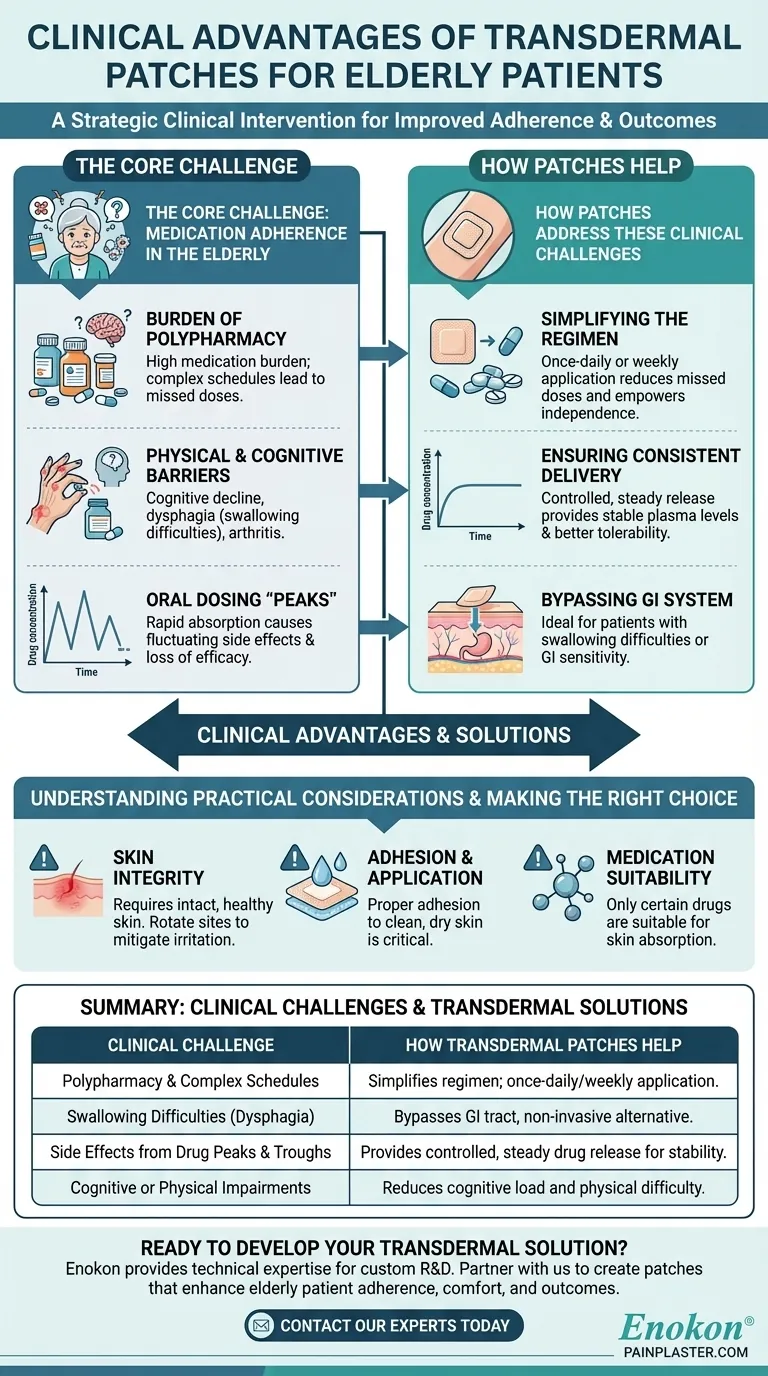
The Core Challenge: Medication Adherence in the Elderly
To understand the benefits of patches, we must first recognize the inherent difficulties many elderly patients face with traditional oral medications.
The Burden of Polypharmacy
Many older adults manage multiple chronic conditions, leading to a high medication burden, often called polypharmacy.
Keeping track of numerous pills, each with its own schedule and instructions, is a significant cognitive challenge that can easily lead to missed doses or errors.
Physical and Cognitive Barriers
Conditions like Alzheimer's or Parkinson's disease can impair the memory and routine required to follow a complex medication schedule.
Furthermore, physical difficulties such as dysphagia (trouble swallowing) can make taking pills difficult or even impossible, while conditions like arthritis can make opening pill bottles a painful task.
The Problem with Oral Dosing "Peaks"
Oral medications are absorbed into the bloodstream relatively quickly, creating a "peak" concentration, which then declines over time.
These fluctuations can cause more pronounced side effects at the peak and a loss of efficacy in the "trough" before the next dose. For an elderly patient with reduced liver or kidney function, metabolizing these peaks can be especially taxing.
How Patches Address These Clinical Challenges
Transdermal delivery systems are engineered to solve these specific problems, offering a more stable and user-friendly therapeutic approach.
Simplifying the Regimen
A single patch can replace multiple daily pills, often requiring application only once a day or even once a week.
This dramatically simplifies the medication regimen, reducing the risk of forgotten doses and accidental overdoses. It empowers patients with greater independence, as they can often manage application themselves.
Ensuring Consistent Drug Delivery
Transdermal patches are designed for controlled, steady drug release over an extended period.
This provides stable plasma concentrations, avoiding the peaks and troughs associated with oral dosing. The result is a more consistent therapeutic effect and a significant improvement in the drug's tolerability.
Bypassing the Gastrointestinal System
By delivering medication directly through the skin, patches completely avoid the gastrointestinal tract.
This is a critical advantage for patients with swallowing difficulties or those who experience GI side effects like nausea or stomach irritation from their medications.
Understanding the Practical Considerations
While highly beneficial, transdermal patches are not a universal solution. An objective assessment requires acknowledging their limitations.
Skin Integrity and Irritation
The patient's skin must be intact and healthy for the patch to be effective and safe. Patches cannot be applied over cuts, sores, or irritated areas.
Some patients may experience localized skin reactions, such as redness or itching, at the application site. Rotating the location of the patch can often mitigate this issue.
Adhesion and Application
Proper adhesion is critical for correct dosing. Issues like excessive sweating, lotion or oil on the skin, or improper application can cause a patch to loosen or fall off.
Caregivers and patients must be properly instructed on how to apply the patch to clean, dry skin to ensure it remains secure for the entire dosing period.
Medication Suitability
Only certain medications can be formulated for transdermal delivery. The drug's molecular size and properties must allow it to be absorbed effectively through the skin barrier to reach the bloodstream.
Making the Right Choice for Your Patient
The decision to use a transdermal patch should be based on a clear understanding of the primary clinical challenge you aim to solve.
- If the primary challenge is cognitive decline or a complex pill schedule: The patch offers a powerful advantage through its simplified, long-acting nature.
- If the patient has swallowing difficulties or GI sensitivity: Transdermal delivery is an ideal non-invasive alternative that bypasses these issues entirely.
- If managing side effects from dose fluctuations is the main concern: The steady drug concentration provided by a patch can significantly improve tolerability and patient comfort.
Ultimately, transdermal systems offer a valuable clinical tool for aligning treatment with the unique physiological and practical needs of elderly patients.
Summary Table:
| Clinical Challenge | How Transdermal Patches Help |
|---|---|
| Polypharmacy & Complex Schedules | Simplifies regimen; replaces multiple daily pills with once-daily/weekly application. |
| Swallowing Difficulties (Dysphagia) | Bypasses the gastrointestinal tract entirely, offering a non-invasive alternative. |
| Side Effects from Drug Peaks & Troughs | Provides controlled, steady drug release for stable plasma concentrations and better tolerability. |
| Cognitive or Physical Impairments | Reduces cognitive load and physical difficulty associated with managing pill bottles. |
Ready to develop a transdermal solution that meets the specific needs of your elderly patients?
As a bulk manufacturer of reliable transdermal patches and pain plasters, Enokon provides the technical expertise for custom R&D and development. We partner with healthcare and pharma distributors and brands to create patches that enhance patient adherence, comfort, and outcomes.
Contact our experts today to discuss how we can support your product development goals.
Visual Guide
Related Products
- Far Infrared Heat Pain Relief Patches Transdermal Patches
- Silicone Scar Sheets Patch Transdermal Drug Patch
- Icy Hot Menthol Medicine Pain Relief Patch
- Menthol Gel Pain Relief Patch
- Mugwort Wormwood Pain Relief Patch for Neck Pain
People Also Ask
- Why is the selection of matrix materials critical when developing customized transdermal patches? Optimize Efficacy
- What are the physical impacts of external heat exposure on the performance and safety of transdermal patches? - Guide
- What are the clinical advantages of local transdermal delivery systems? Unlock Safer, More Effective Pain Relief Solutions
- What role does a skin tolerance scoring system play in the safety evaluation of transdermal patches? Key Safety Metrics
- How does high-purity far-infrared ceramic powder contribute to the efficacy of far-infrared physical therapy patches?



















