
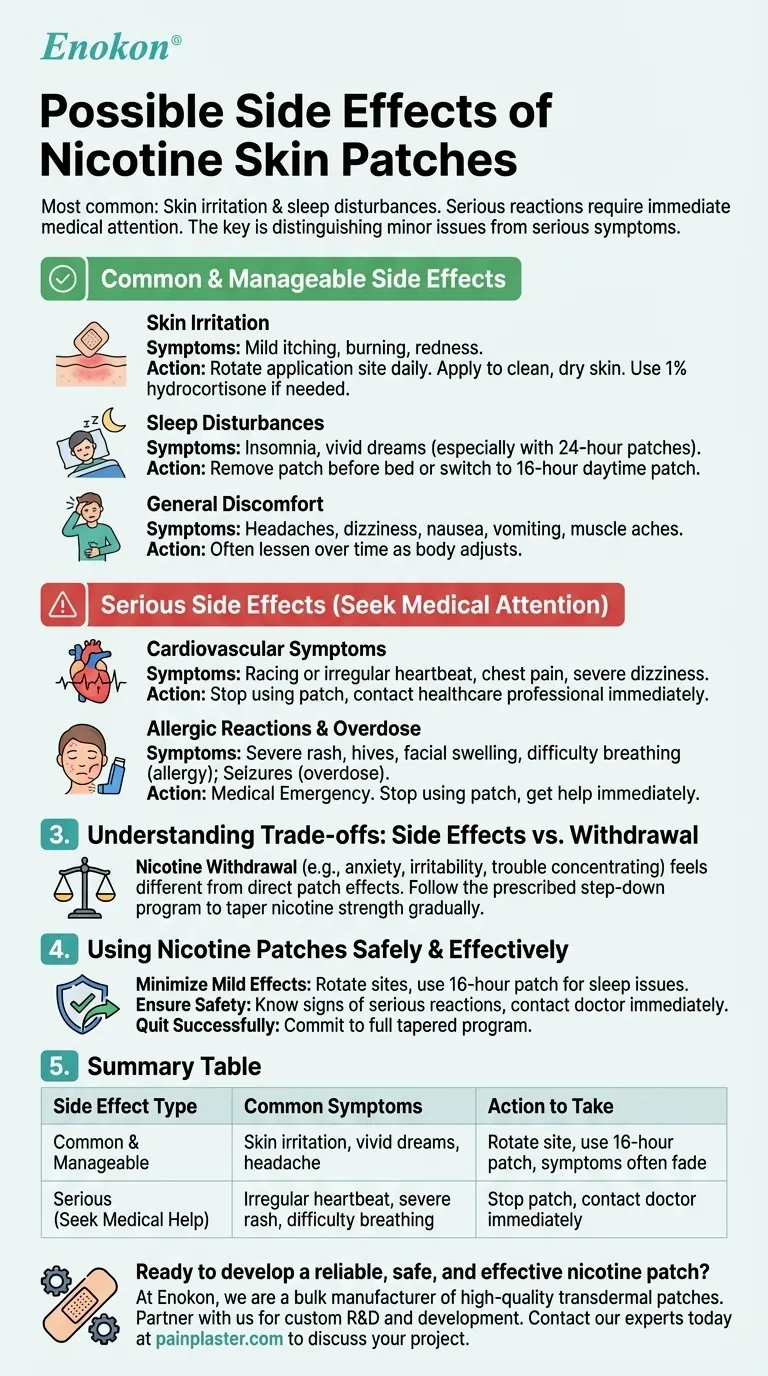
In short, the most common side effects of nicotine skin patches are skin irritation at the application site and sleep disturbances, such as insomnia or vivid dreams. Other possible effects include headache, dizziness, and nausea, while more serious reactions like an irregular heartbeat or severe rash require immediate medical attention.
The key to using nicotine patches successfully is understanding that most side effects are mild and can be managed with simple adjustments. The real challenge is distinguishing these minor issues from the rare but serious symptoms that require you to stop using the patch and consult a doctor.
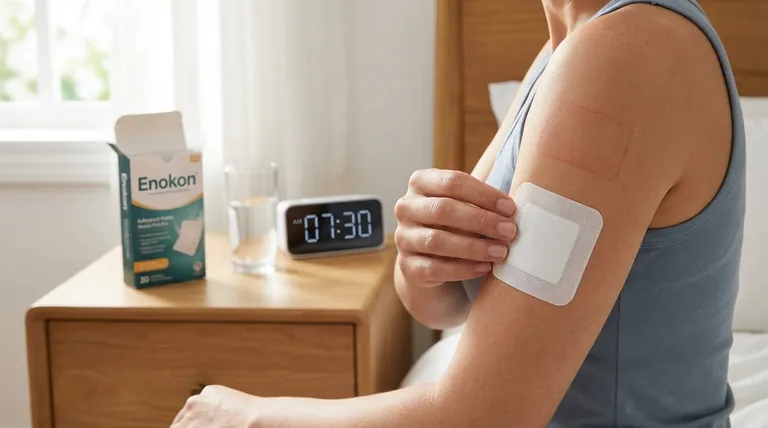
Common and Manageable Side Effects
Most people who experience side effects find them to be minor and temporary. These are typically a direct result of the nicotine entering your system or the patch's adhesive interacting with your skin.
Skin Irritation
The most frequently reported issue is a reaction at the application site. This can include mild itching, burning, or redness.
These symptoms usually resolve within a few days. The best way to prevent significant irritation is to rotate the patch location each day, applying it to a new area of clean, dry skin. If irritation persists, a 1% hydrocortisone cream may help.
Sleep Disturbances
Nicotine is a stimulant, which can interfere with your sleep patterns, especially with 24-hour patches.
Many users report experiencing insomnia or unusually vivid dreams. If this becomes a problem, you can remove the patch before bed or switch to a 16-hour patch designed only for daytime use.
General Discomfort
As your body adjusts to the nicotine dose, you may experience some systemic effects.
These can include headaches, dizziness, nausea, vomiting, or muscle aches. These symptoms often lessen over time as you continue with the treatment program.
Serious Side Effects Requiring Medical Attention
While rare, some side effects indicate a more serious reaction. You should stop using the patch and contact a healthcare professional immediately if you experience any of the following.
Cardiovascular Symptoms
Nicotine can affect your heart and blood pressure. Pay close attention to any significant changes.
Symptoms to watch for include a racing or irregular heartbeat, chest pain, or severe dizziness. These are not normal and require immediate medical evaluation.
Allergic Reactions and Overdose
A severe reaction to the patch itself or receiving too much nicotine is a medical emergency.
Look for signs of a severe allergic reaction, such as a widespread rash, hives, swelling of the face or mouth, or difficulty breathing. Signs of an overdose can include seizures and require emergency help.
Understanding the Trade-offs: Side Effects vs. Withdrawal
It can be difficult to tell whether your symptoms are a side effect of the patch or a symptom of nicotine withdrawal.
Distinguishing the Symptoms
Nicotine withdrawal itself can cause anxiety, irritability, trouble concentrating, and insomnia. These often feel different from the direct physical effects of the patch, like skin irritation or a racing heart.
The Importance of the Program
Following the full, prescribed treatment program is critical. The patches are designed to be used in a step-down approach, gradually decreasing the nicotine strength over time.
This tapering process helps your body adjust slowly, minimizing both withdrawal symptoms and the risk of side effects from the patch itself.
Using Nicotine Patches Safely and Effectively
Your goal is to quit smoking with minimal discomfort and risk. Tailoring your approach to the patch can help you achieve this.
- If your primary focus is minimizing mild side effects: Be diligent about rotating the patch site daily and consider using a 16-hour patch if you experience sleep problems.
- If your primary focus is ensuring safety: Know the signs of a serious reaction (irregular heartbeat, severe rash, difficulty breathing) and be prepared to contact your doctor immediately.
- If your primary focus is successfully quitting for good: Commit to the full, tapered program as directed by the product label or your doctor to manage withdrawal effectively.
By understanding how to manage potential side effects, you can use the nicotine patch as a powerful and safe tool in your journey to quit smoking.
Summary Table:
| Side Effect Type | Common Symptoms | Action to Take |
|---|---|---|
| Common & Manageable | Skin irritation, vivid dreams, headache | Rotate application site, use 16-hour patch, symptoms often fade |
| Serious (Seek Medical Help) | Irregular heartbeat, severe rash, difficulty breathing | Stop using patch and contact a doctor immediately |
Ready to develop a reliable, safe, and effective nicotine patch or other transdermal product?
At Enokon, we are a bulk manufacturer of high-quality transdermal patches and pain plasters. We partner with healthcare and pharmaceutical distributors and brands to bring their product visions to life.
Benefit from our technical expertise for custom R&D and development. Whether you're looking to minimize side effects, ensure consistent dosing, or create a unique formulation, our team can help you design and manufacture a superior product for your customers.
Contact our experts today to discuss your project needs and discover how we can support your success.
Visual Guide
Related Products
- Capsaicin Chili Medicated Pain Relief Patches
- Icy Hot Menthol Medicine Pain Relief Patch
- Menthol Gel Pain Relief Patch
- Lidocaine Hydrogel Pain Relief Patch for Pain Relief
- Silicone Scar Sheets Patch Transdermal Drug Patch
People Also Ask
- What conditions can capsaicin creams and patches help relieve? Find Targeted Pain Relief for Nerves & Joints
- What conditions should be reported to a care team before using capsaicin patches? Ensure Safe Pain Relief
- What are the uses of nonprescription capsaicin patches? Natural Pain Relief for Muscles & Joints
- What should be avoided while using capsaicin patches? Essential Safety Tips for Effective Pain Relief
- What special precautions should be followed before using capsaicin patches? Ensure Safe and Effective Pain Relief




