
The most common side effects of the oxybutynin patch are skin reactions at the application site, such as redness and itching, and classic anticholinergic effects like dry mouth, constipation, and dizziness. While most side effects are mild, it is critical to be aware of rare but serious reactions, including sudden vision changes or difficulty urinating.
The oxybutynin patch is designed to minimize some systemic side effects seen with the oral pill, but it introduces a trade-off: localized skin irritation is its most frequent and specific complication. Understanding the difference between local reactions and more serious systemic warnings is key to using it safely.

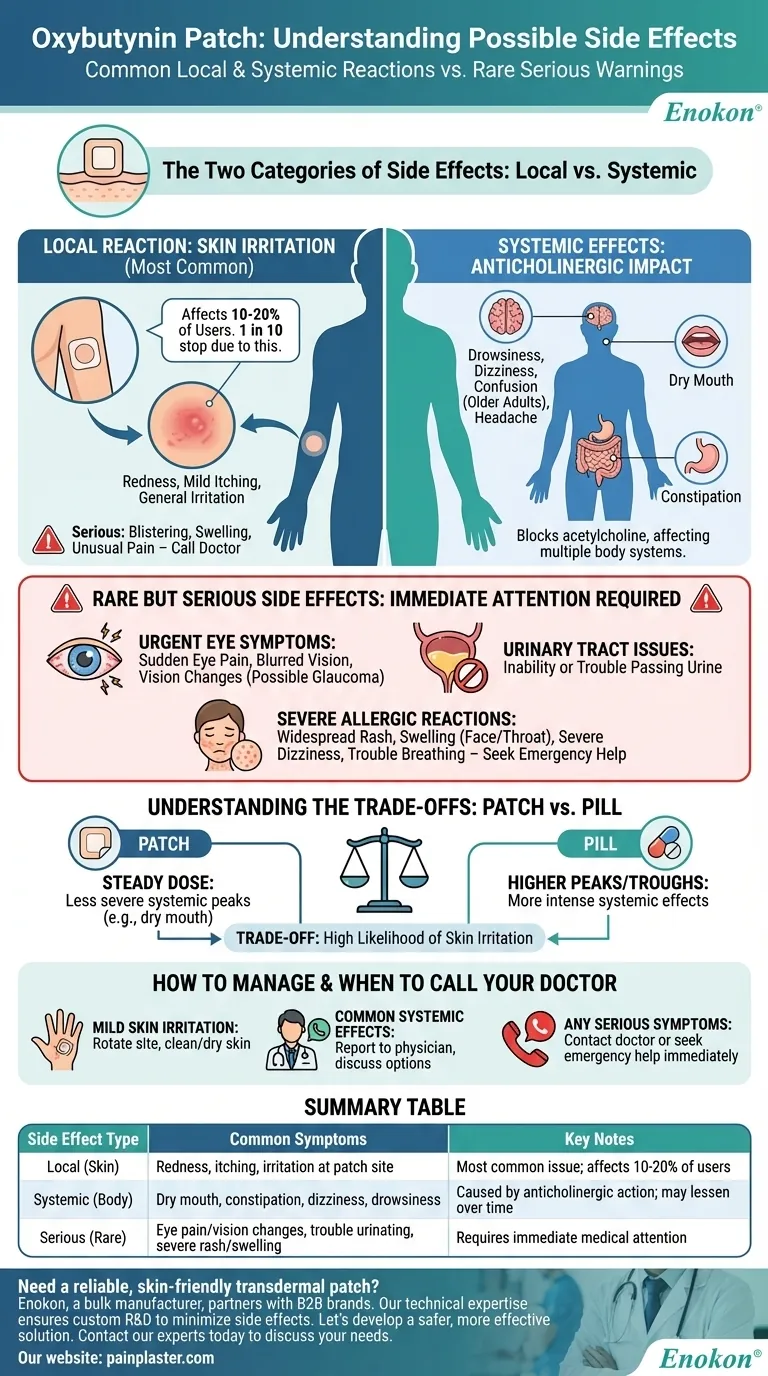
The Two Categories of Side Effects: Local vs. Systemic
Oxybutynin works by relaxing bladder muscles, but its effects aren't limited to the bladder. The side effects can be broken down into two main types: those that happen on your skin where the patch is applied, and those that affect your entire system.
Local Reaction: Skin Irritation (The Most Common Issue)
The transdermal patch delivers medication directly through the skin, which can cause irritation.
Symptoms at the patch site include redness, mild itching, or general irritation. These reactions are very common, affecting between 10 to 20 percent of users.
For some, this irritation is significant. About one in ten patients stop using the patch specifically because of these skin-related symptoms.
More serious local reactions can include blistering, swelling, or unusual pain at the application site. These warrant a call to your doctor.
Systemic Effects: The Anticholinergic Impact
Oxybutynin is an anticholinergic drug, meaning it blocks the neurotransmitter acetylcholine. This action relaxes the bladder, but also causes predictable side effects throughout the body.
The most frequently reported systemic effects include:
- Dry mouth
- Drowsiness
- Dizziness
- Constipation
- Confusion, particularly in older adults
- Headache
These occur because the medication is absorbed into your bloodstream and affects other systems that use the same chemical messenger.
Rare But Serious Side Effects You Must Know
While uncommon, some side effects require immediate medical attention. Being able to recognize these is crucial for your safety.
Urgent Eye and Urinary Symptoms
Oxybutynin can affect the muscles in your eyes and urinary tract.
Contact your doctor immediately if you experience sudden eye pain, blurred vision, or other significant vision changes. This could be a sign of acute angle-closure glaucoma.
Likewise, an inability or trouble passing urine is a serious side effect that indicates the drug is over-relaxing the bladder or causing a blockage.
Severe Allergic Reactions
A true allergic reaction to the drug is rare but can be life-threatening.
Seek emergency medical help if you develop a widespread rash, swelling (especially of the face, tongue, or throat), severe dizziness, or trouble breathing.
Understanding the Trade-offs: Patch vs. Pill
The primary reason for using a patch instead of an oral pill is to provide a steady, continuous dose of medication. This can reduce the intensity of systemic side effects like severe dry mouth that often come with the peaks and troughs of oral dosing.
However, the trade-off is the high likelihood of skin irritation. You are exchanging one set of potential side effects for another. The right choice depends on which side effects are more tolerable for you as an individual.
How to Manage and When to Call Your Doctor
Knowing how to respond to side effects is as important as knowing what they are.
- If you experience mild skin irritation: Rotate the application site with each new patch, ensuring the skin is clean, dry, and free of lotions or oils.
- If you experience common systemic effects (like dry mouth): These may lessen over time, but you should report them to your prescribing physician to discuss management options.
- If you experience ANY serious symptoms (eye pain, severe rash, trouble urinating): Contact your doctor or seek emergency medical attention immediately.
Ultimately, being an informed partner in your healthcare allows you to use your medication safely and effectively.
Summary Table:
| Side Effect Type | Common Symptoms | Key Notes |
|---|---|---|
| Local (Skin) | Redness, itching, irritation at patch site | Most common issue; affects 10-20% of users |
| Systemic (Body) | Dry mouth, constipation, dizziness, drowsiness | Caused by anticholinergic action; may lessen over time |
| Serious (Rare) | Eye pain/vision changes, trouble urinating, severe rash/swelling | Requires immediate medical attention |
Need a reliable, skin-friendly transdermal patch? As Enokon, a bulk manufacturer of reliable transdermal patches and pain plasters, we partner with healthcare and pharma distributors and brands. Our technical expertise ensures custom R&D and development to minimize side effects like skin irritation. Let's develop a safer, more effective solution for your patients. Contact our experts today to discuss your needs.
Visual Guide
Related Products
- Silicone Scar Sheets Patch Transdermal Drug Patch
- Far Infrared Heat Pain Relief Patches Transdermal Patches
- Menthol Gel Pain Relief Patch
- Icy Hot Menthol Medicine Pain Relief Patch
- Mugwort Wormwood Pain Relief Patch for Neck Pain
People Also Ask
- What role does a silicone-based transdermal delivery system play in Parkinson's? Enhancing Early-Stage Patient Care
- How is the long-term skin tolerance of silicone-based transdermal patches evaluated in clinical settings? R&D and Safety
- Why is a polarizing microscope used to evaluate the long-term stability of transdermal drug patches? Ensure Efficacy.
- What are common adverse effects of transdermal drug delivery? Risks & Prevention Tips
- What are the advantages of transdermal drug patches? Optimize Medication Delivery with Patches














