
The potential allergic reactions to the patch range from common, mild skin irritation at the application site to rare but severe, life-threatening systemic responses. The most common issues are localized redness, itching, or a rash, while more serious reactions can involve hives, swelling of the face and tongue, and difficulty breathing, often linked to a specific ingredient called sodium metabisulfite.
While most reactions are manageable skin irritations, the critical takeaway is to distinguish between localized discomfort and a body-wide allergic event. The patch contains sulfites, which can trigger severe reactions, particularly in individuals with a history of asthma or sulfite sensitivity.
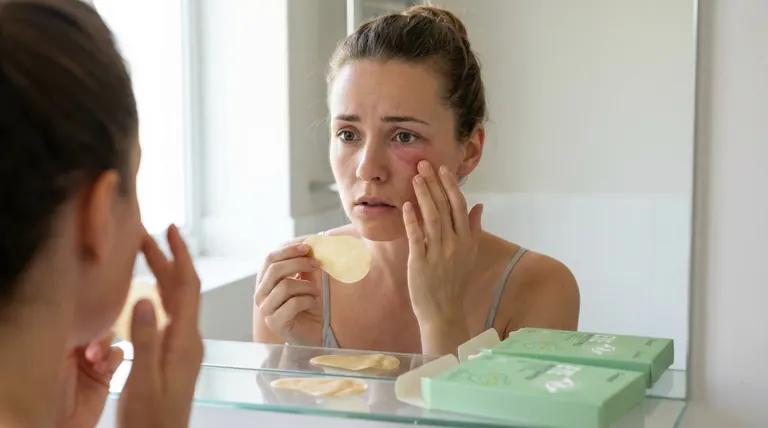
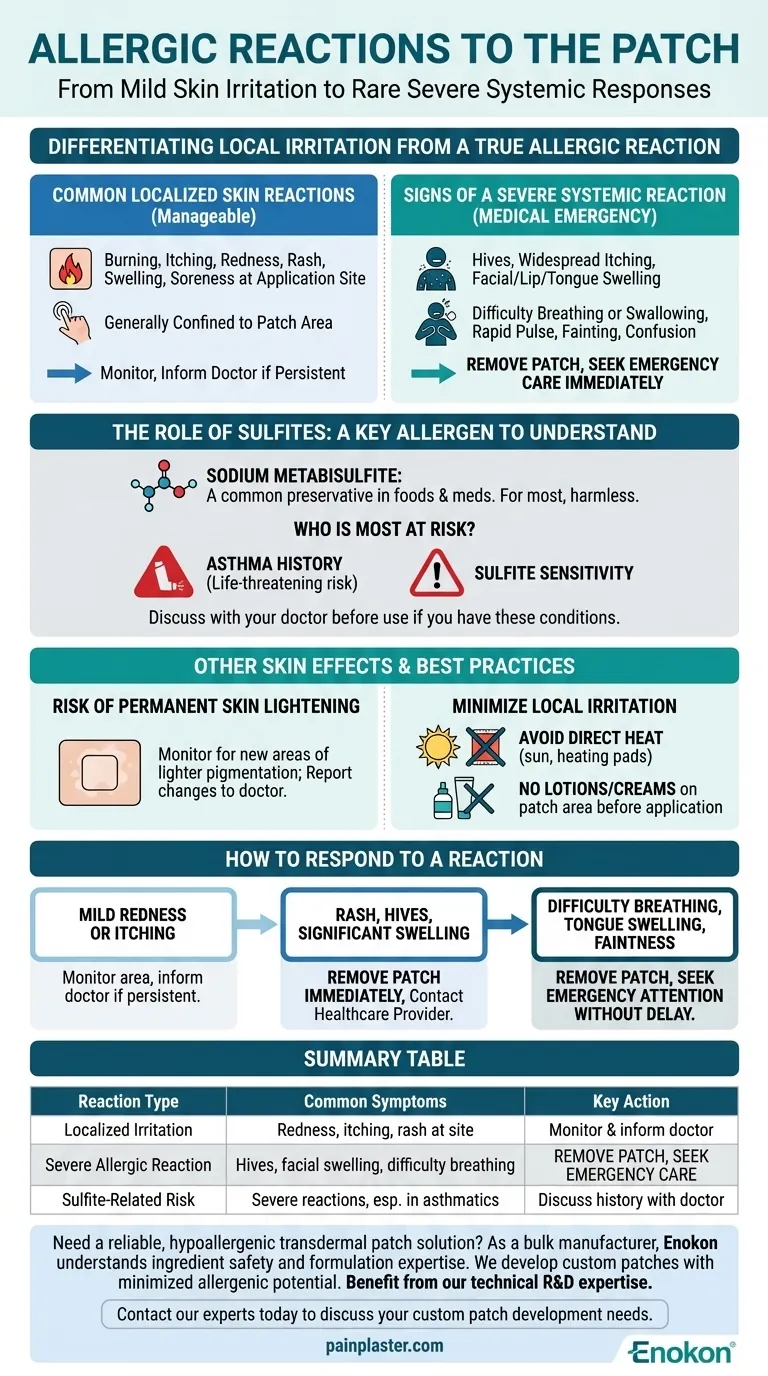
Differentiating Local Irritation from a True Allergic Reaction
Understanding the difference between a minor side effect and a serious allergic reaction is essential for your safety. One is a manageable inconvenience, while the other requires immediate medical attention.
Common Localized Skin Reactions
The most frequently reported issues occur directly where the patch is applied.
These reactions typically include burning, itching, redness, a skin rash, swelling, or soreness. While uncomfortable, these symptoms are generally confined to the patch area.
Signs of a Severe Systemic Reaction
A systemic reaction affects your entire body and is a medical emergency.
Key warning signs include hives, widespread itching, difficulty breathing or swallowing, and swelling, especially of the face, lips, or tongue.
Other serious symptoms are a rapid pulse, unusual hoarseness, dizziness, confusion, or fainting. These indicate a severe allergic event that requires immediate intervention.
The Role of Sulfites: A Key Allergen to Understand
A specific ingredient in the patch is often responsible for the most severe allergic reactions.
What is Sodium Metabisulfite?
The patch contains sodium metabisulfite, a preservative commonly used in foods and medications. For most people, it is harmless.
Who is Most at Risk?
Individuals with a known sulfite sensitivity are at a significantly higher risk of a reaction.
This risk is particularly elevated for those with asthma, as the reaction can be life-threatening. If you have a history of either condition, discuss it with your doctor.
Understanding Other Skin Effects and Best Practices
Beyond classic allergic reactions, there are other potential skin changes and ways to minimize irritation.
The Risk of Permanent Skin Lightening
Over time, some users may experience permanent lightening of the skin in the area where the patch is consistently applied.
You should monitor your skin for any new areas of lighter pigmentation and report these changes to your doctor.
How to Minimize Local Irritation
To reduce the chance of skin reactions, avoid exposing the patch to direct heat sources like heating pads or direct sunlight.
Do not apply lotions, creams, or other products to the skin where you plan to place the patch, as this can interfere with adhesion and increase irritation.
How to Respond to a Reaction
Your response should be based directly on the severity of your symptoms.
- If your primary symptom is mild redness or itching: Monitor the area and inform your doctor if the irritation persists or worsens after you remove the patch.
- If you develop a rash, hives, or significant localized swelling: Remove the patch immediately and contact your healthcare provider for guidance.
- If you experience difficulty breathing, swelling of the tongue, or feel faint: Remove the patch and seek emergency medical attention without any delay.
Knowing these critical distinctions empowers you to use the patch safely and take decisive action when it matters most.
Summary Table:
| Reaction Type | Common Symptoms | Key Action |
|---|---|---|
| Localized Irritation | Redness, itching, rash at application site | Monitor and inform doctor if persistent |
| Severe Allergic Reaction | Hives, facial swelling, difficulty breathing | Remove patch and seek emergency care |
| Sulfite-Related Risk | Severe reactions, especially in asthmatics | Discuss history with doctor before use |
Need a reliable, hypoallergenic transdermal patch solution?
As a bulk manufacturer of medical-grade transdermal patches and pain plasters, Enokon understands the critical importance of ingredient safety and formulation expertise. We work with healthcare and pharmaceutical distributors and brands to develop custom patches with minimized allergenic potential.
Benefit from our technical R&D expertise to create a safer, more effective product for your customers.
Contact our experts today to discuss your custom patch development needs.
Visual Guide
Related Products
- Far Infrared Heat Pain Relief Patches Transdermal Patches
- Silicone Scar Sheets Patch Transdermal Drug Patch
- Icy Hot Menthol Medicine Pain Relief Patch
- Menthol Gel Pain Relief Patch
- Mugwort Wormwood Pain Relief Patch for Neck Pain
People Also Ask
- Why is the selection of matrix materials critical when developing customized transdermal patches? Optimize Efficacy
- What are the physical impacts of external heat exposure on the performance and safety of transdermal patches? - Guide
- What role does a skin tolerance scoring system play in the safety evaluation of transdermal patches? Key Safety Metrics
- What are the clinical advantages of local transdermal delivery systems? Unlock Safer, More Effective Pain Relief Solutions
- How does high-purity far-infrared ceramic powder contribute to the efficacy of far-infrared physical therapy patches?



















