Voltaren Gel, containing diclofenac sodium, is a topical NSAID gel used for muscle and joint pain relief, particularly in osteoarthritis and rheumatoid arthritis. Its advantages include over-the-counter availability, FDA approval, and suitability for those avoiding oral medications. However, it may cause skin irritation, digestive issues, and isn't ideal for actinic keratosis. Full pain relief can take up to 7 days.

Key Points Explained:
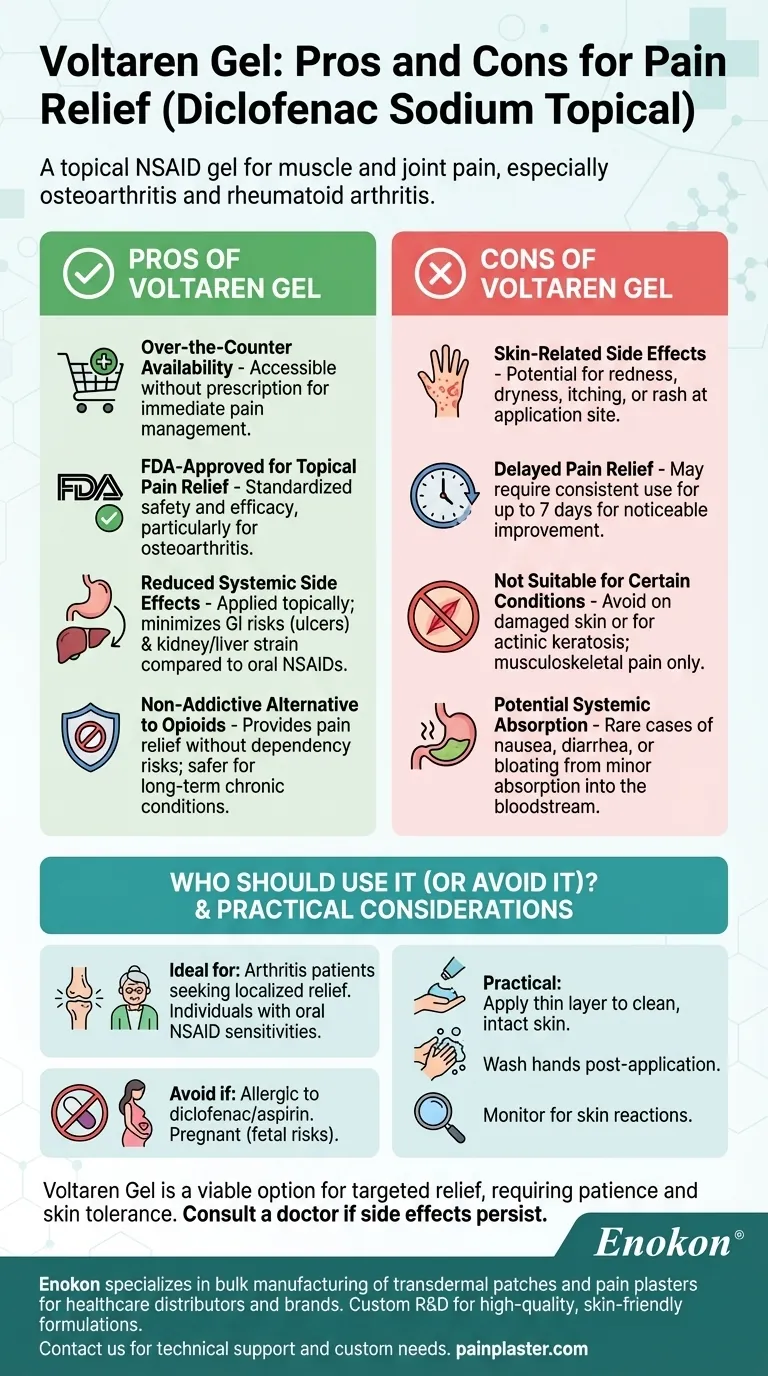
Pros of Voltaren Gel
-
Over-the-counter availability
- Unlike prescription NSAIDs, Voltaren Gel can be purchased without a doctor’s visit, making it more accessible for immediate pain management.
-
FDA-approved for topical pain relief
- Its approval ensures standardized safety and efficacy for treating joint and muscle pain, particularly in osteoarthritis.
-
Reduced systemic side effects compared to oral NSAIDs
- Since it’s applied topically, it minimizes gastrointestinal risks (e.g., ulcers) and kidney/liver strain associated with oral diclofenac.
-
Non-addictive alternative to opioids
- Provides pain relief without dependency risks, making it a safer long-term option for chronic conditions.
Cons of Voltaren Gel
-
Skin-related side effects
- Common reactions include redness, dryness, itching, or rash at the application site. Severe cases may involve hives or swelling.
-
Delayed pain relief
- Unlike fast-acting oral NSAIDs, it may require consistent use for up to 7 days for noticeable improvement.
-
Not suitable for certain conditions
- Avoid use on damaged skin (e.g., open wounds) or for actinic keratosis, as it’s formulated for musculoskeletal pain only.
-
Potential systemic absorption
- Though rare, some users report nausea, diarrhea, or bloating, indicating minor absorption into the bloodstream.
Who Should Use It (or Avoid It)?
-
Ideal for:
- Arthritis patients seeking localized relief.
- Individuals with oral NSAID sensitivities.
-
Avoid if:
- Allergic to diclofenac/aspirin.
- Pregnant (linked to fetal risks in later trimesters).
Practical Considerations
- Apply a thin layer to clean, intact skin (avoiding eyes/mouth).
- Wash hands post-application to prevent accidental transfer.
- Monitor for skin reactions, especially with prolonged use.
For those prioritizing convenience and targeted relief, Voltaren Gel is a viable option—but patience and skin tolerance are key. Always consult a doctor if side effects persist or pain worsens.
Summary Table:
| Pros | Cons |
|---|---|
| ✅ Over-the-counter availability | ❌ May cause skin irritation (redness, itching) |
| ✅ FDA-approved for osteoarthritis pain | ❌ Delayed relief (up to 7 days for full effect) |
| ✅ Fewer systemic side effects than oral NSAIDs | ❌ Not for use on broken skin or actinic keratosis |
| ✅ Non-addictive alternative to opioids | ❌ Rare systemic absorption (nausea, bloating) |
Looking for a reliable pain relief solution? Enokon specializes in bulk manufacturing of transdermal patches and pain plasters tailored for healthcare distributors and brands. Our expertise in custom R&D ensures high-quality, skin-friendly formulations. Contact us today to discuss your needs and benefit from our technical support!
Visual Guide
Related Products
- Menthol Gel Pain Relief Patch
- Lidocaine Hydrogel Pain Relief Patch for Pain Relief
- Medical Cooling Gel Patches for Fever Cooling Patches
- Herbal Pain Relief Cream Pain Relieving Creams
- Icy Hot Menthol Medicine Pain Relief Patch
People Also Ask
- How effective are pain relief patches for muscle pain? Target Localized Pain with Transdermal Delivery
- How do pain relief patches compare to other pain relief methods? Discover Targeted, Long-Lasting Relief
- Who should consult a healthcare professional before using pain relief patches? Ensure Your Safety with Medical Advice
- How do drug loading and permeation enhancers ensure patch efficacy? Achieve Superior Clinical-Grade Pain Relief.
- What are some common applications of pain relief patches? Effective Relief for Muscle & Joint Pain