
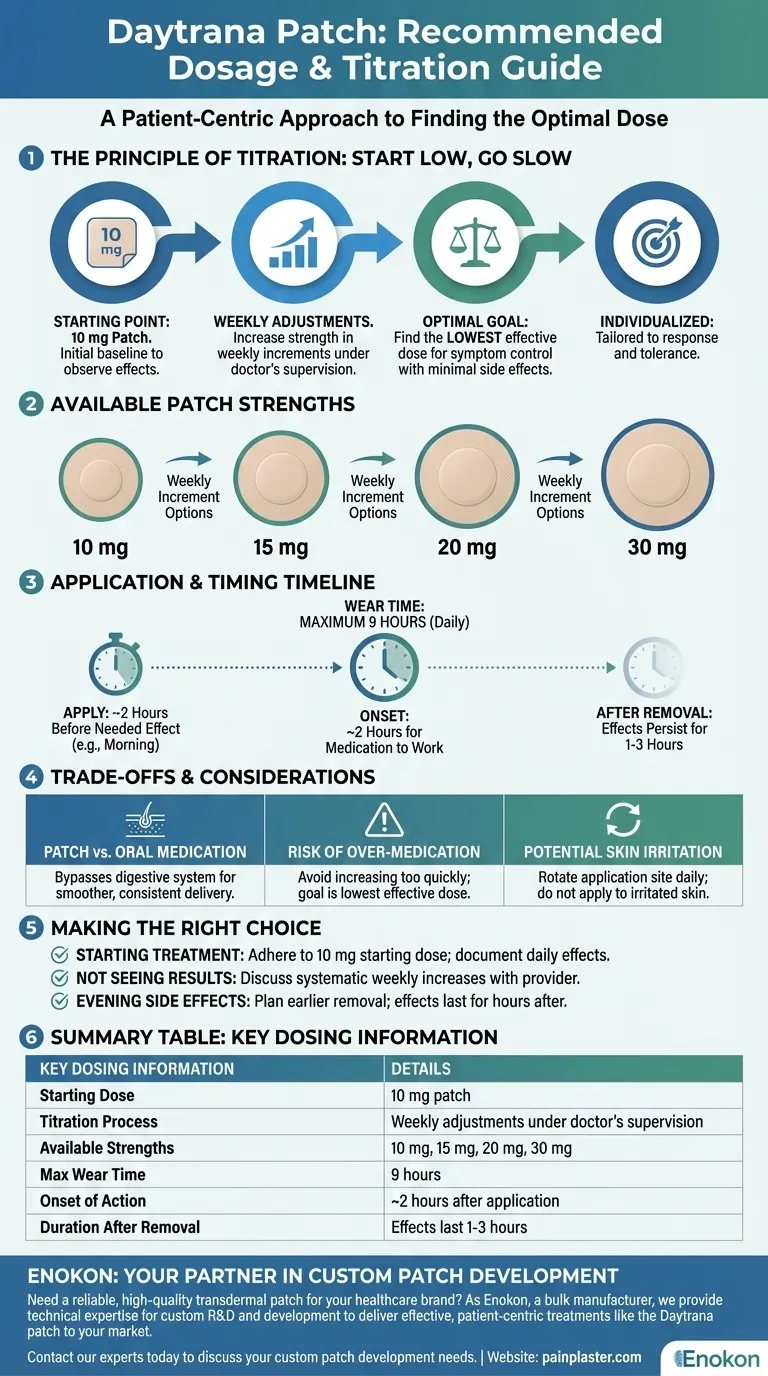
When determining the correct Daytrana dosage, the universally recommended starting point for children and adolescents with ADHD is the 10 mg patch. This initial dose is applied to the skin and worn for up to nine hours. The dosage is then methodically increased on a weekly basis, under a doctor's supervision, until an optimal balance of symptom management and minimal side effects is achieved.
The key to using Daytrana effectively is not finding a single "correct" dose, but engaging in a careful process called titration. Starting low and adjusting slowly allows you and your doctor to discover the minimum effective dose required for your specific needs, which is the ultimate goal of treatment.

The Principle of Titration: Finding Your Optimal Dose
The core strategy behind Daytrana dosing is to start low and go slow. This ensures the medication is tailored to the individual's response and tolerance, rather than following a rigid, one-size-fits-all approach.
The Recommended Starting Point
The initial 10 mg patch serves as a baseline. Its purpose is to introduce the medication to the body and allow you and your doctor to observe its initial effects and check for any immediate side effects.
Weekly Dose Adjustments
If the 10 mg dose does not provide adequate symptom control after a week, your physician may recommend increasing the strength. This is typically done in weekly increments, moving to the next available patch strength.
Available Patch Strengths
Daytrana is available in four different dosage strengths (10 mg, 15 mg, 20 mg, and 30 mg) to accommodate the titration process and meet varying patient needs as determined by a healthcare professional.
How the Patch Works: Application and Timing
Understanding the timeline of the patch's effects is crucial for managing the day effectively and aligning symptom control with school or work schedules.
Application Time
The patch should be applied to a clean, dry area of the hip about two hours before the desired effect is needed. It must be worn for a maximum of nine hours.
Onset of Action
It takes approximately two hours for the medication to be absorbed through the skin and begin working. This delay must be factored into the morning routine.
Duration After Removal
The medication's effects do not stop immediately upon removal. They can persist for another one to three hours after the patch is taken off, which can be useful for helping with after-school activities or homework but is also a consideration for managing effects on appetite or sleep.
Understanding the Trade-offs and Considerations
The transdermal patch system has unique characteristics compared to oral medications, which come with their own set of benefits and potential issues.
Patch vs. Oral Medication
Because the Daytrana patch delivers methylphenidate directly into the bloodstream through the skin, it bypasses the digestive system. This means its dosing is not directly equivalent to oral medications like Ritalin or Concerta and can provide a smoother, more consistent delivery throughout the wear time.
The Risk of Over-Medication
The primary goal of titration is to find the lowest effective dose. Increasing the dose too quickly or using a higher-than-needed strength can lead to more pronounced side effects without providing any additional therapeutic benefit.
Potential for Skin Irritation
A common issue with any transdermal patch is the potential for skin irritation or redness at the application site. It is critical to rotate the application site daily (e.g., from the right hip to the left hip) and not apply the patch to irritated or broken skin.
Making the Right Choice for Your Goal
Your approach to Daytrana should be a collaborative conversation with your healthcare provider.
- If you are just starting treatment: Adhere strictly to the 10 mg starting dose and carefully document daily effects to discuss with your doctor.
- If you are not seeing desired results: Discuss a systematic, weekly increase in dosage with your provider rather than making sudden changes.
- If you are concerned about evening side effects: Plan to remove the patch earlier in the day, keeping in mind that its effects will last for a few hours afterward.
Ultimately, finding the right Daytrana dosage is a patient and precise process, focused on achieving maximum symptom control with minimum side effects.
Summary Table:
| Key Dosing Information | Details |
|---|---|
| Starting Dose | 10 mg patch |
| Titration Process | Weekly adjustments under doctor's supervision |
| Available Strengths | 10 mg, 15 mg, 20 mg, 30 mg |
| Max Wear Time | 9 hours |
| Onset of Action | ~2 hours after application |
| Duration After Removal | Effects last 1-3 hours |
Need a reliable, high-quality transdermal patch for your healthcare brand or distribution network?
As Enokon, a bulk manufacturer of reliable transdermal patches and pain plasters, we provide the technical expertise for custom R&D and development. Our goal is to help you deliver effective, patient-centric treatments like the Daytrana patch to your market.
Contact our experts today to discuss your custom patch development needs.
Visual Guide
Related Products
- Menthol Gel Pain Relief Patch
- Far Infrared Heat Pain Relief Patches Transdermal Patches
- Icy Hot Menthol Medicine Pain Relief Patch
- Silicone Scar Sheets Patch Transdermal Drug Patch
- Mugwort Wormwood Pain Relief Patch for Neck Pain
People Also Ask
- How do pain relief patches compare to other pain relief methods? Discover Targeted, Long-Lasting Relief
- How effective are pain relief patches for muscle pain? Target Localized Pain with Transdermal Delivery
- Who should consult a healthcare professional before using pain relief patches? Ensure Your Safety with Medical Advice
- What are the different types of pain relief patches available? Find the Right Solution for Your Pain
- What are the potential side effects of pain relief patches? A Guide to Safe Use & Key Risks



















