
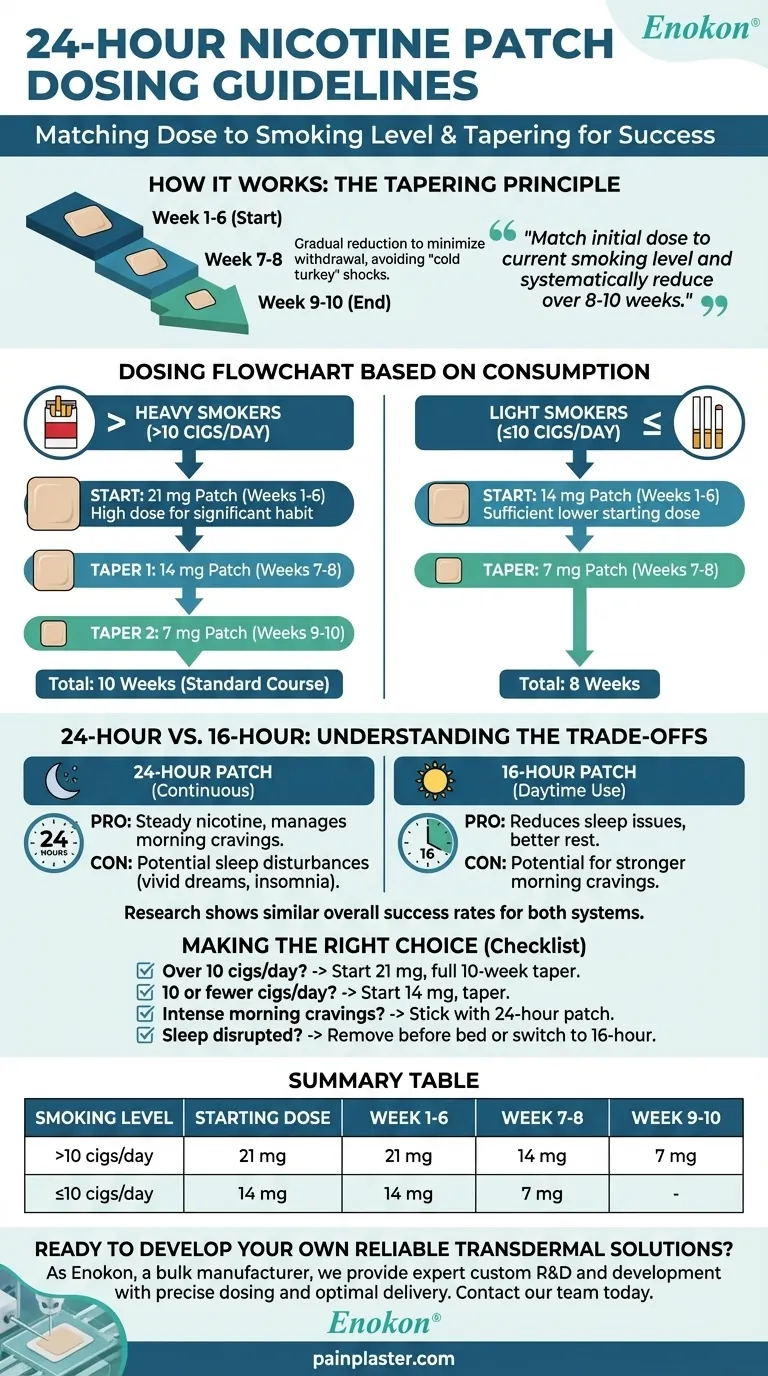
For smokers of more than 10 cigarettes per day, the standard dosing for a 24-hour nicotine patch begins with a 21 mg patch daily for the first six weeks. This is followed by a tapering period, using a 14 mg patch for two weeks, and finally a 7 mg patch for the last two weeks of the 10-week cycle. Those who smoke 10 or fewer cigarettes daily should start with the 14 mg patch.
The core principle behind nicotine patch dosing is to match your initial dose to your current smoking level and then systematically reduce, or "taper," that dose over 8 to 10 weeks to gently wean your body off its dependence.

How Nicotine Patch Dosing Works
Understanding the strategy behind the dosing schedule is key to using the patch effectively. The entire process is designed to manage withdrawal symptoms while breaking the physical habit of smoking.
The Principle of Tapering
The gradual reduction in nicotine dosage is the most critical part of the therapy. By stepping down from a higher dose to a lower one, you allow your body to slowly adjust to less nicotine, minimizing the discomfort of withdrawal.
This controlled reduction helps prevent the intense cravings and side effects that often lead to relapse when quitting "cold turkey."
Starting Dose Based on Consumption
The initial dose is determined by your daily cigarette consumption, which serves as a proxy for your level of nicotine dependence.
For those smoking more than 10 cigarettes daily, the 21 mg patch provides a high enough dose to manage withdrawal from a significant habit. For lighter smokers (10 or fewer cigarettes daily), starting on a lower 14 mg dose is sufficient and avoids providing more nicotine than necessary.
The Standard Treatment Timeline
The typical treatment course is 10 weeks for heavier smokers. However, it's important to note that a meta-analysis has shown no significant benefit to extending patch use beyond eight weeks.
The goal is to use the patch as a temporary tool, not a permanent replacement.
Understanding the Trade-offs: 24-Hour vs. 16-Hour Use
While the 24-hour patch is common, its around-the-clock dosing comes with specific considerations.
The Advantage of 24-Hour Use
The primary benefit of a 24-hour patch is the continuous, steady delivery of nicotine. This is particularly effective for individuals who experience strong cigarette cravings immediately upon waking up.
Maintaining a baseline nicotine level overnight can make mornings significantly more manageable during the early stages of quitting.
The Potential Downside: Sleep Disturbances
For some individuals, receiving nicotine during sleep can lead to side effects like vivid dreams or insomnia. This is a known and relatively common reaction.
If you find your sleep is negatively impacted, you have options and do not need to abandon the therapy.
When to Consider 16-Hour Use
If sleep disturbances occur, removing the 24-hour patch before bed is a viable strategy. Alternatively, a 16-hour patch is designed specifically for daytime use.
The trade-off is the potential for stronger morning cravings, as nicotine levels will have dropped overnight. However, research shows that both 16-hour and 24-hour patch systems have very similar overall success rates for smoking cessation.
Making the Right Choice for Your Goal
- If you smoke more than 10 cigarettes a day: Start with the 21 mg patch and follow the full 10-week tapering schedule (6 weeks at 21mg, 2 at 14mg, 2 at 7mg).
- If you smoke 10 or fewer cigarettes a day: Begin your treatment with the 14 mg patch and follow the subsequent tapering steps.
- If your primary concern is intense morning cravings: Stick with the 24-hour patch to ensure a steady nicotine level throughout the night.
- If you find the patch disrupts your sleep: You can safely remove it before bed or switch to a 16-hour patch, as this will not significantly impact your overall chance of success.
Adhering to a structured, tapered dosing plan is the most reliable way to use the nicotine patch to your advantage.
Summary Table:
| Smoking Level | Starting Dose | Week 1-6 | Week 7-8 | Week 9-10 |
|---|---|---|---|---|
| >10 cigarettes/day | 21 mg | 21 mg | 14 mg | 7 mg |
| ≤10 cigarettes/day | 14 mg | 14 mg | 7 mg | - |
Ready to develop your own reliable nicotine patches or other transdermal solutions? As Enokon, a bulk manufacturer of high-quality transdermal patches for healthcare and pharma brands, we provide expert custom R&D and development services. Our technical expertise ensures your product has precise dosing and optimal delivery. Contact our team today to discuss your project requirements and benefit from our manufacturing excellence.
Visual Guide
Related Products
- Mugwort Wormwood Pain Relief Patch for Neck Pain
- Lidocaine Hydrogel Pain Relief Patch for Pain Relief
- Heating Pain Relief Patches for Menstrual Cramps
- Icy Hot Menthol Medicine Pain Relief Patch
- Far Infrared Heat Pain Relief Patches Transdermal Patches
People Also Ask
- What type of pain are pain relief patches best suited for? Find Targeted Relief for Your Aches
- Are pain relief pills and patches available without a prescription? Choose the Right OTC Pain Relief
- How do pain relief patches compare to oral painkillers? Targeted Relief vs. Systemic Effects
- What are pain relief patches? Discover Targeted, Drug-Free Pain Management Solutions
- What is the purpose of pain relief patches? Get Targeted Relief with Fewer Side Effects



















