
Applying a nicotine patch correctly is a straightforward process focused on ensuring the patch adheres firmly to clean, dry skin for consistent nicotine delivery. You must choose a non-hairy spot on your upper body, clean it with water only, and press the patch firmly in place for 10 to 30 seconds before washing your hands.
The success of nicotine replacement therapy via a patch hinges on two key principles: ensuring optimal skin contact for steady absorption and systematically rotating the application site daily to prevent skin irritation.
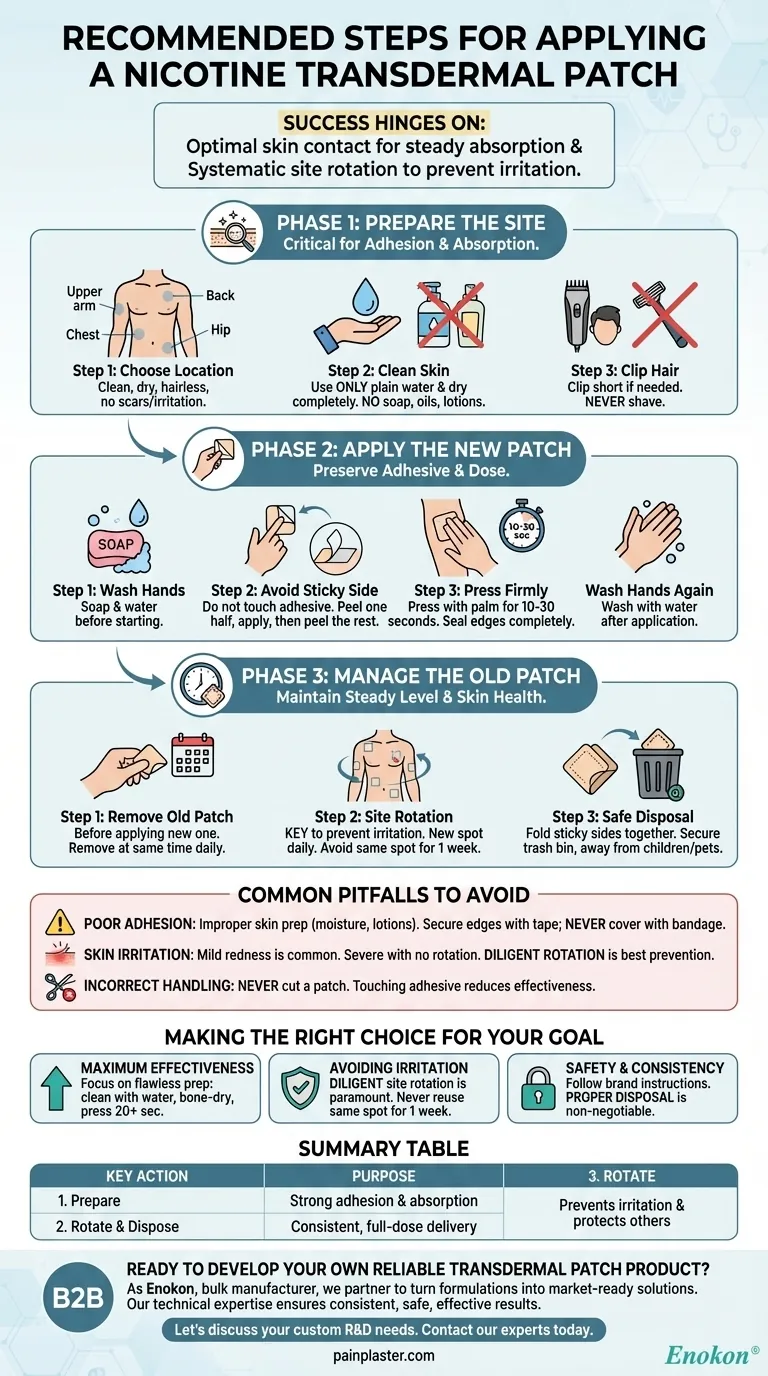
The 3-Phase Application Process
To ensure the patch works as intended, think of the application as a simple three-phase daily routine: preparing the site, applying the new patch, and managing the old one.
Phase 1: Prepare the Site
Proper preparation is the most critical step for effective adhesion and absorption.
First, choose a suitable location. Select a spot on your upper arm, chest, back, or hip. The skin should be clean, dry, hairless, and free of any scars, cuts, or irritation.
Next, clean the skin. Use only plain water and ensure the area is completely dry. Do not use soaps, alcohols, oils, or lotions, as they can leave a residue that prevents the patch from sticking properly.
If the area has hair, clip it as short as possible. Never shave the area, as shaving can create tiny cuts and cause skin irritation under the patch.
Phase 2: Apply the New Patch
Handle the patch carefully to preserve the adhesive and the nicotine dose.
Wash your hands with soap and water before you begin. Carefully tear open the sealed pouch and remove the patch.
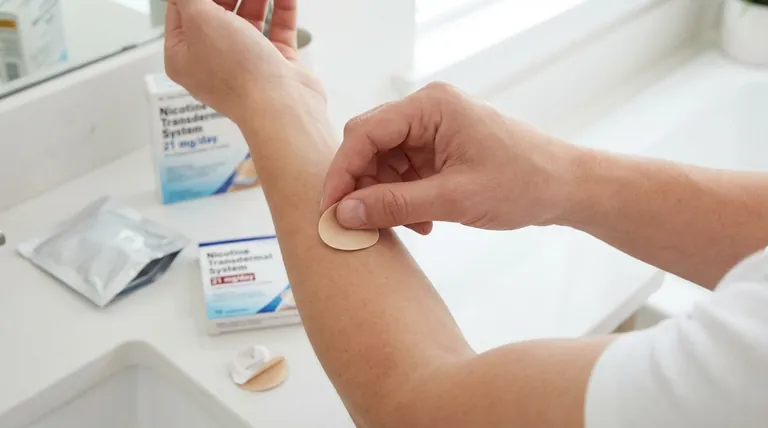
Avoid touching the sticky side of the patch. Most patches have a protective liner that is split into two pieces. Peel off one half of the liner, apply the exposed sticky side to your prepared skin, and then peel off the remaining liner while smoothing the rest of the patch into place.
Press the patch firmly onto your skin with the palm of your hand for 10 to 30 seconds. Make sure the edges are sealed completely to ensure full contact.
Finally, wash your hands thoroughly with water after application to remove any nicotine that may have gotten on your fingers.
Phase 3: Manage the Old Patch
A consistent daily routine is key to maintaining a steady level of nicotine.
Before applying a new patch, you must first remove the old one. Apply your new patch at the same time each day, typically in the morning.
The most important step for skin health is site rotation. Always apply the new patch to a different spot than the one you just used. Avoid using the same patch of skin for at least one week to prevent redness and irritation.
When you remove the old patch, fold it in half with the sticky sides together. Dispose of it in a secure trash can, safely out of reach of children and pets.
Common Pitfalls to Avoid
Understanding potential issues can help you troubleshoot problems and ensure the therapy remains effective.
Poor Adhesion
If a patch consistently falls off, it is almost always due to improper skin preparation. Skin must be completely free of moisture, oils, or lotions. If the edges lift, you can secure them with a medical tape like Transpore, but never cover the entire patch with a bandage, as this can affect nicotine absorption.
Skin Irritation
Mild itching or redness at the application site is common but should fade after you remove the patch. If you are not rotating sites, this irritation can become more severe. Diligent daily rotation to a new, clean spot is the best way to prevent this.
Incorrect Handling
Never cut a nicotine patch unless specifically instructed by your doctor or the product manufacturer. Cutting a patch can damage its nicotine-delivery system, leading to an incorrect and unpredictable dose. Similarly, touching the adhesive can transfer nicotine to your fingers and reduce the patch's effectiveness.
Making the Right Choice for Your Goal
Mastering this simple routine is a foundational step in your journey to quit smoking. Your specific focus will determine which steps you prioritize most.
- If your primary focus is maximum effectiveness: Concentrate on flawless skin prep—clean with only water, ensure it's bone-dry, and press firmly for at least 20 seconds.
- If your primary focus is avoiding skin irritation: Make diligent site rotation your most important daily habit, never reusing the same spot for at least a week.
- If your primary focus is safety and consistency: Always follow the specific instructions for your brand and make proper disposal of used patches a non-negotiable part of your routine.
A consistent and correct application technique empowers you to get the full, intended benefit from your nicotine replacement therapy.
Summary Table:
| Phase | Key Action | Purpose |
|---|---|---|
| 1. Prepare | Clean skin with water only; choose a hairless, dry spot. | Ensures strong adhesion and proper nicotine absorption. |
| 2. Apply | Press patch firmly for 10-30 seconds; avoid touching adhesive. | Guarantees consistent, full-dose delivery. |
| 3. Rotate & Dispose | Apply to a new site daily; fold and dispose of old patch safely. | Prevents skin irritation and protects others. |
Ready to develop your own reliable transdermal patch product?
As Enokon, a bulk manufacturer of proven transdermal patches and pain plasters, we partner with healthcare and pharmaceutical brands to turn formulations into market-ready solutions. Our technical expertise ensures your product delivers consistent, safe, and effective results for end-users.
Let's discuss your custom R&D and development needs. Contact our experts today to explore how we can support your product's success.
Visual Guide
Related Products
- Menthol Gel Pain Relief Patch
- Icy Hot Menthol Medicine Pain Relief Patch
- Silicone Scar Sheets Patch Transdermal Drug Patch
- Far Infrared Heat Pain Relief Patches Transdermal Patches
- Mugwort Wormwood Pain Relief Patch for Neck Pain
People Also Ask
- How do pain relief patches compare to other pain relief methods? Discover Targeted, Long-Lasting Relief
- How effective are pain relief patches for muscle pain? Target Localized Pain with Transdermal Delivery
- Who should consult a healthcare professional before using pain relief patches? Ensure Your Safety with Medical Advice
- What are some common applications of pain relief patches? Effective Relief for Muscle & Joint Pain
- What are pain relief patches and how do they work? Discover Non-Invasive Pain Management











