
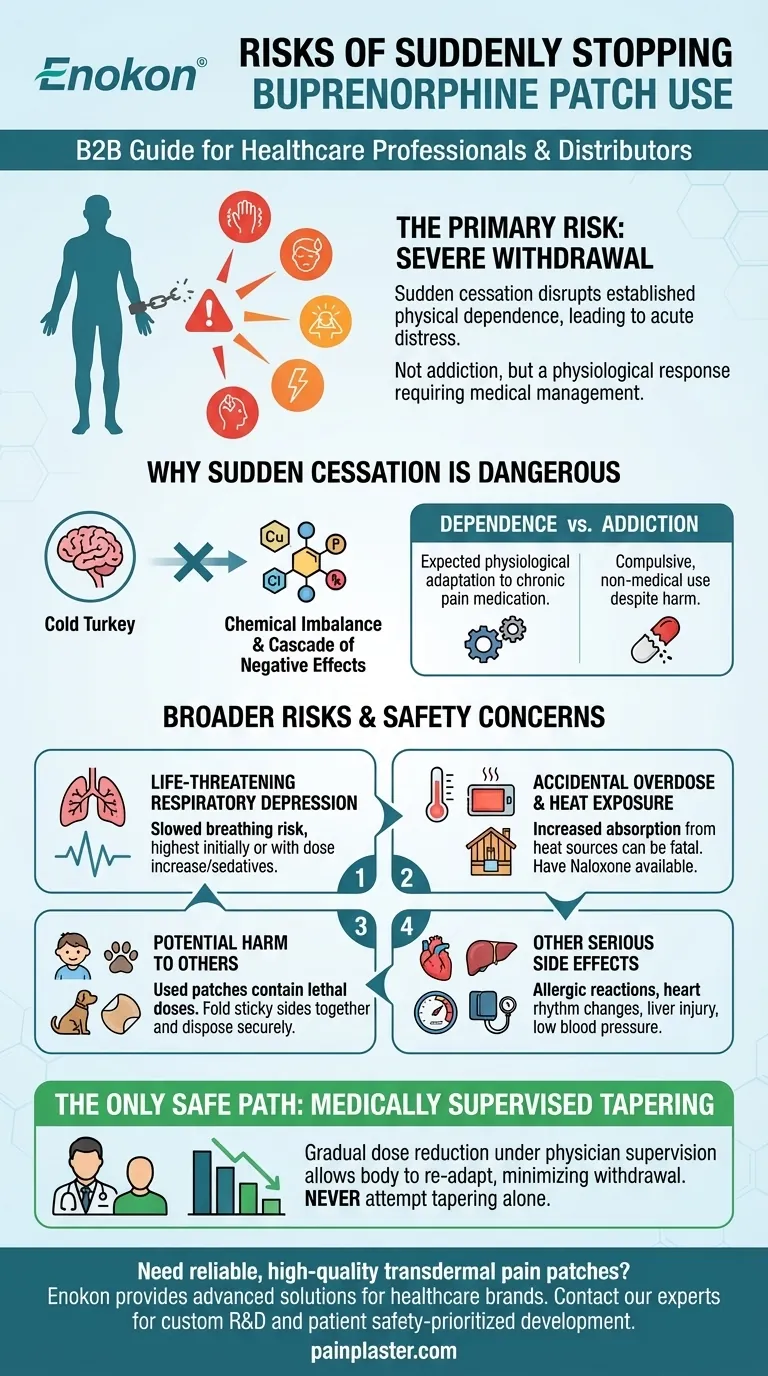
The primary risk of suddenly stopping buprenorphine patch use is the onset of severe withdrawal symptoms. This reaction occurs because your body has developed a physical dependence on the medication, a normal physiological response to long-term opioid use for pain management. This is not the same as addiction, but it requires careful medical management to avoid significant distress and complications.
The core danger of stopping buprenorphine patches abruptly is severe physical withdrawal. The only safe method for discontinuing this medication is a gradual dose reduction, known as tapering, performed under the direct supervision of a healthcare professional.
Why Sudden Cessation is Dangerous
Stopping a buprenorphine patch "cold turkey" disrupts the chemical balance your body has grown accustomed to, leading to a cascade of negative effects. Understanding the mechanism behind this is key to appreciating the need for a managed approach.
The Onset of Physical Dependence
When used for chronic pain, your body adapts to the consistent presence of buprenorphine. This adaptation is known as physical dependence.
Your system adjusts its own internal processes to function normally with the medication. Suddenly removing it throws that system into a state of acute imbalance.
Distinguishing Dependence from Addiction
It is critical to differentiate between physical dependence and addiction. Physical dependence is an expected physiological response to a medication.
Addiction, in contrast, involves compulsive, non-medical use of a substance despite harmful consequences. Using buprenorphine as prescribed for pain is medical treatment, and the resulting dependence is a manageable side effect.
The Severity of Withdrawal Reactions
The references describe the reactions to sudden cessation as "severe." While specific symptoms are not detailed, this indicates a significant level of physical and psychological distress that requires professional medical intervention to manage safely and effectively.
Understanding Buprenorphine's Broader Risks
The risks associated with stopping the patch are intrinsically linked to the powerful nature of the medication itself. Recognizing the overall safety profile underscores why both starting and stopping treatment demand careful oversight.
Life-Threatening Breathing Problems
Buprenorphine can cause serious or life-threatening respiratory depression (slowed breathing). This risk is highest during the first 24-72 hours of treatment or after a dose increase.
The danger is significantly amplified when combined with alcohol, street drugs, or other specific medications that cause sedation.
Risk of Accidental Overdose
An overdose is a constant risk that requires vigilance. Increased absorption of the drug through the skin, caused by exposure to heat from sources like heating pads, saunas, or hot baths, can lead to a dangerous overdose.
It is crucial for you and those around you to have naloxone available and know how to use it in case of an overdose, characterized by extreme drowsiness, unresponsiveness, or breathing trouble.
Potential Harm to Others
Used patches still contain a significant amount of medication. They must be folded with the sticky sides together and disposed of securely to prevent accidental exposure to children or pets, which can be fatal.
For pregnant users, buprenorphine can cause life-threatening withdrawal symptoms in the newborn baby after birth.
Other Serious Side Effects
Beyond breathing issues, buprenorphine can cause other severe side effects that require immediate medical attention. These include allergic reactions, changes in heart rhythm, liver injury, and dangerously low blood pressure.
The Only Safe Path: Medically Supervised Tapering
Given the risks of withdrawal, the only medically accepted method for discontinuing a buprenorphine patch is a gradual reduction in dose over time.
The Principle of Tapering
Tapering involves slowly decreasing your dosage according to a schedule set by your doctor. This allows your body to gradually re-adapt to functioning without the medication, minimizing the severity of withdrawal symptoms.
The Necessity of Medical Supervision
You must never attempt to taper your dose on your own. Your physician will create a personalized plan based on your current dose, duration of use, and overall health, adjusting it as needed to ensure your safety and comfort.
Designed for Chronic, Not Acute, Pain
Buprenorphine patches are specifically designed for managing persistent, long-term pain. They are not intended for short-term pain, such as after surgery, or for pain that is mild or intermittent. This long-acting design is precisely why the body becomes so dependent on its presence.
Making the Right Choice for Your Health
Navigating the use and cessation of powerful pain medication requires a partnership with your healthcare provider. Your safety is the primary goal.
- If you are considering stopping your buprenorphine patch: Do not make any changes on your own. Schedule an appointment with your doctor immediately to discuss creating a safe tapering plan.
- If you are concerned about dependence: Recognize that this is a normal and expected physiological response, not a personal failing, and it can be managed safely with professional guidance.
- If you are currently using a buprenorphine patch: Ensure you follow all safety protocols, including avoiding heat, disposing of used patches correctly, and having naloxone accessible.
Ultimately, managing your health is about making informed decisions under the guidance of a trusted medical expert.
Summary Table:
| Risk Category | Key Concern |
|---|---|
| Withdrawal | Severe physical symptoms from sudden cessation (cold turkey). |
| Respiratory Depression | Life-threatening slowed breathing, especially in first 72 hours or with other sedatives. |
| Accidental Overdose | Risk increases with heat exposure (heating pads, hot baths). |
| Accidental Exposure | Used patches can be fatal to children or pets if not disposed of properly. |
| Safe Discontinuation | Medically Supervised Tapering is the only safe method. |
Need a reliable, high-quality transdermal pain patch? As Enokon, a bulk manufacturer of reliable transdermal patches and pain plasters, we provide healthcare distributors and pharmaceutical brands with technically advanced solutions. Benefit from our custom R&D expertise to develop a product that prioritizes patient safety and consistent delivery. Contact our experts today to discuss your development needs.
Visual Guide
Related Products
- Menthol Gel Pain Relief Patch
- Lidocaine Hydrogel Pain Relief Patch for Pain Relief
- Asthma Cough and Pain Relief Patch for Adults and Kids
- Herbal Medicated Anti Diarrhea Patch for Digestive Relief
- Far Infrared Pain Patch Relief Pain Reliever for Back
People Also Ask
- How do pain relief patches compare to other pain relief methods? Discover Targeted, Long-Lasting Relief
- How effective are pain relief patches for muscle pain? Target Localized Pain with Transdermal Delivery
- Who should consult a healthcare professional before using pain relief patches? Ensure Your Safety with Medical Advice
- Can pregnant women use pain relief patches? Your Essential Guide to Safe Pain Management
- What are the potential side effects of pain relief patches? A Guide to Safe Use & Key Risks



















