
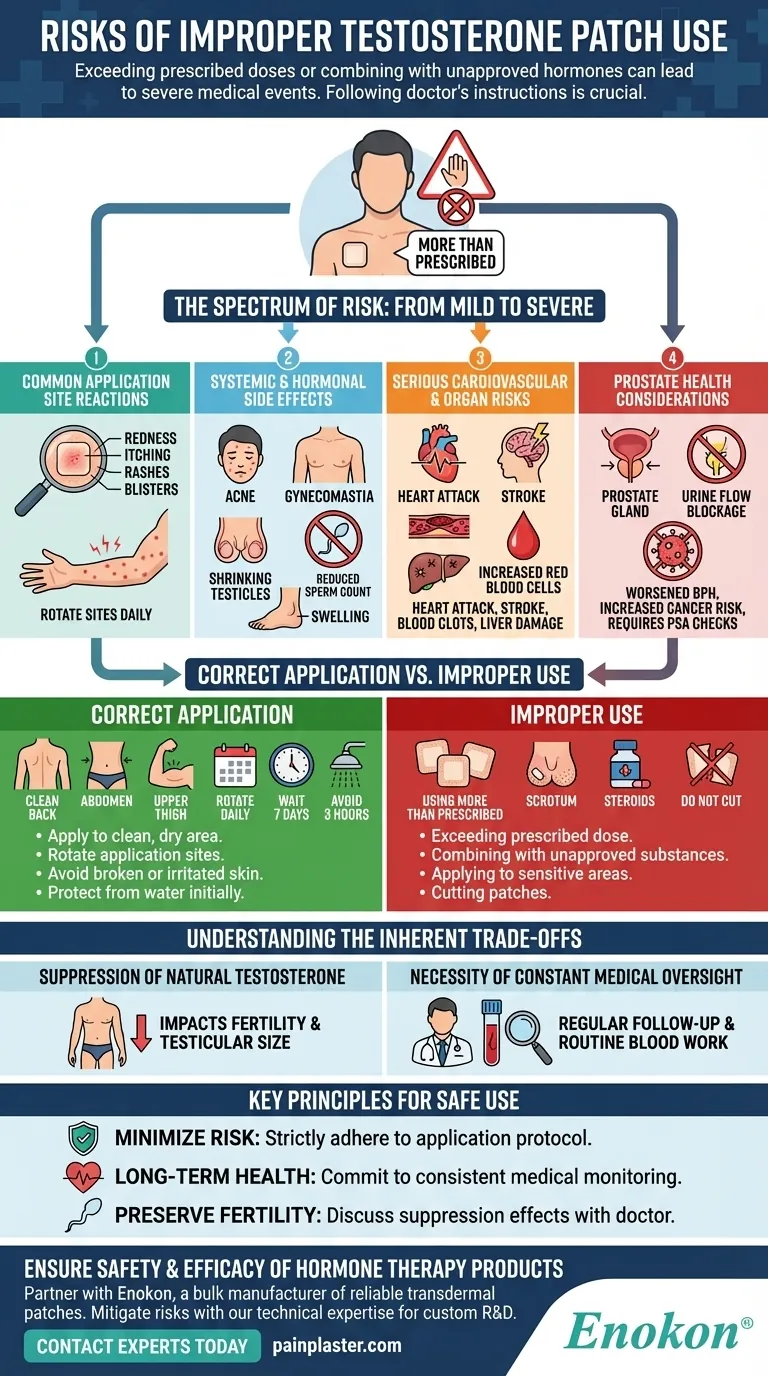
Improperly using testosterone patches dramatically elevates the risk of severe medical events. Exceeding prescribed doses or combining them with other unapproved hormones can lead to serious consequences, including heart attacks, strokes, liver disease, and profound mental health changes. Following your physician's exact instructions is the only way to mitigate these dangers.
The core issue extends beyond simple misuse. While improper application creates acute danger, even correct use of testosterone replacement therapy (TRT) carries inherent risks that demand rigorous adherence to medical protocols and continuous monitoring by a healthcare professional.

The Spectrum of Risk: From Mild to Severe
Understanding the potential side effects of testosterone patches requires looking at the full range of possibilities. These can be categorized from common, localized issues to rare but life-threatening systemic problems.
Common Application Site Reactions
The most frequent side effects are directly related to the transdermal patch itself. Because the patch adheres to the skin for 24 hours, localized reactions are common.
These can include redness, itching, skin irritation, rashes, or even blisters at the application site. Rotating the location daily is critical to minimize this irritation.
Systemic and Hormonal Side Effects
Once testosterone enters the bloodstream, it can cause broader hormonal shifts and side effects throughout the body.
These may include acne or oily skin, gynecomastia (enlarged male breast tissue), shrinking of the testicles, and a reduced sperm count, which can lead to infertility. Swelling in the legs or ankles can also occur.
Serious Cardiovascular and Organ-Related Risks
The most significant risks associated with TRT involve the cardiovascular system and major organs. These are the primary dangers of improper, high-dose usage.
These risks include an increase in red blood cell production (erythrocytosis), which can thicken the blood and lead to blood clots, stroke, or heart attack. Liver damage is also a documented risk of misusing male sex hormones.
Prostate Health Considerations
Testosterone therapy can directly affect the prostate gland. This is a critical area for monitoring during any form of TRT.
Treatment can worsen symptoms of benign prostatic hyperplasia (BPH), such as changes in urine flow. It may also potentially increase the long-term risk of developing prostate cancer, making regular PSA level checks essential.
Correct Application vs. Improper Use
The line between therapeutic benefit and significant risk is defined by how the medication is used. "Improper use" is not an abstract concept; it involves specific, avoidable actions.
The Definition of Improper Use
Improper use is primarily defined as using more patches than prescribed to achieve a higher dose. It also includes combining the therapy with other anabolic steroids or male sex hormones without a doctor's direction.
The Rules of Correct Application
To ensure safety and effectiveness, you must follow a strict protocol. Apply the patch to a clean, dry area of skin on the back, abdomen, upper arms, or thighs.
Crucially, avoid applying patches to the scrotum, irritated or broken skin, or any bony areas. You must rotate application sites daily and wait at least seven days before reusing a spot to prevent severe skin irritation. Never cut a patch in half.
Managing Adhesion and Exposure
The patch must remain adhered to the skin to deliver its medication correctly. For this reason, you should avoid showering, swimming, or bathing for at least three hours after application.
If a patch falls off before noon, replace it with a new one. If it falls off after noon, do not replace it; simply wait until your next scheduled application time to avoid excessive dosage.
Understanding the Inherent Trade-offs
Choosing to undergo TRT with patches is a decision with built-in compromises that require careful consideration and medical guidance.
Suppression of Natural Testosterone
A significant consequence of TRT is that it suppresses your body's natural production of testosterone. This is why the therapy can impact fertility and lead to testicular shrinkage. This effect may not be fully reversible after stopping treatment.
The Necessity of Constant Medical Oversight
Testosterone patch therapy is not a "set and forget" treatment. It requires a commitment to regular follow-up with your physician.
This includes routine blood work to monitor red blood cell counts, hormone levels, and PSA levels to screen for prostate issues. This monitoring is your primary safety net for catching serious problems early.
Key Principles for Safe Testosterone Patch Use
Navigating testosterone replacement therapy safely requires a clear understanding of your personal health goals and a steadfast commitment to medical protocol.
- If your primary focus is minimizing daily risk: Strictly adhere to the application protocol—rotate sites daily, never exceed your dose, and protect the patch from water for the first three hours.
- If your primary focus is long-term health: Commit to consistent medical monitoring, including all recommended blood tests and prostate exams, to manage cardiovascular and prostate risks.
- If your primary focus is preserving fertility: You must have a frank discussion with your doctor about how TRT suppresses natural hormone function before beginning treatment.
Ultimately, using testosterone patches safely is an active partnership between your personal diligence and your physician's expert guidance.
Summary Table:
| Risk Category | Potential Consequences |
|---|---|
| Application Site | Redness, itching, rashes, blisters |
| Hormonal | Acne, gynecomastia, testicular shrinkage, infertility |
| Cardiovascular | Blood clots, stroke, heart attack (from erythrocytosis) |
| Organ-Related | Liver damage, prostate issues (BPH, cancer risk) |
Ensure the Safety and Efficacy of Your Hormone Therapy Products
Partner with Enokon, a bulk manufacturer of reliable transdermal patches and pain plasters for healthcare and pharmaceutical distributors and brands. Mitigate the risks associated with improper patch use by leveraging our technical expertise for custom R&D and development. We help you deliver safe, consistent, and high-quality transdermal solutions to your customers.
Contact our experts today to discuss your custom patch manufacturing needs.
Visual Guide
Related Products
- Prostate Pain Kidney Health Care Patch for Men
- Lidocaine Hydrogel Pain Relief Patch for Pain Relief
- Cooling Fever Patches Color Change Cold Fever Patch
- Menthol Gel Pain Relief Patch
- Heating Pain Relief Patches for Menstrual Cramps
People Also Ask
- What are the key components of Chinese herbal pain patches? Discover the Science Behind Natural Pain Relief
- How can Chinese pain patches help with back pain? Natural Relief & Healing Benefits
- What should be avoided when using Chinese pain patches? Key Safety Tips for Effective Relief
- What are the main benefits of using Chinese pain patches? Holistic Relief for Musculoskeletal Pain
- What are Chinese pain patches used for? Natural Relief for Joint & Muscle Pain














