
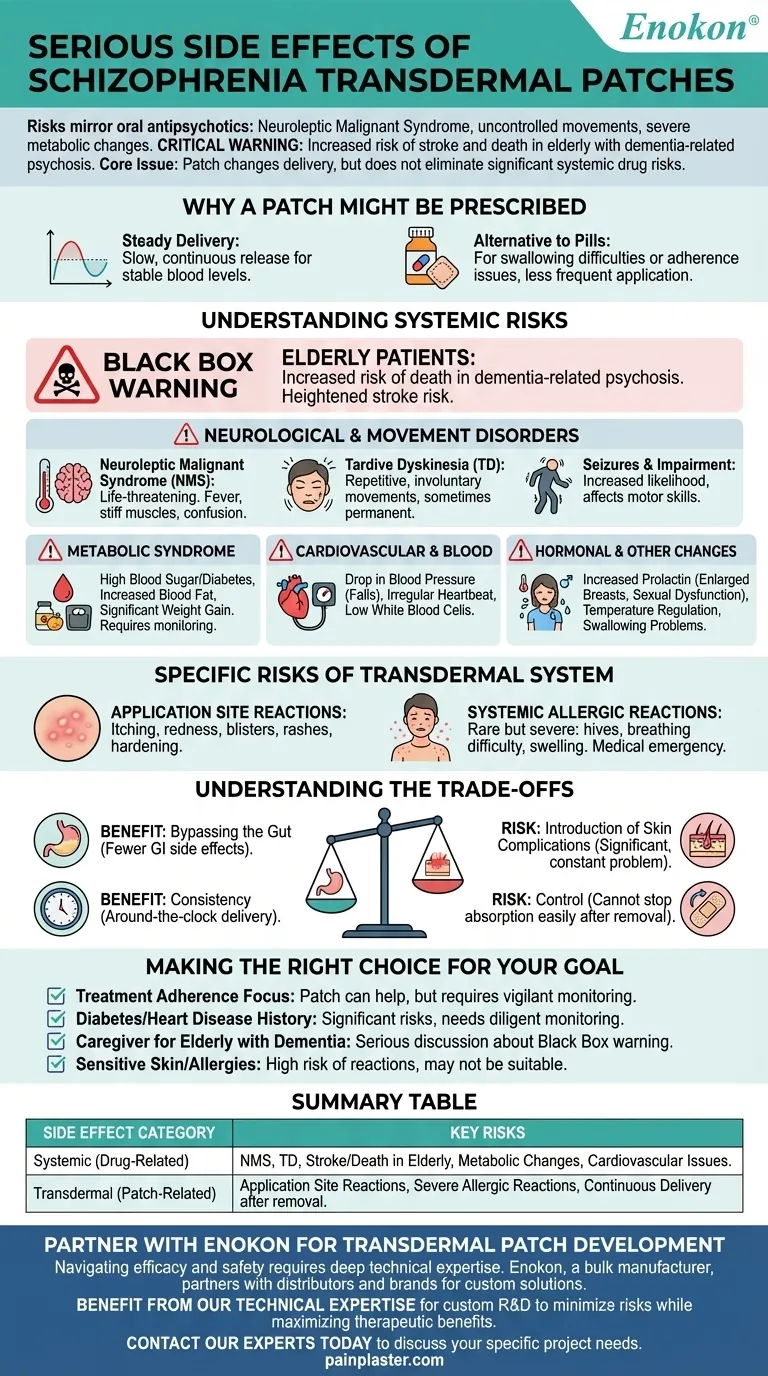
First and foremost, transdermal patches for schizophrenia carry serious risks that mirror those of oral antipsychotics, including a life-threatening reaction called Neuroleptic Malignant Syndrome, uncontrolled body movements, and severe metabolic changes. The most critical warning is an increased risk of stroke and death in elderly patients with dementia-related psychosis.
The core issue is that while a patch changes the delivery method of the medication, it does not eliminate the significant systemic risks of the antipsychotic drug itself. It simply adds a different set of potential complications, primarily related to the skin.
Why a Patch Might Be Prescribed
Before examining the risks, it's important to understand the intended benefits of a transdermal system.
The Goal of Steady Delivery
A patch is designed to release medication slowly and continuously through the skin. This can create a more stable level of the drug in the bloodstream compared to the peaks and valleys associated with oral pills.
An Alternative to Pills or Injections
For individuals who have difficulty swallowing pills or adhering to a daily medication schedule, a patch that is changed less frequently can be a valuable alternative to ensure consistent treatment.
Understanding the Systemic Risks
These are serious side effects caused by the antipsychotic medication circulating in your body, regardless of how it gets there. They are not unique to the patch but are inherent to the drug class.
Black Box Warning: Risks in Elderly Patients
The FDA requires the most serious type of warning for these medications. They are associated with an increased risk of death in elderly people being treated for dementia-related psychosis. There is also a heightened risk of stroke in this population.
Neurological and Movement Disorders
Neuroleptic Malignant Syndrome (NMS) is a rare but life-threatening reaction. Symptoms include high fever, excessive sweating, muscle stiffness, confusion, and changes in heart rate or blood pressure, requiring immediate medical intervention.
Tardive Dyskinesia (TD) is a condition involving repetitive, involuntary body movements, such as grimacing or twitching, which can sometimes be permanent.
Other neurological risks include an increased likelihood of seizures and general impairment of thinking and motor skills, which can affect your ability to operate machinery.
Metabolic Syndrome
A significant concern with antipsychotics is the risk of major metabolic changes. This includes high blood sugar (hyperglycemia) and the development of diabetes, increased blood fat levels (cholesterol and triglycerides), and significant weight gain. Regular monitoring is essential.
Cardiovascular and Blood-Related Issues
These medications can cause a drop in blood pressure upon standing, which can lead to dizziness and falls. They can also cause an irregular heartbeat and, in some cases, a dangerous drop in white blood cell count, which compromises your ability to fight infection.
Hormonal and Other Bodily Changes
Antipsychotics can increase levels of a hormone called prolactin, which may lead to enlarged breasts, milk production, or sexual dysfunction. Other potential issues include difficulty regulating body temperature and problems with swallowing.
Specific Risks of the Transdermal System
These side effects are directly related to using a patch on the skin.
Application Site Reactions
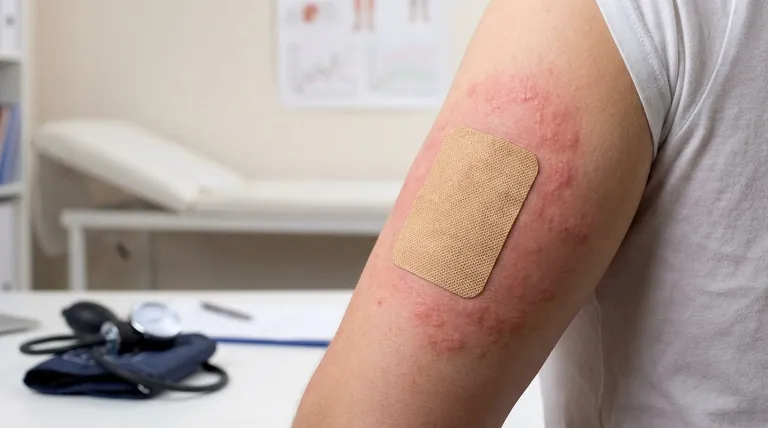
The most common issue is a reaction where the patch is applied. This can range from mild itching, redness, and irritation to more severe reactions like blisters, rashes, or hardening of the skin.
Systemic Allergic Reactions
While rare, a severe allergic reaction is possible. Symptoms include hives, tightness in the throat, difficulty breathing or swallowing, or swelling. This is a medical emergency that requires immediate attention.
Understanding the Trade-offs
The decision to use a transdermal patch involves weighing its unique benefits against a combined set of risks.
The Benefit of Bypassing the Gut
By delivering medication through the skin, the patch avoids initial processing by the stomach and liver. For some individuals, this may lead to fewer gastrointestinal side effects compared to oral tablets.
The Introduction of Skin Complications
The primary trade-off is exchanging potential GI issues for definite skin-related risks. For people with sensitive skin, this can be a significant and constant problem that may lead to discontinuing treatment.
Consistency vs. Control
A patch provides consistent, around-the-clock medication delivery, which can be a major benefit for managing symptoms. However, unlike a pill, you cannot easily stop the dose if a side effect occurs; the medication will continue to be absorbed for some time even after the patch is removed.
Making the Right Choice for Your Goal
Engaging in an open dialogue with your healthcare provider is the only way to determine if a transdermal patch is the appropriate treatment for your specific situation.
- If your primary focus is treatment adherence: A patch can be an excellent tool if you struggle with taking daily pills, but you must be vigilant about monitoring for all potential side effects.
- If you have a history of diabetes or heart disease: The metabolic and cardiovascular risks are significant, and this treatment will require diligent monitoring of your weight, blood sugar, and heart health.
- If you are a caregiver for an elderly person with dementia: You must have a serious discussion with their doctor about the black box warning regarding increased risk of stroke and death.
- If you have sensitive skin or known allergies: The risk of severe application site reactions is high, and this may not be the best delivery system for you.
Ultimately, managing your health is a partnership between you and your medical team, founded on a clear understanding of both the benefits and the risks.
Summary Table:
| Side Effect Category | Key Risks |
|---|---|
| Systemic (Drug-Related) | Neuroleptic Malignant Syndrome (NMS), Tardive Dyskinesia, Increased risk of stroke/death in elderly patients with dementia, Metabolic changes (diabetes, weight gain), Cardiovascular issues. |
| Transdermal (Patch-Related) | Application site reactions (redness, blisters), Severe allergic reactions, Continuous drug delivery even after removal. |
Partner with Enokon for Your Transdermal Patch Development
Navigating the complex balance of efficacy and safety in transdermal drug delivery requires a manufacturer with deep technical expertise. As a bulk manufacturer of reliable transdermal patches and pain plasters, Enokon partners with healthcare and pharma distributors and brands to develop custom solutions.
We can help you address critical formulation and delivery challenges, ensuring patient safety and treatment adherence. Benefit from our technical expertise for custom R&D and development to create patches that minimize risks while maximizing therapeutic benefits.
Contact our experts today to discuss your specific project needs.
Visual Guide
Related Products
- Silicone Scar Sheets Patch Transdermal Drug Patch
- Icy Hot Menthol Medicine Pain Relief Patch
- Far Infrared Heat Pain Relief Patches Transdermal Patches
- Menthol Gel Pain Relief Patch
- Mugwort Wormwood Pain Relief Patch for Neck Pain
People Also Ask
- What role does a silicone-based transdermal delivery system play in Parkinson's? Enhancing Early-Stage Patient Care
- How is the long-term skin tolerance of silicone-based transdermal patches evaluated in clinical settings? R&D and Safety
- Why is a polarizing microscope used to evaluate the long-term stability of transdermal drug patches? Ensure Efficacy.
- What are common adverse effects of transdermal drug delivery? Risks & Prevention Tips
- What are the advantages of transdermal drug patches? Optimize Medication Delivery with Patches









