
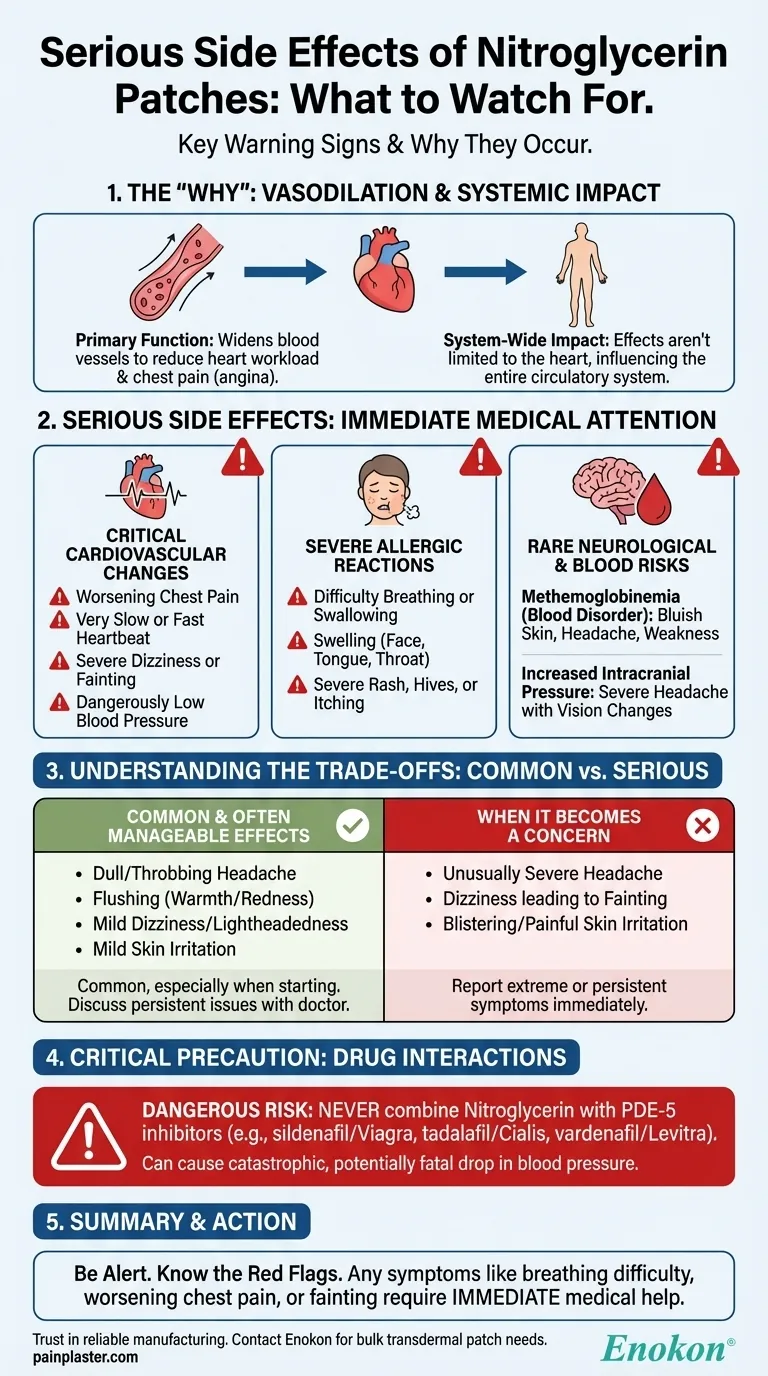
The most serious side effects of nitroglycerin patches involve severe allergic reactions, dangerous changes in heart rate and blood pressure, and in rare cases, specific blood and neurological disorders. Key warning signs include difficulty breathing, worsening chest pain, a very slow or fast heartbeat, severe dizziness or fainting, and blue-tinted skin.
While nitroglycerin patches are a vital tool for managing angina, your primary task is to distinguish between the common, expected side effects and the rare but critical symptoms that require immediate medical intervention.

Why Nitroglycerin Causes Side Effects
The Role of Vasodilation
Nitroglycerin is a vasodilator. Its primary function is to widen your blood vessels.
This widening effect reduces the workload on your heart by making it easier for blood to flow, which helps prevent chest pain (angina). However, this same mechanism is responsible for most of its side effects.
A System-Wide Impact
Because blood vessels are located throughout your body, the patch's effects are not limited to the heart. This systemic impact is what can lead to both common and serious reactions as your entire circulatory system adjusts.
Serious Side Effects That Demand Immediate Attention
If you or someone you know experiences any of the following symptoms while using a nitroglycerin patch, contact a doctor or emergency services immediately.
Severe Allergic Reactions
Your body can have a significant allergic reaction to the medication or the patch adhesive.
Key signs include a severe rash, hives, or itching, as well as swelling of the face, tongue, or throat. The most critical symptoms are difficulty breathing or swallowing.
Critical Cardiovascular Changes
While the patch is meant to help your heart, it can sometimes cause dangerous cardiovascular events.
Be alert for a slow or fast heartbeat, severe dizziness or fainting (signs of dangerously low blood pressure), and most paradoxically, a worsening of your chest pain.
Rare Neurological and Blood-Related Risks
Two rare but extremely serious conditions can occur.
One is methemoglobinemia, a blood disorder where your blood cannot carry oxygen properly. Its distinct signs include a bluish discoloration of the skin, accompanied by headache and weakness.
The other is an increase in intracranial pressure. If you develop a severe headache combined with vision changes, it could signal dangerous pressure building in your brain.
Understanding the Trade-offs: Common vs. Serious
A key part of using this medication safely is knowing which symptoms are expected and which are red flags.
Common and Often Manageable Effects
Because nitroglycerin widens blood vessels, some effects are very common, especially when first starting treatment.
These include a dull or throbbing headache, a feeling of warmth or redness known as flushing, and dizziness or lightheadedness, particularly when standing up quickly. Mild skin redness or itching at the patch site is also normal.
When Common Effects Become a Concern
A common side effect can become serious if it is extreme or persistent.
A headache that is unusually severe, dizziness that leads to fainting, or skin irritation that becomes blistering or painful should be reported to your healthcare provider.
The Critical Precaution: Drug Interactions
The most dangerous risk comes from interaction with other drugs that affect blood pressure.
Nitroglycerin must never be used with PDE-5 inhibitors like sildenafil (Viagra), tadalafil (Cialis), or vardenafil (Levitra). The combination can cause a catastrophic drop in blood pressure, which can be fatal.
How to Apply This to Your Situation
Your response should be dictated by the specific symptoms you are experiencing.
- If your primary focus is managing common side effects: Know that headaches and dizziness often decrease as your body adjusts; discuss persistent issues with your doctor.
- If you are concerned about a potential serious reaction: Do not wait. Any symptom like difficulty breathing, worsening chest pain, fainting, or blue skin requires immediate medical help.
- If you are taking multiple medications: Ensure your doctor and pharmacist are aware of every medication and supplement you use to prevent dangerous interactions.
Understanding these distinctions empowers you to use this medication safely while recognizing the clear signals that demand urgent action.
Summary Table:
| Serious Side Effect | Key Warning Signs |
|---|---|
| Severe Allergic Reaction | Difficulty breathing, swelling of face/tongue, severe rash/hives |
| Dangerous Heart/Blood Pressure Changes | Worsening chest pain, very slow/fast heartbeat, fainting, severe dizziness |
| Methemoglobinemia (Blood Disorder) | Bluish skin, headache, weakness, shortness of breath |
| Increased Intracranial Pressure | Severe headache, vision changes |
Need a reliable, high-quality transdermal patch supplier?
If you are a healthcare or pharmaceutical distributor or brand, ensuring the safety and efficacy of your products is paramount. Enokon is a bulk manufacturer of reliable transdermal patches and pain plasters. Our technical expertise supports custom R&D and development to meet your specific requirements, helping you deliver safe and effective treatments to the market.
Contact our experts today to discuss your transdermal patch needs and benefit from our manufacturing excellence.
Visual Guide
Related Products
- Herbal Medicated Anti Diarrhea Patch for Digestive Relief
- Asthma Cough and Pain Relief Patch for Adults and Kids
- Menthol Gel Pain Relief Patch
- Lidocaine Hydrogel Pain Relief Patch for Pain Relief
- Icy Hot Menthol Medicine Pain Relief Patch
People Also Ask
- What activities should be avoided while using this patch? Key Precautions for Safe & Effective Use
- What should be avoided when using the patch? Key Safety Tips for Herbal Patch Users
- What should be done if a patch falls off or a dose is missed? Quick Fixes & Safety Tips
- What should be done if a patch comes loose or falls off? Ensure Continuous & Effective Treatment
- What lifestyle factors should be considered with the patch? Ensure Safe and Effective Medication Delivery



















