
To properly apply the granisetron transdermal patch, you must first select a clean, dry, and hairless area of skin on your upper outer arm. After removing the patch from its pouch, you will peel off a two-piece plastic liner from the sticky side before pressing it firmly onto the prepared skin for at least 30 seconds to ensure it is completely sealed.
Applying a transdermal patch is more than just a simple sticker. The effectiveness of your medication depends directly on proper skin preparation and creating a secure, complete seal that allows the drug to be absorbed consistently over time.
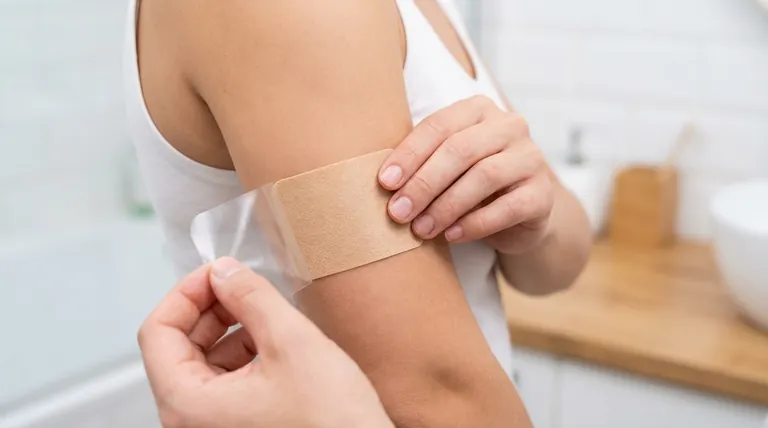
A Detailed Guide to Patch Application
Following a precise method ensures the medication works as intended while minimizing the risk of skin irritation or the patch falling off prematurely. We can break the process down into three distinct phases.
Phase 1: Preparation
Your first steps are focused on creating the ideal environment for the patch to adhere and function correctly.
Remove Any Old Patch If you are replacing a patch, remove the old one first. Fold it in half with the sticky sides together and dispose of it safely, away from children and pets.
Wash Your Hands Thoroughly wash your hands with soap and water to prevent contamination of the patch or application site.
Select and Prepare the Skin Choose a spot on your upper outer arm. The skin should be clean, dry, and as hairless as possible. The site must be free of any cuts, sores, redness, or irritation.
Clean the Area Clean the application site with plain water only and pat it completely dry. Do not use soaps, oils, lotions, alcohol, or other products, as they can leave a residue that interferes with both adhesion and medication absorption.
Phase 2: The Application Process
Handle the patch carefully to protect the medication and ensure a strong bond with the skin.
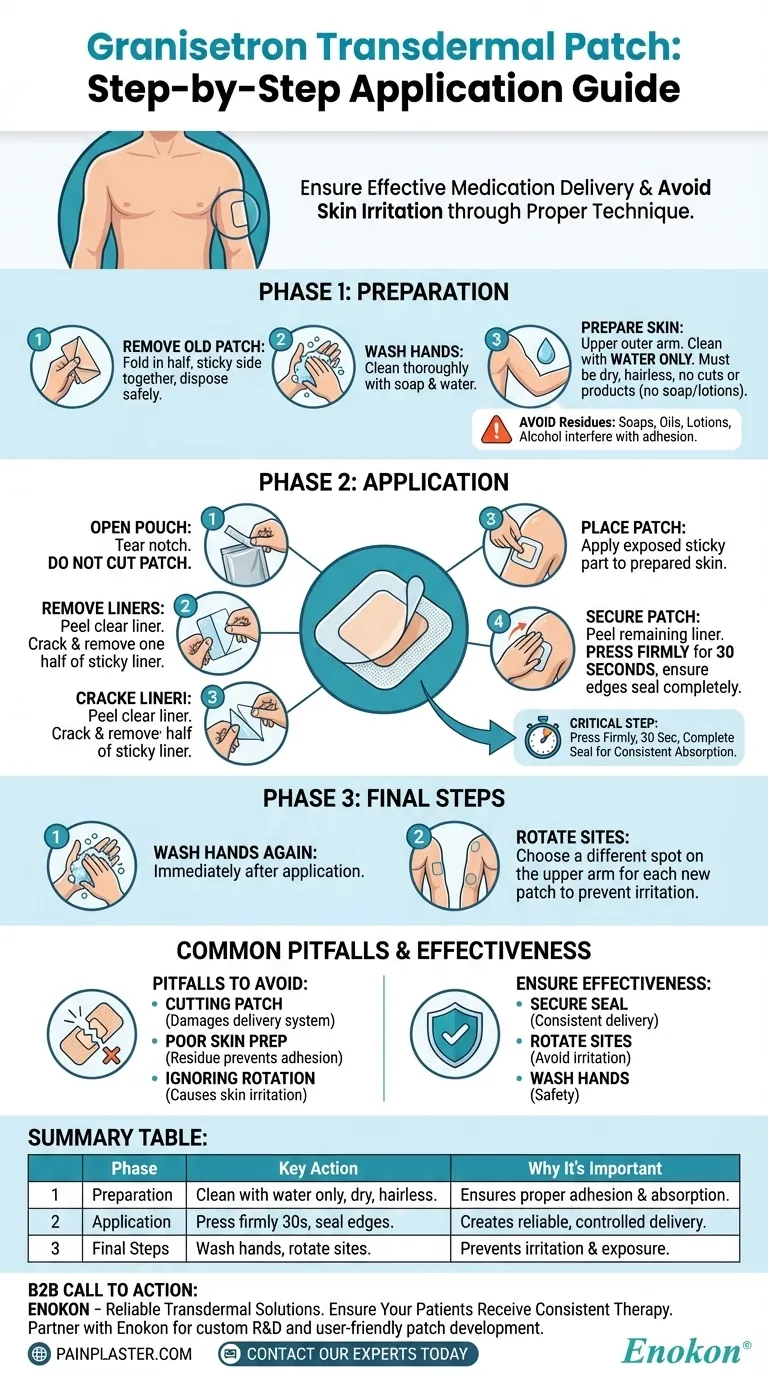
Open the Pouch Tear open the foil pouch at the designated notch. Be careful not to damage the patch inside. Crucially, never cut a granisetron patch, as this will damage the drug-delivery system.
Remove the Protective Liners The granisetron patch has a specific, multi-part liner. First, peel off the thin, clear plastic liner from the printed (non-sticky) side. Then, bend the patch in the middle to crack the thicker liner on the sticky side, removing one piece of it.
Place the Patch on the Skin Holding the remaining piece of the liner, apply the exposed sticky part of the patch to the prepared area on your skin.
Secure the Patch Carefully peel off the second piece of the liner and press the entire patch down firmly with the palm of your hand. Pay special attention to the edges, ensuring they are completely sealed. Hold firm pressure for at least 30 seconds.
Phase 3: Final Steps
A few simple actions after application are critical for safety.
Wash Your Hands Again Immediately wash your hands with soap and water to remove any medication that may have transferred to your fingers. This prevents accidental contact with your eyes or other sensitive areas.
Rotate Application Sites When it's time to apply a new patch, choose a different spot on your upper outer arm. Consistently rotating the site helps prevent skin irritation and sensitivity from developing.
Common Pitfalls and Why to Avoid Them
Understanding the reasoning behind each step helps prevent common errors that can compromise your treatment.
The Risk of Cutting a Patch
A transdermal patch is a sophisticated drug delivery system, not a simple bandage. Cutting it destroys the membrane that controls the rate of medication release, which can lead to an incorrect and potentially unsafe dose.
Poor Adhesion from Improper Skin Prep
The most common reason a patch fails to stick is residue on the skin. Soaps, lotions, and oils create a barrier that prevents the adhesive from making full contact, which can dramatically reduce the amount of medication you receive.
Forgetting to Rotate Sites
Applying a patch to the same spot repeatedly can lead to contact dermatitis—a red, itchy, or irritated rash. Rotating sites gives your skin time to recover between applications.
Ensuring Maximum Effectiveness
Your specific priorities will determine which steps you should focus on the most.
- If your primary focus is consistent medication delivery: The most critical step is pressing the patch firmly onto clean, dry skin for 30 seconds to achieve a perfect, gap-free seal.
- If your primary focus is avoiding skin irritation: Diligently rotating the application site between different areas on your upper arms is the most important habit to develop.
- If your primary focus is safety: Never cut the patch, always wash your hands after handling it, and ensure old patches are folded and disposed of properly.
By following these steps with precision, you can ensure your medication is delivered safely and effectively.
Summary Table:
| Phase | Key Action | Why It's Important |
|---|---|---|
| Preparation | Clean skin with water only; ensure it's dry and hairless. | Ensures proper adhesion and consistent medication absorption. |
| Application | Press patch firmly for 30 seconds, paying attention to the edges. | Creates a complete seal for reliable, controlled drug delivery. |
| Final Steps | Wash hands and rotate the application site for each new patch. | Prevents skin irritation and accidental exposure to medication. |
Ensure Your Patients Receive Consistent, Reliable Therapy
Proper application is critical for the success of any transdermal patch product. As a bulk manufacturer of reliable transdermal patches and pain plasters, Enokon provides healthcare and pharmaceutical distributors and brands with the technical expertise needed for custom R&D and development.
Partner with us to deliver superior patient experiences. Our team can help you develop patches with user-friendly application features and reliable adhesion.
Contact our experts today to discuss your transdermal product needs.
Visual Guide
Related Products
- Far Infrared Heat Pain Relief Patches Transdermal Patches
- Silicone Scar Sheets Patch Transdermal Drug Patch
- Icy Hot Menthol Medicine Pain Relief Patch
- Menthol Gel Pain Relief Patch
- Mugwort Wormwood Pain Relief Patch for Neck Pain
People Also Ask
- Why is the selection of matrix materials critical when developing customized transdermal patches? Optimize Efficacy
- What are the physical impacts of external heat exposure on the performance and safety of transdermal patches? - Guide
- What role does a skin tolerance scoring system play in the safety evaluation of transdermal patches? Key Safety Metrics
- What are the clinical advantages of local transdermal delivery systems? Unlock Safer, More Effective Pain Relief Solutions
- How does high-purity far-infrared ceramic powder contribute to the efficacy of far-infrared physical therapy patches?















