
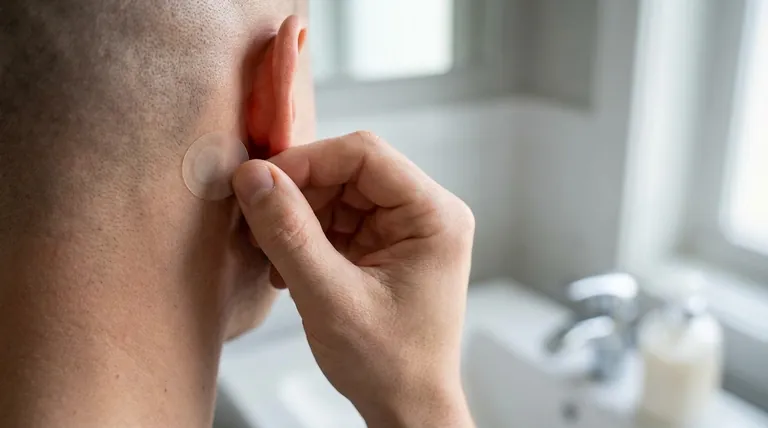
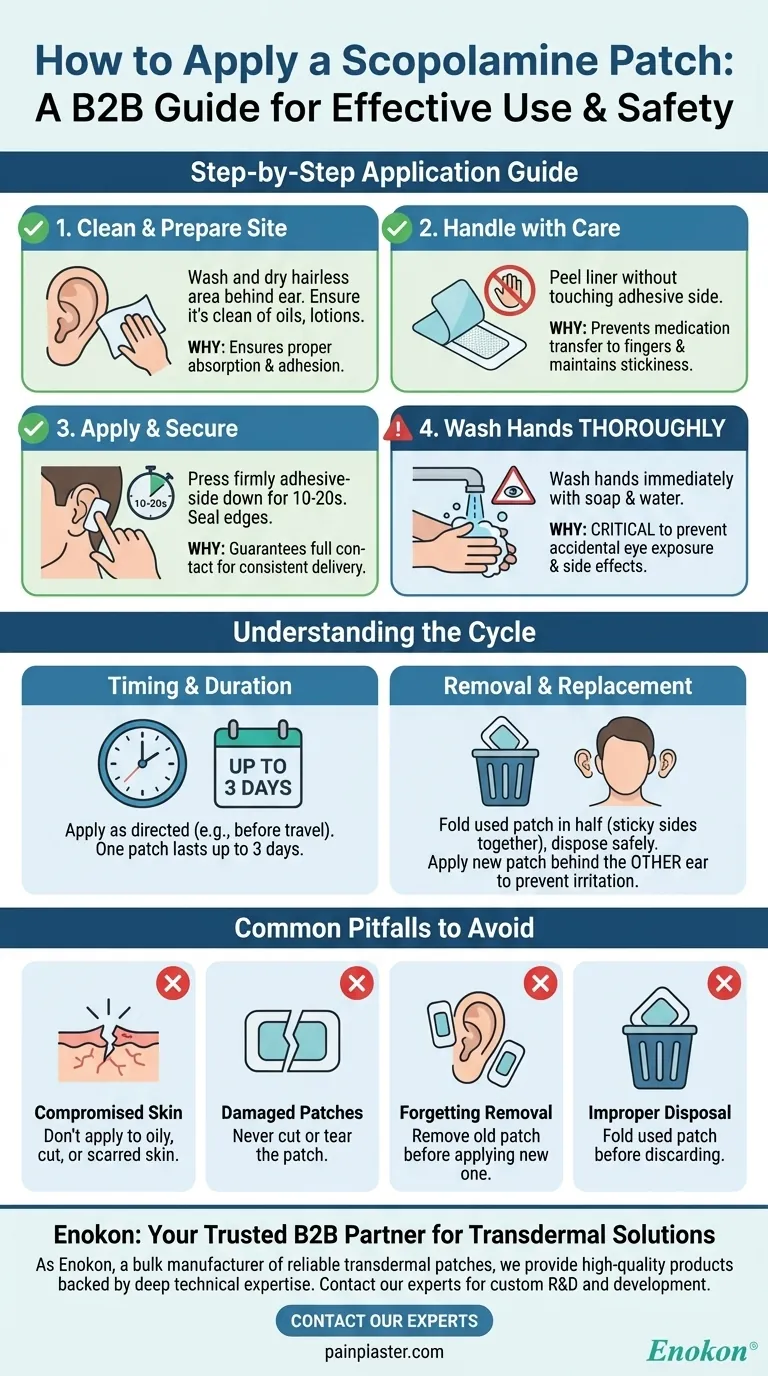
To apply the scopolamine patch, you must first wash and dry the hairless area of skin behind one ear. After removing the patch from its pouch and peeling off the protective liner, press it firmly, adhesive-side down, onto the clean skin. Finally, wash your hands thoroughly with soap and water to remove any medication residue.
The core principle of applying a scopolamine patch is to ensure consistent drug delivery through clean skin contact while preventing accidental exposure to your eyes or mouth, which can cause significant side effects.
The "Why" Behind Each Step
Proper application is more than just making the patch stick; it's about ensuring the medication works effectively and safely. Each step serves a critical purpose.
Preparing the Application Site
The patch must be applied to a clean, dry, and hairless area of skin to ensure full contact. The area specifically for scopolamine is behind the ear.
Oils, lotions, soaps, or residues on the skin can block the medication from being absorbed properly and interfere with the adhesive.
Handling the Patch
When you remove the patch from its pouch, be careful to peel off the protective liner without touching the adhesive side.
Touching the sticky surface can transfer medication to your fingers and reduce the patch's ability to adhere to your skin.
Securing the Patch
Once placed on the skin, press down firmly with your palm for at least 10 to 20 seconds. Make sure the edges are sealed completely.
This firm pressure ensures the patch makes full contact, which is essential for the medication to begin absorbing into your system consistently.
The Critical Final Step: Washing Your Hands
This is arguably the most important safety step. You must wash your hands thoroughly with soap and water immediately after handling the patch.
Any scopolamine residue transferred from your fingers to your eyes can cause significant side effects like blurred vision and pupil dilation.
Understanding the Application Cycle
Using a transdermal patch correctly involves managing its entire lifecycle, from initial application to removal and replacement.
Timing and Duration
Always follow your doctor's instructions on when to apply the patch, which is typically several hours before it's needed (e.g., before travel).
A single scopolamine patch is designed to be worn for up to three days.
Removing and Replacing
When it's time to change the patch, peel off the old one and fold it in half with the sticky sides together before discarding it safely away from children and pets.
Apply the new patch to the clean, dry area behind the other ear. Rotating sites helps prevent skin irritation.
Common Pitfalls and How to Avoid Them
Simple mistakes can compromise the patch's effectiveness or cause unwanted side effects. Understanding these pitfalls is key to a better experience.
Applying to Compromised Skin
Never apply a patch to skin that is oily, irritated, cut, or scarred. The skin must be intact for predictable and safe medication absorption.
Using Damaged Patches
Do not cut or tear the patch. This can damage the medication delivery system, leading to an incorrect dose.
Forgetting to Remove the Old Patch
Leaving an old patch on while applying a new one can lead to an overdose of the medication. Always remove the previous patch first.
Improper Disposal
Simply throwing the used patch in the trash without folding it can expose pets or children to the potent medication remaining on the adhesive.
Applying This to Your Goal
Your approach should be guided by whether your primary concern is ensuring the patch works as intended or preventing potential side effects.
- If your primary focus is maximum effectiveness: Ensure the skin behind your ear is perfectly clean and dry, and press the patch firmly for at least 20 seconds to guarantee adhesion.
- If your primary focus is maximum safety: Make washing your hands thoroughly with soap and water your highest priority immediately after touching the patch.
- If your primary focus is long-term comfort: Always rotate the application site to the opposite ear with each new patch to minimize the risk of skin irritation.
Following these steps ensures the medication works as intended, providing you with relief safely and effectively.
Summary Table:
| Step | Action | Key Reason |
|---|---|---|
| 1 | Wash & dry hairless skin behind the ear. | Ensures clean skin for proper drug absorption and adhesion. |
| 2 | Remove patch from pouch; avoid touching adhesive. | Prevents transfer of medication to fingers and loss of stickiness. |
| 3 | Press patch firmly on skin for 10-20 seconds. | Guarantees full skin contact for consistent medication delivery. |
| 4 | Wash hands thoroughly with soap and water. | Critical safety step to prevent accidental eye exposure and side effects. |
Need a reliable supplier for transdermal patches like scopolamine?
As Enokon, a bulk manufacturer of reliable transdermal patches and pain plasters, we provide healthcare and pharma distributors and brands with high-quality products backed by deep technical expertise. Benefit from our custom R&D and development services to create the precise patches your market needs.
Contact our experts today to discuss your requirements and how we can support your product line.
Visual Guide
Related Products
- Asthma Cough and Pain Relief Patch for Adults and Kids
- Lidocaine Hydrogel Pain Relief Patch for Pain Relief
- Menthol Gel Pain Relief Patch
- Herbal Medicated Anti Diarrhea Patch for Digestive Relief
- Icy Hot Menthol Medicine Pain Relief Patch
People Also Ask
- What role do natural ingredients and acupoint stimulation play in a cough relief patch? Synergistic Relief Explained
- What are the key benefits of using the cough relief patch? Soothe Your Cough with Targeted, Non-Oral Relief
- How does the cough relief patch provide targeted relief? Direct, Soothing Comfort for Coughs & Chest Congestion
- What makes the cough relief patch a convenient option for managing coughs? A Mess-Free, On-the-Go Solution
- What are the different types of pain relief patches available? Find the Right Solution for Your Pain


















