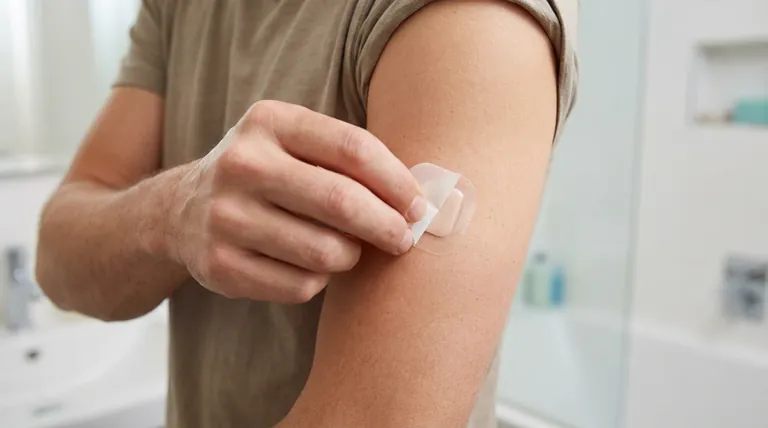
To properly apply a nitroglycerin patch, you must first select a clean, dry, and relatively hairless area of skin on the upper body. After washing your hands, you will hold the patch with the plastic backing facing you, bend it to snap the backing open, peel off one side, and press the sticky surface firmly onto the prepared skin before removing the second piece of backing.
The goal is not just to apply the patch, but to ensure a consistent, safe delivery of medication. This requires careful site selection, a precise application technique, and strict adherence to your prescribed schedule.
Preparing for Application: The First Critical Steps
Before you even open the patch, a few preparatory actions are essential for safety and effectiveness.
Choosing the Right Location
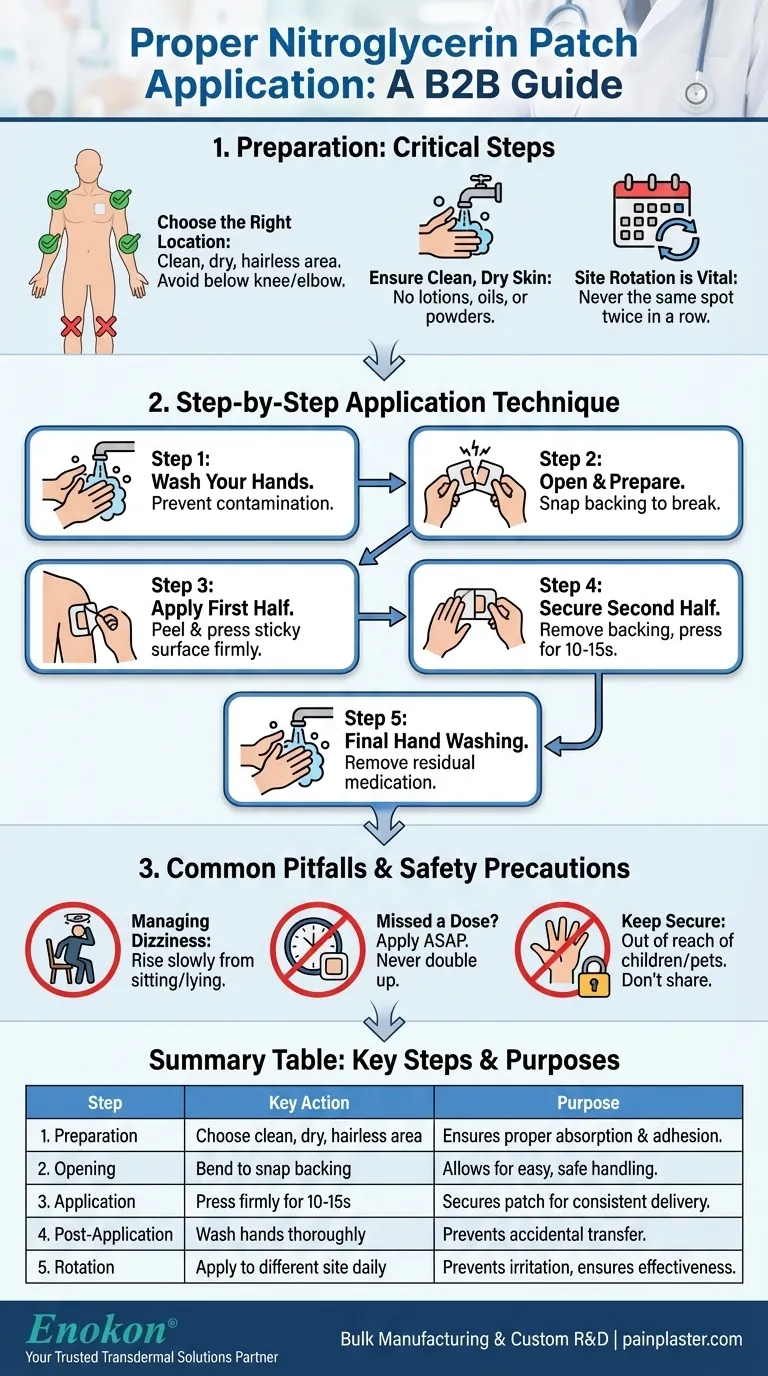
The patch must be applied to a clean, dry, and relatively hairless area of skin. The chest, upper arm, or back are common and effective sites.
Crucially, avoid applying the patch below the knee or elbow. This ensures the medication is absorbed into the bloodstream correctly.
Ensuring Clean, Dry Skin
The chosen site should be free of lotions, oils, or powders, as these can prevent the patch from sticking properly. If you need to clean the area, use plain soap and water, and dry it completely.
The Importance of Site Rotation
Never apply a new patch to the exact same spot two days in a row. Rotating the application site is vital to prevent skin irritation and ensure consistent absorption of the medication over time.
The Step-by-Step Application Technique
Follow this exact process to ensure the patch is applied correctly and securely.
Step 1: Wash Your Hands
Thoroughly wash and dry your hands before handling the patch to prevent contamination.
Step 2: Open and Prepare the Patch
Hold the patch with the plastic backing facing you. Gently bend the sides of the patch until you hear or feel a "snap." This breaks the backing, making it easy to peel off.
Step 3: Apply the First Half
Peel off one side of the plastic backing. Place the sticky, exposed half of the patch onto the chosen skin site. Press down firmly and smooth it out to ensure good contact.
Step 4: Secure the Second Half
Fold back the other side of the patch. Use the remaining piece of backing as a handle to pull the rest of the patch across your skin. Remove the second piece of backing and press the entire patch down for 10-15 seconds.
Step 5: Final Hand Washing
Wash your hands again immediately after applying the patch. This removes any residual medication from your fingers, preventing you from accidentally touching your eyes or transferring it to others.
Common Pitfalls and Safety Precautions
Understanding potential issues is key to using nitroglycerin patches safely.
Managing Dizziness
Nitroglycerin can cause dizziness or lightheadedness, especially when you first start using it. To minimize this, rise slowly when getting up from a sitting or lying position.
What to Do If You Miss a Dose
If you forget to apply a patch, apply one as soon as you remember. However, if it's almost time for your next scheduled patch, skip the missed one and resume your normal schedule.
Never wear two patches at once to "catch up" unless specifically instructed by your healthcare provider.
Keeping the Medication Safe
This medication is prescribed for you and should never be shared. Always keep patches out of the reach of children and pets, as accidental contact can be dangerous.
Making the Right Choice for Your Treatment
Your adherence to these guidelines directly impacts the medication's effectiveness and your safety.
- If your primary focus is consistent dosage: Adhere strictly to your prescribed "on" and "off" schedule to prevent building a tolerance to the medication.
- If your primary focus is preventing skin irritation: Make site rotation a non-negotiable part of your daily routine.
- If your primary focus is overall safety: Always wash your hands after application and be mindful of potential side effects like dizziness.
Following these precise steps ensures your nitroglycerin patch works exactly as your doctor intended.
Summary Table:
| Step | Key Action | Purpose |
|---|---|---|
| 1. Preparation | Choose a clean, dry, hairless area (e.g., chest, upper arm). | Ensures proper medication absorption and adhesion. |
| 2. Opening | Bend the patch to snap the plastic backing. | Allows for easy, safe handling of the medication. |
| 3. Application | Press the patch firmly onto the skin for 10-15 seconds. | Secures the patch for consistent drug delivery. |
| 4. Post-Application | Wash hands thoroughly. | Prevents accidental transfer of medication. |
| 5. Rotation | Apply each new patch to a different site. | Prevents skin irritation and ensures effectiveness. |
Need a reliable, high-quality transdermal patch for your healthcare brand or pharmacy?
At Enokon, we are a bulk manufacturer of reliable transdermal patches and pain plasters. We specialize in custom R&D and development to create patches that meet precise dosage and delivery requirements, just like the nitroglycerin patch described. Our technical expertise ensures your product is safe, effective, and easy for end-users to apply correctly.
Partner with us to enhance your product line with trusted transdermal solutions.
Contact our experts today to discuss your custom patch development needs.
Visual Guide
Related Products
- Herbal Medicated Anti Diarrhea Patch for Digestive Relief
- Asthma Cough and Pain Relief Patch for Adults and Kids
- Menthol Gel Pain Relief Patch
- Icy Hot Menthol Medicine Pain Relief Patch
- Lidocaine Hydrogel Pain Relief Patch for Pain Relief
People Also Ask
- What activities should be avoided while using this patch? Key Precautions for Safe & Effective Use
- What should be done if a patch falls off or a dose is missed? Quick Fixes & Safety Tips
- What should be avoided when using the patch? Key Safety Tips for Herbal Patch Users
- What should be done if a patch comes loose or falls off? Ensure Continuous & Effective Treatment
- What lifestyle factors should be considered with the patch? Ensure Safe and Effective Medication Delivery