
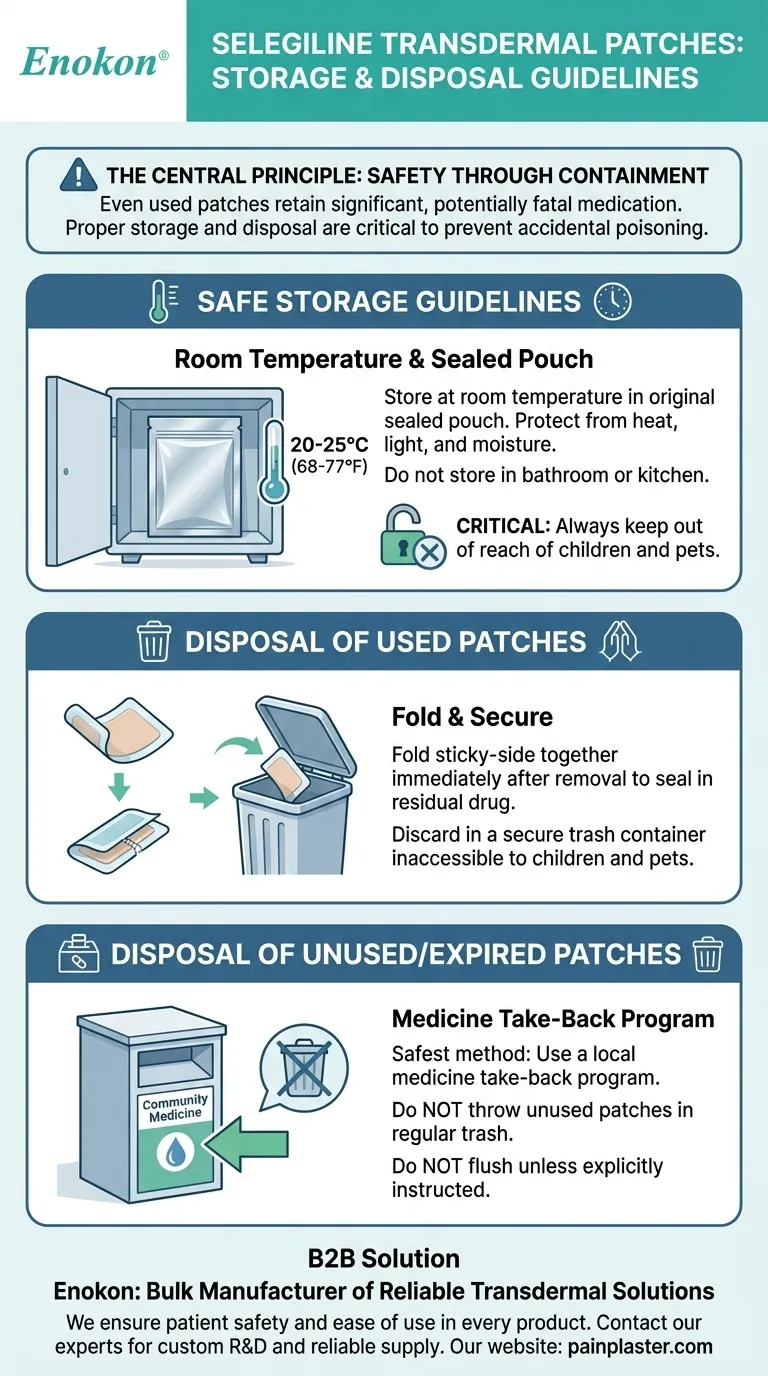
To safely manage selegiline transdermal patches, you must store them at room temperature in their original sealed pouch, away from heat and moisture. Used patches should be folded sticky-side together and discarded in a secure trash container, while unused or expired patches should be taken to a medicine take-back program. Both used and unused patches must be kept out of reach of children and pets at all times.
The central principle for selegiline patch management is safety through containment. Because even used patches retain a significant and potentially fatal amount of active medication, proper storage and disposal are not just about preserving efficacy—they are critical safety measures to prevent accidental poisoning.
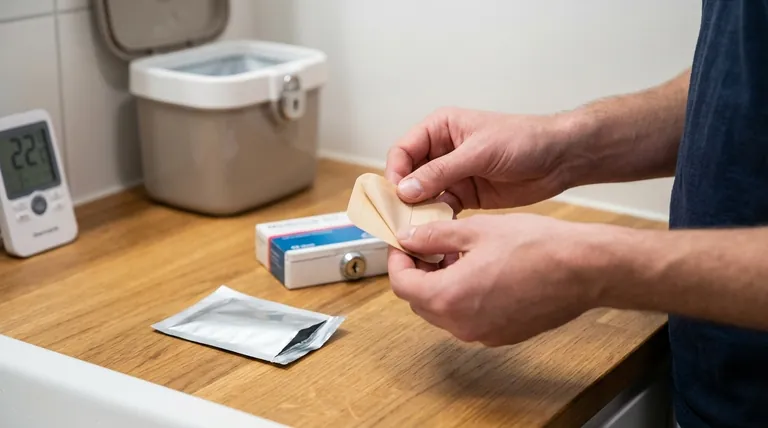
The Principles of Safe Storage
Proper storage is the first line of defense in ensuring your medication is both effective and safe for everyone in your household. The guidelines are straightforward and serve specific purposes.
Keep It at Room Temperature
The medication in a selegiline patch is sensitive to environmental conditions. Storing it at room temperature, typically 20-25°C (68-77°F), ensures the drug remains stable and the patch's adhesive layer remains intact.
Avoid storing patches in places with fluctuating temperatures and humidity, like a bathroom or kitchen. Heat and moisture can degrade the medication and compromise the patch's ability to stick to your skin.
The Importance of the Protective Pouch
Each patch comes in an individual, sealed protective pouch for a reason. This pouch shields it from light, air, and moisture, all of which can reduce its effectiveness.
Only open a pouch when you are immediately ready to apply the patch. Storing a patch outside of its pouch exposes it to the elements and renders it less effective and potentially unsafe.
Why "Out of Reach" is Critical
This is the single most important safety rule. Both new and used patches contain selegiline, a potent medication.
If a child or pet chews on or ingests a patch, they can receive a massive, potentially fatal overdose. Always store patches in a location that children and pets absolutely cannot access.
Proper Disposal: A Step-by-Step Guide
Disposing of a transdermal patch is not like throwing away a typical bandage. The method differs depending on whether the patch is used or has expired.
Disposing of a Used Patch
Immediately after removing a patch, fold it in half with the sticky sides pressed firmly together. This seals in most of the remaining medication.
Place the folded patch back into its empty pouch or another sealable container. Dispose of it in a trash can with a secure lid that is inaccessible to children and pets.
Handling Unused or Expired Patches
The safest and most environmentally responsible way to dispose of unused or expired patches is through a medicine take-back program. These programs are often available at local pharmacies or police departments.
Do not simply throw unused patches in the trash, as they contain the full dose of medication. If a take-back program is not available, consult your pharmacist for guidance.
What Not to Do
Unless explicitly instructed by a pharmacist for a specific high-risk medication, do not flush selegiline patches down the toilet. While this prevents accidental ingestion, it introduces medication into the water supply, which can have negative environmental consequences.
Understanding the Risks and Trade-offs
The strict guidelines for selegiline patches are based on a clear understanding of the risks associated with transdermal drug delivery systems.
The Danger of Residual Medication
A transdermal patch is designed to deliver a steady dose of medication over a 24-hour period, but it is not "empty" when you remove it. A significant amount of the active drug remains in the patch's matrix.
This residual medication is the primary reason that careful, secure disposal is non-negotiable. The patch remains a potent source of the drug long after it has been removed from your skin.
Why Disposal Instructions Can Vary
You may encounter different disposal advice for different types of patches. For example, some opioid or stimulant (e.g., methylphenidate) patches may have instructions to be flushed.
This difference is due to risk assessment. For drugs with a very high potential for abuse and diversion, the immediate risk of someone retrieving the patch from the trash outweighs the environmental concern of flushing. For selegiline, the primary risk is accidental poisoning, which is best mitigated by secure trash disposal.
A Quick Reference for Safe Handling
Use these key actions to ensure you are managing your medication correctly and safely.
- For daily storage: Keep patches in their sealed pouch in a cool, dry place, such as a locked cabinet or a high shelf in a bedroom closet.
- After applying a patch: Immediately fold the used one sticky-side together and dispose of it in a secured trash container that children or pets cannot open.
- For unused or expired medication: The gold standard is to use a community medicine take-back program to ensure the safest possible disposal.
Proper handling of your selegiline patches is a critical part of your treatment, ensuring both your personal safety and the medication's intended effect.
Summary Table:
| Action | Key Guideline | Purpose |
|---|---|---|
| Storage | Keep in sealed pouch at room temperature (20-25°C). | Protects drug stability and patch integrity. |
| Disposal (Used) | Fold sticky sides together; discard in secure trash. | Seals in residual medication to prevent poisoning. |
| Disposal (Unused/Expired) | Use a medicine take-back program. | Safest method to eliminate risk of misuse. |
| General Safety | Always keep out of reach of children and pets. | Prevents potentially fatal accidental ingestion. |
Need a reliable, high-quality supply of transdermal patches? As Enokon, a bulk manufacturer of reliable transdermal patches and pain plasters for healthcare and pharma distributors and brands, we ensure every product is designed with patient safety and ease of use in mind. Our technical expertise supports custom R&D to meet your specific requirements. Let us help you deliver safe and effective transdermal solutions to your customers.
Contact our experts today to discuss your needs!
Visual Guide
Related Products
- Silicone Scar Sheets Patch Transdermal Drug Patch
- Far Infrared Heat Pain Relief Patches Transdermal Patches
- Menthol Gel Pain Relief Patch
- Icy Hot Menthol Medicine Pain Relief Patch
- Mugwort Wormwood Pain Relief Patch for Neck Pain
People Also Ask
- What role does a silicone-based transdermal delivery system play in Parkinson's? Enhancing Early-Stage Patient Care
- How is the long-term skin tolerance of silicone-based transdermal patches evaluated in clinical settings? R&D and Safety
- Why is a polarizing microscope used to evaluate the long-term stability of transdermal drug patches? Ensure Efficacy.
- What are common adverse effects of transdermal drug delivery? Risks & Prevention Tips
- What are the advantages of transdermal drug patches? Optimize Medication Delivery with Patches


















