
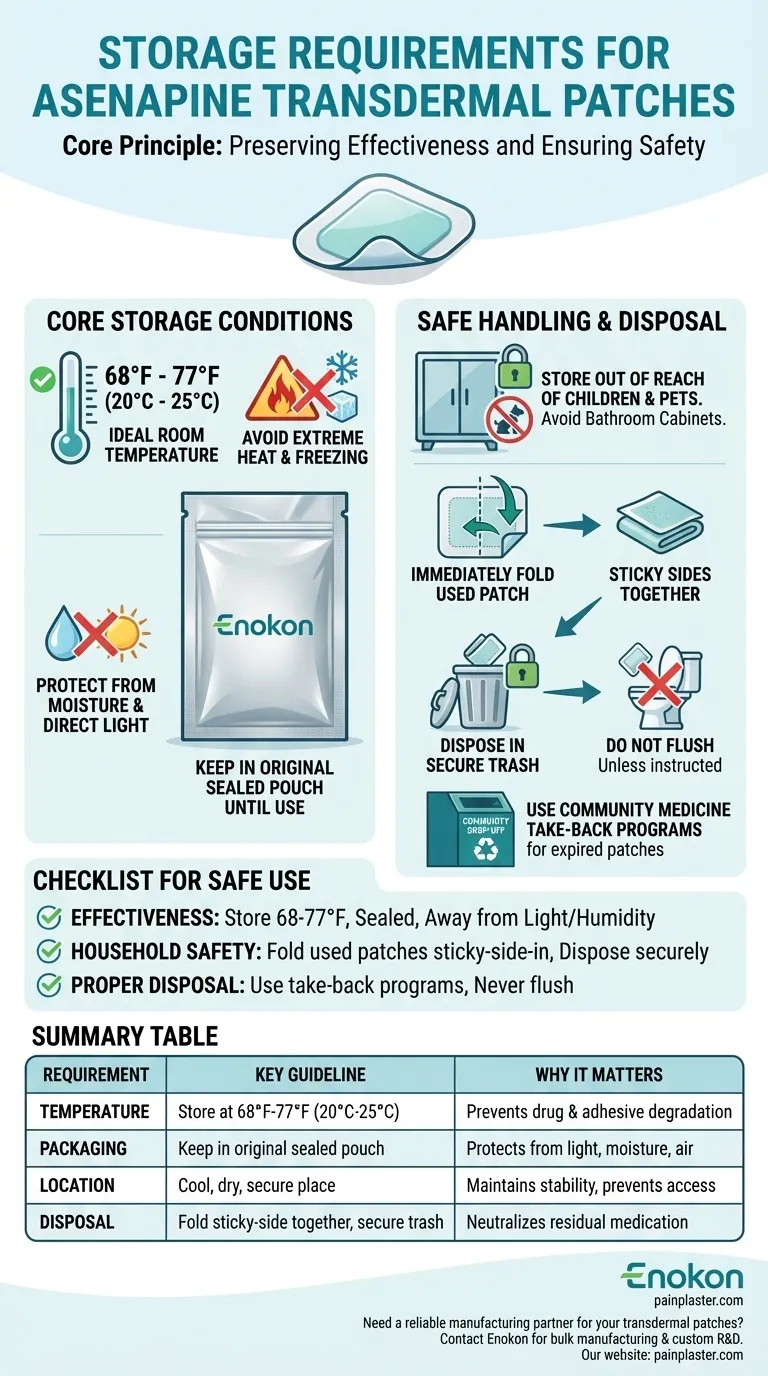
To put it simply, asenapine transdermal patches must be stored at room temperature in their original sealed pouch. It is critical to keep them away from sources of heat, moisture, and direct light to ensure the medication remains stable and effective.
The core principle is not just about preserving the medication's effectiveness, but also about ensuring safety. Proper storage and disposal prevent the patch's potent active ingredient from being compromised by the environment or accidentally exposing children and pets to harm.
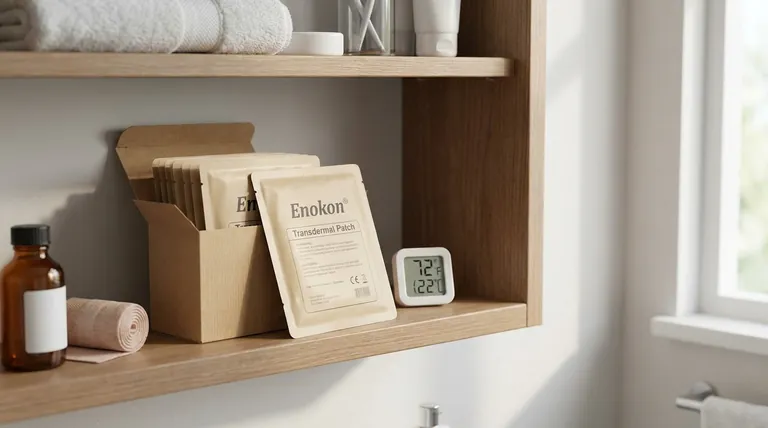
The Core Principles of Transdermal Patch Storage
Understanding why these storage rules exist helps ensure your medication works as intended. The patch is a complex system designed to deliver medication steadily through the skin, and its components are sensitive to environmental conditions.
Maintaining the Right Temperature
The term "room temperature" for pharmaceuticals generally means between 68°F and 77°F (20°C and 25°C).
Brief periods, such as during transport, at temperatures between 59°F and 86°F (15°C and 30°C) are typically acceptable.
Extreme heat can degrade the asenapine within the patch and damage the adhesive, preventing it from sticking properly. You should also never freeze the patches, as this can damage the drug matrix and compromise its structure.
Protecting from Moisture and Light
The patch's adhesive is designed to stick to skin, and exposure to moisture or high humidity before application can weaken it significantly.
Furthermore, many medications, including asenapine, can be degraded by direct light. The original packaging is designed to be a barrier against both moisture and light.
The Importance of the Sealed Pouch
The foil or paper pouch the patch comes in is its primary protective barrier.
Keep the patch inside its sealed pouch until the moment you are ready to apply it. Opening it prematurely exposes it to air, light, and humidity, which immediately begins to compromise its integrity.
Safe Handling and Disposal: A Critical Responsibility
Because transdermal patches contain a powerful medication, handling them safely before and after use is a critical responsibility.
Keeping Unused Patches Secure
Store the box of patches in a safe place that is out of the reach of children and pets. A high cabinet or a locked medicine box are ideal locations.
The bathroom medicine cabinet is often a poor choice due to the fluctuating heat and humidity from showers and baths.
Neutralizing Used Patches Immediately
Even after a patch has been worn for the prescribed time, it still contains a significant amount of active medication. This residue can be extremely dangerous if touched, chewed, or ingested by a child or pet.
As soon as you remove a patch, fold it in half with the sticky sides together. This seals in the remaining medication and makes the adhesive surfaces inert.
The Final Disposal Step
Place the folded patch back into its original pouch if possible. Dispose of it in a trash can with a lid that children and pets cannot easily access.
Do not flush patches down the toilet unless specifically instructed to do so by a pharmacist or the manufacturer's instructions. This prevents the medication from entering the water supply. For expired or unneeded patches, a community medicine take-back program is the safest disposal method.
A Checklist for Safe and Effective Use
Follow these clear guidelines to manage your asenapine transdermal patches correctly.
- If your primary focus is medication effectiveness: Always store patches between 68-77°F (20-25°C) in their sealed pouch, away from light and humidity, until the moment of application.
- If your primary focus is household safety: Immediately fold used patches sticky-side-in and dispose of them in a secure trash receptacle that is inaccessible to children and pets.
- If your primary focus is proper disposal: Use an official medicine take-back program for any expired patches and never flush used patches down the toilet.
Proper storage and disposal are essential safety practices that protect both the patient and their entire household.
Summary Table:
| Requirement | Key Guideline | Why It Matters |
|---|---|---|
| Temperature | Store at 68°F-77°F (20°C-25°C) | Prevents degradation of the drug and adhesive. |
| Packaging | Keep in original sealed pouch until use | Protects from light, moisture, and air exposure. |
| Location | Store in a cool, dry, secure place | Maintains stability and prevents access by children/pets. |
| Disposal | Fold used patch sticky-side together, dispose in secure trash | Neutralizes residual medication to prevent accidental exposure. |
Need a reliable manufacturing partner for your transdermal patches?
As a bulk manufacturer of trusted transdermal patches and pain plasters, Enokon provides the technical expertise for custom R&D and development. We ensure your products, like asenapine patches, are designed with stability and safety as top priorities from the start.
Let's discuss your project requirements. Contact our experts today to benefit from our reliable manufacturing solutions.
Visual Guide
Related Products
- Silicone Scar Sheets Patch Transdermal Drug Patch
- Far Infrared Heat Pain Relief Patches Transdermal Patches
- Menthol Gel Pain Relief Patch
- Icy Hot Menthol Medicine Pain Relief Patch
- Mugwort Wormwood Pain Relief Patch for Neck Pain
People Also Ask
- What role does a silicone-based transdermal delivery system play in Parkinson's? Enhancing Early-Stage Patient Care
- How is the long-term skin tolerance of silicone-based transdermal patches evaluated in clinical settings? R&D and Safety
- Why is a polarizing microscope used to evaluate the long-term stability of transdermal drug patches? Ensure Efficacy.
- What are common adverse effects of transdermal drug delivery? Risks & Prevention Tips
- What are the advantages of transdermal drug patches? Optimize Medication Delivery with Patches











