
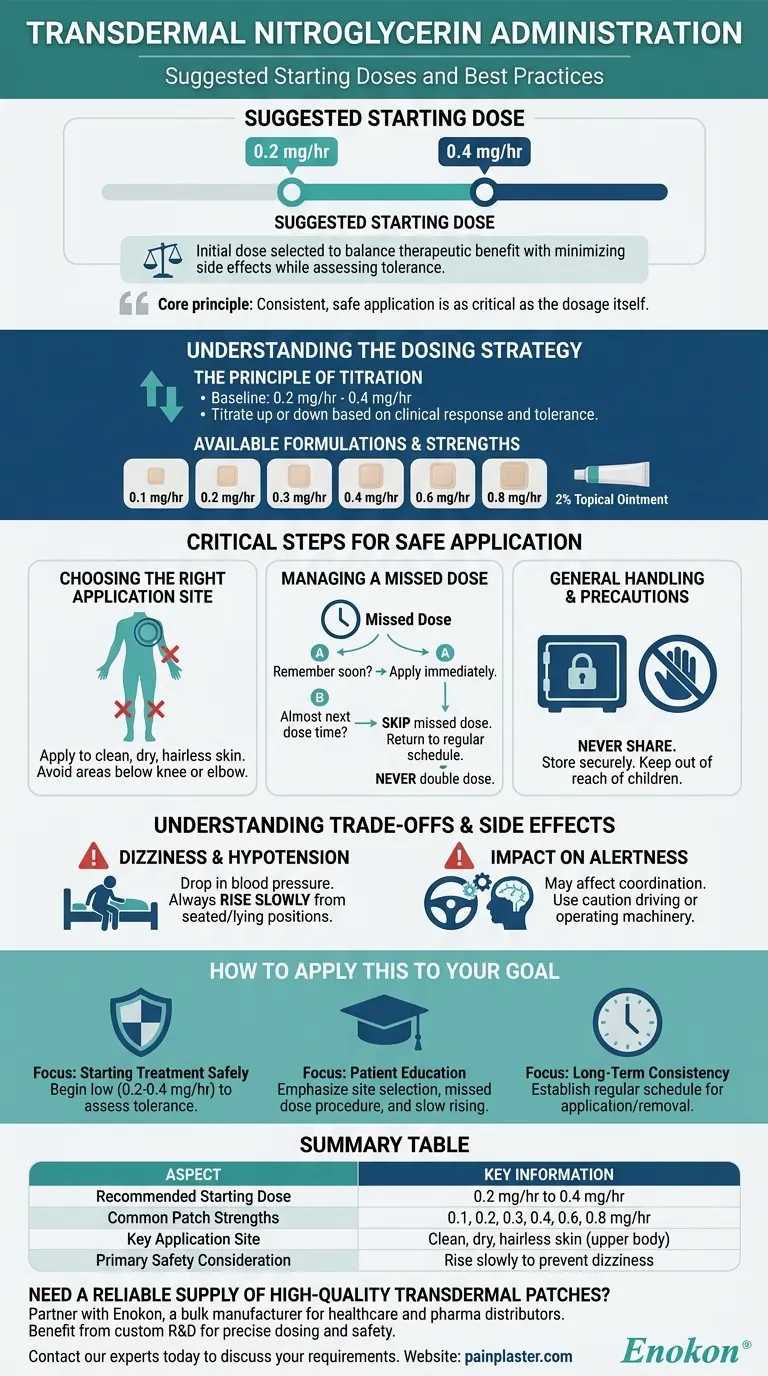
For transdermal administration, the suggested starting dose of nitroglycerin is between 0.2 mg/hr and 0.4 mg/hr. This initial dose is selected to balance therapeutic benefit with the goal of minimizing potential side effects as the patient's tolerance is assessed.
The core principle of nitroglycerin therapy is not just about the initial dose, but ensuring consistent, safe application. Proper administration technique is as critical as the dosage itself for achieving the desired therapeutic outcome.

Understanding the Dosing Strategy
The recommended starting dose for transdermal nitroglycerin is intentionally conservative. This approach allows healthcare providers to observe the patient's response and adjust the dosage as needed to achieve optimal angina control while minimizing adverse effects.
The Principle of Titration
The initial dose of 0.2 mg/hr to 0.4 mg/hr serves as a baseline. The dose can then be titrated up or down based on the clinical response and the patient's tolerance.
Available Formulations and Strengths
To facilitate dose adjustment, nitroglycerin is available in several forms. This includes transdermal patches with a range of delivery rates.
Common patch strengths include 0.1 mg/hr, 0.2 mg/hr, 0.3 mg/hr, 0.4 mg/hr, 0.6 mg/hr, and 0.8 mg/hr. A 2% topical ointment is also available.
Critical Steps for Safe Application
Proper application is essential for both the safety and effectiveness of transdermal nitroglycerin. Following a consistent procedure helps ensure a steady delivery of medication.
Choosing the Right Application Site
The patch should be applied to a clean, dry, and relatively hairless area of skin. It is important to avoid applying it to areas below the knee or elbow.
Managing a Missed Dose
If a dose is missed, apply it as soon as you remember. However, if it is almost time for the next scheduled dose, skip the missed dose and return to the regular schedule. Never apply double or extra doses.
General Handling and Precautions
This medication should never be shared with others. It must be stored securely and kept out of the reach of children.
Understanding the Trade-offs and Potential Side Effects
While effective, nitroglycerin can cause side effects, primarily related to its effect on blood pressure. Understanding these is key to managing treatment safely.
Dizziness and Hypotension
Nitroglycerin can cause a drop in blood pressure, leading to dizziness or lightheadedness. To minimize this risk, always rise slowly when moving from a seated or lying position.
Impact on Alertness
The medication may affect coordination and alertness. Use caution when driving, operating machinery, or performing any other activity that requires full mental focus until you know how your body responds.
How to Apply This to Your Goal
Proper administration is key to successful therapy. The right approach depends on prioritizing safety and consistency.
- If your primary focus is starting treatment safely: Begin at the low end of the recommended range (0.2 mg/hr to 0.4 mg/hr) to carefully assess patient tolerance and side effects.
- If your primary focus is patient education: Emphasize the critical importance of application site selection, the procedure for a missed dose, and the need to rise slowly to prevent dizziness.
- If your primary focus is long-term consistency: Establish a regular schedule for patch application and removal to maintain therapeutic levels and prevent the development of tolerance.
Ultimately, successful treatment with transdermal nitroglycerin relies on a precise dose combined with diligent and safe application practices.
Summary Table:
| Aspect | Key Information |
|---|---|
| Recommended Starting Dose | 0.2 mg/hr to 0.4 mg/hr |
| Common Patch Strengths | 0.1 mg/hr, 0.2 mg/hr, 0.3 mg/hr, 0.4 mg/hr, 0.6 mg/hr, 0.8 mg/hr |
| Key Application Site | Clean, dry, hairless skin (avoid areas below knee/elbow) |
| Primary Safety Consideration | Rise slowly to prevent dizziness from blood pressure drop |
Need a reliable supply of high-quality transdermal patches for your nitroglycerin formulations or other therapeutic needs?
Partner with Enokon, a bulk manufacturer of reliable transdermal patches and pain plasters for healthcare and pharma distributors and brands. Benefit from our technical expertise for custom R&D and development to create patches that ensure precise dosing and patient safety.
Contact our experts today to discuss your specific requirements and how we can support your product development.
Visual Guide
Related Products
- Icy Hot Menthol Medicine Pain Relief Patch
- Menthol Gel Pain Relief Patch
- Far Infrared Heat Pain Relief Patches Transdermal Patches
- Silicone Scar Sheets Patch Transdermal Drug Patch
- Mugwort Wormwood Pain Relief Patch for Neck Pain
People Also Ask
- When should the pain relief patch not be used? Key Safety Rules to Avoid Risks
- What are the common side effects of pain relief patches? Risks & Safety Tips
- What alternatives exist for pain relief patches? Compare systemic meds & physical therapy
- What are the benefits of using pain relief patches compared to oral medications? Targeted Relief with Fewer Side Effects
- What is the duration of pain relief provided by the patches? Find the Right Patch for Your Pain



















