
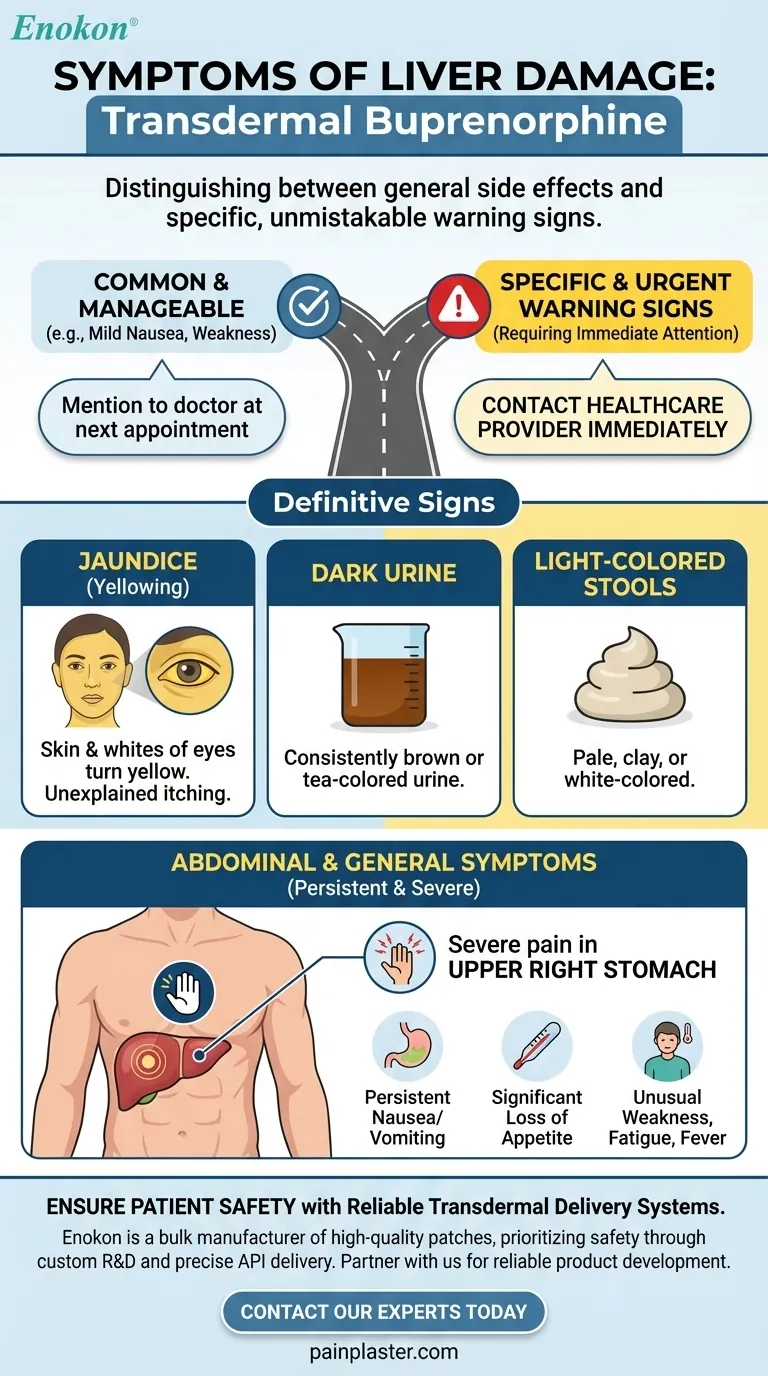
The primary symptoms of liver damage from transdermal buprenorphine include jaundice (yellowing of the skin or eyes), dark urine, and light-colored stools. These are often accompanied by more general symptoms like persistent nausea, severe stomach pain, unusual weakness or fatigue, fever, and a significant loss of appetite.
While many medications can cause general side effects like nausea, the key to identifying potential liver damage is to watch for specific, unmistakable signs like jaundice, dark urine, and pale stools, which demand immediate medical attention.

Identifying the Warning Signs of Liver Damage
When monitoring for liver-related side effects, it's crucial to distinguish between general feelings of being unwell and the specific indicators of organ distress.
Jaundice and Skin Changes
The most definitive visual sign of liver problems is jaundice, which is a yellowing of the skin and the whites of the eyes. This occurs when the liver can no longer properly process bilirubin. You may also experience persistent and unexplained itching.
Changes in Urine and Stool
A healthy liver helps process waste, and changes here are a significant red flag. Be alert for consistently dark-colored urine (brown or tea-colored) or light-colored stools (pale, clay, or white-colored).
Abdominal and General Symptoms
Pain in the upper right part of your stomach, where the liver is located, can be a direct symptom. This may be coupled with persistent nausea, vomiting, fever, a pronounced loss of appetite, and a feeling of extreme weakness or tiredness that doesn't resolve.
Placing Liver Damage in Context
Liver damage is one of several potential serious side effects of transdermal buprenorphine. Understanding its place among other risks provides a more complete picture of what to monitor.
Common vs. Serious Side Effects
Many users may experience more common side effects like nausea, weakness, or low blood pressure. These symptoms are also associated with liver damage, which can cause confusion. The key difference is their persistence and appearance alongside the more specific signs mentioned above.
Other Serious Risks to Consider
Beyond liver damage, it is important to be aware of other serious adverse effects. These include severe breathing problems (respiratory depression), central nervous system depression, the potential for misuse and addiction, and reduced adrenal function.
Understanding the Trade-offs
The primary challenge is differentiating between common, manageable side effects and the warning signs of a severe complication like liver toxicity.
Symptom Overlap
Nausea and weakness are common with many opioid medications and can also be early signs of liver issues. Standing alone, they may not be alarming, but they should not be ignored, especially if they are severe or persistent.
The Importance of Specificity
The truly urgent warning signs are specific and unmistakable. Jaundice, dark urine, and light stools are not typical side effects; they are direct indicators of organ dysfunction and require an immediate conversation with your healthcare provider. Ignoring these can lead to severe health consequences.
How to Apply This to Your Health
Proactive monitoring and clear communication with your doctor are the most effective ways to use this medication safely.
- If you experience general side effects like mild nausea or tiredness: Mention these to your doctor at your next appointment, as they may be able to help manage them.
- If you notice any specific sign of liver damage like yellowing skin, dark urine, or severe stomach pain: Contact your healthcare provider immediately for guidance.
Being informed about these potential symptoms empowers you to be an active partner in your own healthcare.
Summary Table:
| Symptom Category | Key Warning Signs |
|---|---|
| Definitive Signs | Jaundice (yellow skin/eyes), Dark urine, Light-colored stools |
| Abdominal Symptoms | Severe upper right stomach pain, Persistent nausea/vomiting, Loss of appetite |
| General Symptoms | Unusual fatigue/weakness, Fever, Unexplained itching |
Ensure Patient Safety with Reliable Transdermal Delivery Systems
As a bulk manufacturer of transdermal patches for pharmaceutical distributors and brands, Enokon understands that medication safety starts with product quality and clear patient information. Our technical expertise in custom R&D ensures the precise, consistent delivery of active ingredients like buprenorphine.
Partner with us to develop reliable, high-quality transdermal patches that prioritize patient well-being. Contact our experts today to discuss your product development needs.
Visual Guide
Related Products
- Menthol Gel Pain Relief Patch
- Icy Hot Menthol Medicine Pain Relief Patch
- Far Infrared Heat Pain Relief Patches Transdermal Patches
- Silicone Scar Sheets Patch Transdermal Drug Patch
- Mugwort Wormwood Pain Relief Patch for Neck Pain
People Also Ask
- How effective are pain relief patches for muscle pain? Target Localized Pain with Transdermal Delivery
- How do pain relief patches compare to other pain relief methods? Discover Targeted, Long-Lasting Relief
- Who should consult a healthcare professional before using pain relief patches? Ensure Your Safety with Medical Advice
- How do drug loading and permeation enhancers ensure patch efficacy? Achieve Superior Clinical-Grade Pain Relief.
- What are some common applications of pain relief patches? Effective Relief for Muscle & Joint Pain








