
At its core, the clonidine patch is a transdermal system used primarily to treat high blood pressure (hypertension) and hot flushes, often associated with menopause. It belongs to a class of medicines known as vasodilators, which work by relaxing and widening blood vessels, thereby improving blood flow and lowering pressure.
The key value of the clonidine patch is its ability to deliver a steady, continuous dose of medication over a seven-day period. This consistent delivery helps manage symptoms effectively but requires precise application and awareness of potential side effects for optimal results.
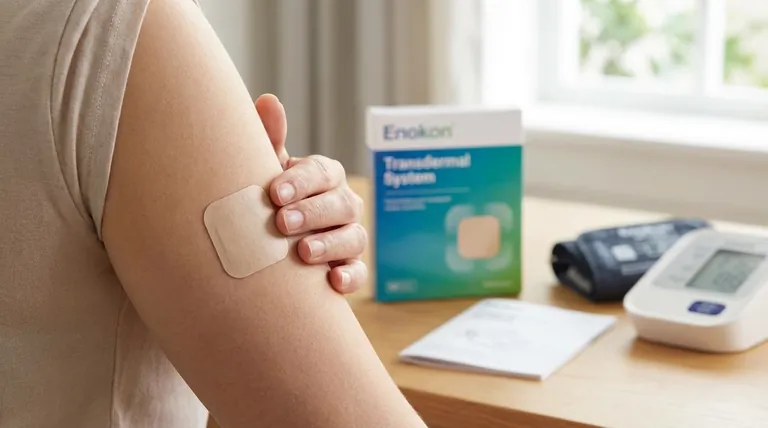
How Clonidine Patches Work
The Vasodilator Effect
Clonidine functions by stimulating certain receptors in the brain that cause your blood vessels to relax and widen.
This widening, or vasodilation, makes it easier for blood to flow through your arteries and veins, which directly leads to a reduction in blood pressure.
The Benefit of a Transdermal System
Unlike oral medications that can cause peaks and valleys in drug concentration, the patch provides a slow, controlled release of clonidine through the skin.
This transdermal delivery maintains a stable level of the medication in your bloodstream for a full week, leading to more consistent symptom control.
Mastering Proper Application
Choosing the Right Location
The patch must be applied to a clean, dry, and relatively hairless area of skin. The upper outer arm or upper chest are the recommended sites.
Avoid any skin that has wrinkles, folds, cuts, irritation, calluses, or scars. You should also avoid recently shaved areas.
The 7-Day Cycle
Each patch is designed to be worn continuously for seven days.
After removing a patch, apply the new one to a different skin location. Rotating the application site is crucial to prevent skin irritation.
Keeping the Patch Secure
If a patch begins to loosen before the week is up, you can secure it with the adhesive cover that may be included with your prescription.
Should the patch fall off completely, do not reapply it. Instead, apply a fresh patch to a new area and wear it for a full seven days.
Understanding the Trade-offs and Safety
Critical Monitoring
While using clonidine, it is important to monitor your heart rate and blood pressure regularly to ensure the medication is working as intended.
Drowsiness and Dizziness
Clonidine can cause drowsiness or dizziness. Until you know how it affects you, avoid driving or any other activity that requires full mental alertness.
Do not stand up quickly, as this can cause a sudden drop in blood pressure and lead to dizziness or fainting.
Interactions to Avoid
Avoid consuming alcohol while using clonidine patches, as it can significantly worsen the side effect of drowsiness.
You must inform your doctor about all other medications you are taking, as well as your full medical history, including any heart or kidney disease, stroke, or allergies.
Proper Storage and Disposal
Storing Patches Correctly
Store your clonidine patches in their original sealed pouch at room temperature, away from excess heat and moisture.
Keep them securely out of the reach of children and pets at all times.
Safe Disposal Practices
When you remove a used patch, fold it in half with the sticky sides together before discarding it.
This prevents accidental exposure to any remaining medication. If a medicine take-back program is available, it is the safest disposal method.
Making the Right Choice for Your Goal
Following your healthcare provider's instructions is the most important step. However, keeping these principles in mind will help you achieve the best outcome.
- If your primary focus is consistent symptom control: Meticulously follow the 7-day application schedule and always rotate the application site to ensure proper adhesion and drug absorption.
- If your primary focus is safety: Be vigilant about side effects like dizziness, avoid alcohol, and maintain open communication with your doctor about your blood pressure readings and overall health.
Ultimately, using the clonidine patch effectively is a partnership between you and your healthcare provider.
Summary Table:
| Key Aspect | Details |
|---|---|
| Primary Uses | Hypertension (high blood pressure), Menopausal hot flushes |
| Mechanism | Vasodilation (widening blood vessels) via transdermal delivery |
| Application Duration | 7 days per patch |
| Key Benefit | Steady, continuous medication release for consistent symptom control |
| Important Considerations | Monitor blood pressure; may cause drowsiness/dizziness; avoid alcohol |
Partner with Enokon for Your Transdermal Patch Needs
As a bulk manufacturer of reliable transdermal patches and pain plasters, Enokon provides healthcare and pharmaceutical distributors and brands with high-quality, consistent products. Benefit from our technical expertise for custom R&D and development to create solutions tailored to your market's needs, just like the clonidine patch.
Contact our experts today to discuss your project and how we can support your success.
Visual Guide

Related Products
- Far Infrared Heat Pain Relief Patches Transdermal Patches
- Silicone Scar Sheets Patch Transdermal Drug Patch
- Menthol Gel Pain Relief Patch
- Icy Hot Menthol Medicine Pain Relief Patch
- Mugwort Wormwood Pain Relief Patch for Neck Pain
People Also Ask
- Why is the selection of matrix materials critical when developing customized transdermal patches? Optimize Efficacy
- What role does a skin tolerance scoring system play in the safety evaluation of transdermal patches? Key Safety Metrics
- How does high-purity far-infrared ceramic powder contribute to the efficacy of far-infrared physical therapy patches?
- Why is an optical microscope used for the quality assessment of transdermal patches? Ensure Safety & Matrix Integrity
- What is the purpose of vacuum filtration for polymer solutions? Ensuring Quality in Transdermal Patch Manufacturing












