
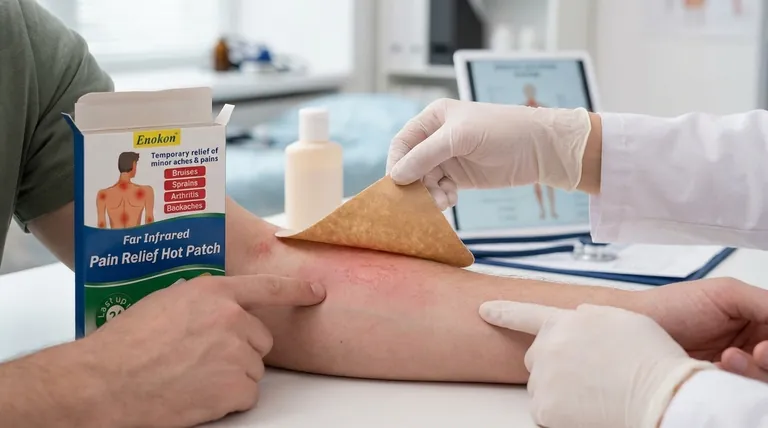
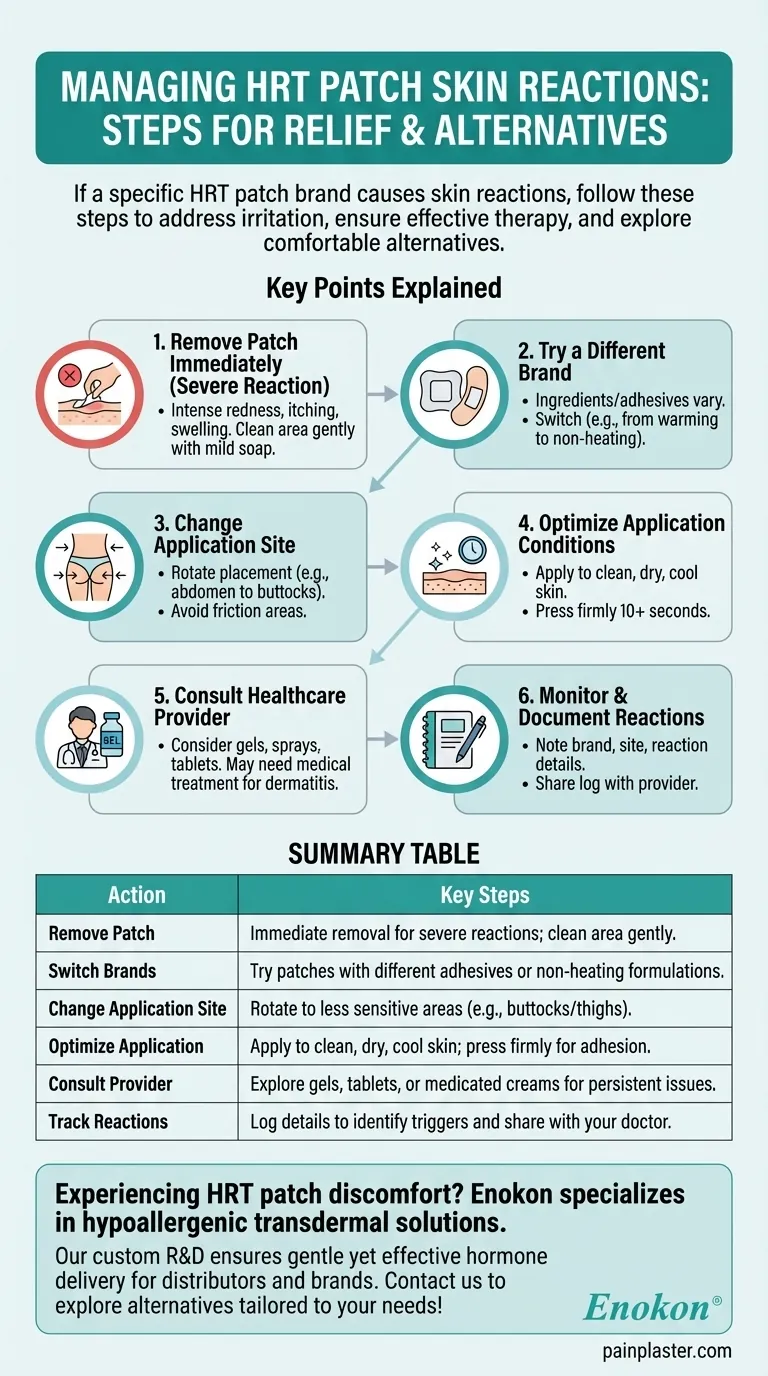
If you experience a skin reaction with a specific HRT patch brand, there are several steps you can take to address the issue. First, remove the patch immediately if the reaction is severe, and consult your healthcare provider. Switching to a different brand may help, as formulations vary in ingredients beyond just oestradiol. Applying the patch to a different area of the body can also reduce irritation. Ensure the skin is clean, dry, and cool before application, and avoid areas with friction or heavy sweating. If reactions persist, alternative HRT delivery methods like gels or tablets may be considered. Always follow medical advice for personalized solutions.
Key Points Explained:
-
Remove the Patch if Severe Reaction Occurs
- If the skin reaction is intense (redness, itching, swelling), remove the patch immediately to prevent further irritation.
- Clean the area gently with mild soap and water to remove any residual adhesive or active ingredients.
-
Try a Different Brand
- HRT patches contain varying inactive ingredients (adhesives, stabilizers) that may cause reactions.
- Switching brands, such as from a warming patch to a non-heating variant, could reduce sensitivity.
-
Change Application Site
- Rotate patch placement (e.g., from abdomen to buttocks or thigh) to avoid repeated irritation in one area.
- Avoid bony areas, skin folds, or spots prone to friction (e.g., waistband lines).
-
Optimize Application Conditions
- Apply to clean, dry, cool skin—wait after bathing or exercising to prevent trapping moisture.
- Press firmly for 10+ seconds to ensure adhesion, reducing edge lifting that can irritate.
-
Consult a Healthcare Provider
- Persistent reactions may require switching to gels, sprays, or oral HRT forms.
- Allergic contact dermatitis might need topical steroids or antihistamines (under medical guidance).
-
Monitor and Document Reactions
- Note the brand, application site, and reaction details to identify patterns.
- Share this log with your provider to tailor alternatives effectively.
These adjustments balance immediate relief with long-term solutions, ensuring hormone therapy remains effective and comfortable. Have you checked whether the reaction aligns with the patch edges (suggesting adhesive issues) or the entire contact area (indicating ingredient sensitivity)?
Summary Table:
| Action | Key Steps |
|---|---|
| Remove Patch | Immediate removal for severe reactions; clean area gently. |
| Switch Brands | Try patches with different adhesives or non-heating formulations. |
| Change Application Site | Rotate to less sensitive areas (e.g., buttocks/thighs). |
| Optimize Application | Apply to clean, dry, cool skin; press firmly for adhesion. |
| Consult Provider | Explore gels, tablets, or medicated creams for persistent issues. |
| Track Reactions | Log details to identify triggers and share with your doctor. |
Experiencing HRT patch discomfort? Enokon specializes in hypoallergenic transdermal solutions for distributors and brands. Our custom R&D ensures gentle yet effective hormone delivery. Contact us to explore alternatives tailored to your needs!
Visual Guide
Related Products
- Far Infrared Heat Pain Relief Patches Transdermal Patches
- Far Infrared Deep Heat Relief Patches Medicated Pain Relief Patches
- Far Infrared Pain Patch Relief Pain Reliever for Back
- Far Infrared Knee Pain Patch Heat Patches for Pain Relief
- Hydra Gel Health Care Eye Patch
People Also Ask
- Why is the selection of matrix materials critical when developing customized transdermal patches? Optimize Efficacy
- What are the clinical advantages of local transdermal delivery systems? Unlock Safer, More Effective Pain Relief Solutions
- What are the physical impacts of external heat exposure on the performance and safety of transdermal patches? - Guide
- What role does a skin tolerance scoring system play in the safety evaluation of transdermal patches? Key Safety Metrics
- How does high-purity far-infrared ceramic powder contribute to the efficacy of far-infrared physical therapy patches?



















