
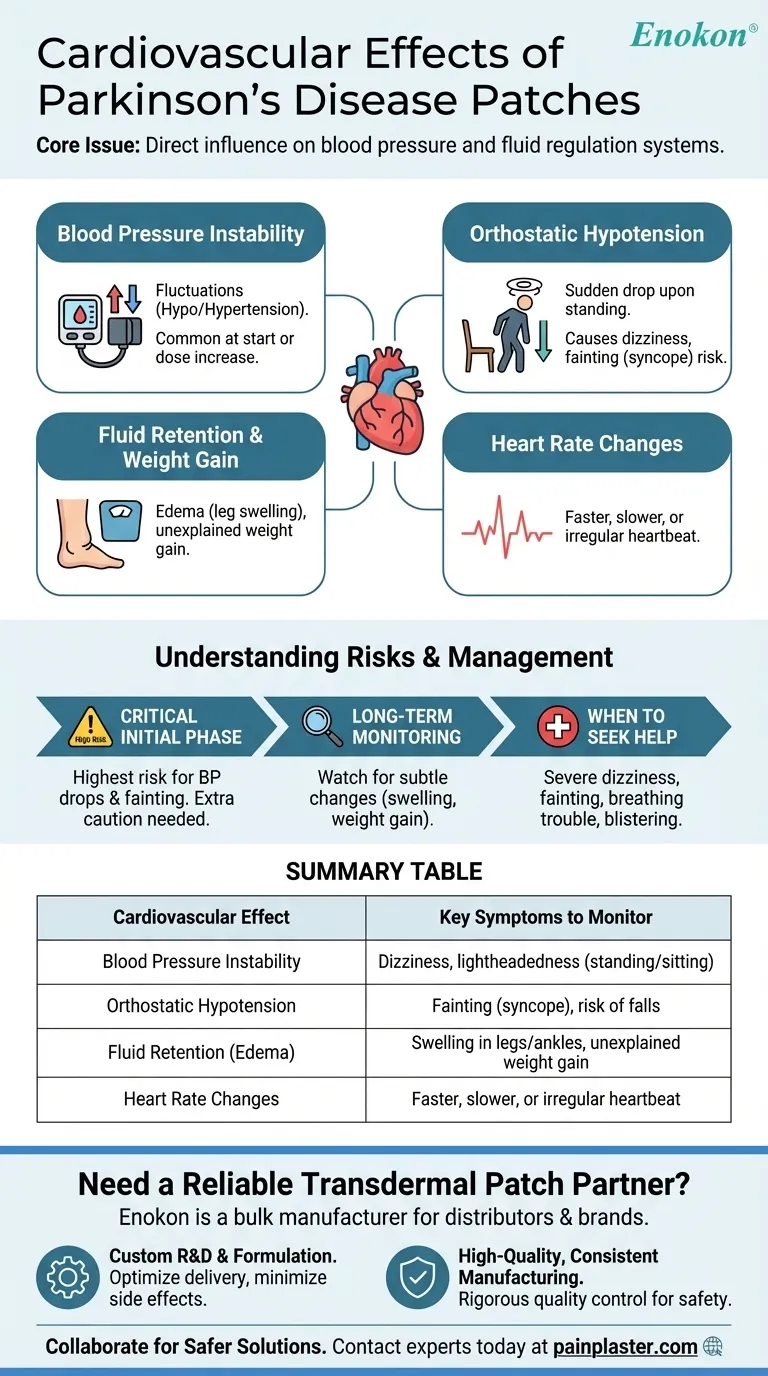
To be clear, the Parkinson's disease patch can cause a range of cardiovascular effects, most notably significant changes in blood pressure. You may experience decreases in blood pressure, especially when starting the medication or increasing the dose, as well as blood pressure increases, heart rate changes, fainting, weight gain, and fluid retention.
The core issue to understand is that this medication directly influences systems that regulate your blood pressure and fluid balance. Therefore, careful monitoring for symptoms like dizziness, fainting, or swelling is a critical part of managing treatment safely.

The Primary Cardiovascular Effects Explained
The patch's impact on your cardiovascular system centers on its ability to alter blood pressure, heart rate, and the body's management of fluids.
Blood Pressure Instability
The most prominent cardiovascular effect is a change in blood pressure. This can manifest as either a decrease (hypotension) or an increase (hypertension).
These fluctuations are particularly common when you first begin using the patch or when your doctor increases your dose.
Orthostatic Hypotension and Fainting
A specific concern is orthostatic hypotension, which is a sudden drop in blood pressure when you stand up from a sitting or lying position.
This can cause significant dizziness, lightheadedness, or even fainting (syncope), which increases the risk of falls and injury.
Fluid Retention and Weight Gain
The medication can also cause your body to retain excess fluid, a condition known as edema.
This is often most noticeable as swelling in the legs or ankles. This fluid retention is a direct contributor to unexplained weight gain.
Changes in Heart Rate
In addition to blood pressure effects, the patch can also cause noticeable changes in your heart rate. This could be a faster, slower, or more irregular heartbeat.
Understanding the Risks and Related Side Effects
While cardiovascular effects are a primary concern, it's important to view them in the context of other potential side effects and know when to act.
The Critical Initial Phase
The risk for blood pressure drops and fainting is highest during the initial phase of treatment or following a dose increase. This period requires extra caution.
Non-Cardiovascular Side Effects
It's also useful to be aware of other common side effects, which can include nausea, sleepiness, insomnia, and reactions at the application site (like redness or itching). While not directly cardiovascular, symptoms like severe dizziness can be linked to blood pressure changes.
When to Seek Medical Attention
While mild irritation at the patch site is common, more serious issues require immediate attention. Seek medical help for blistering or severe pain at the application site, or for rare but serious allergic reactions involving a rash, severe dizziness, or trouble breathing.
A Proactive Approach to Your Treatment
Managing these potential effects is a partnership between you and your healthcare provider. Being observant and communicative is key.
- If your primary focus is starting treatment safely: Be especially vigilant for dizziness or lightheadedness when you change positions, and report any fainting episodes to your doctor immediately.
- If your primary focus is long-term management: Regularly monitor for subtle changes like gradual leg swelling or unexplained weight gain, as these can indicate fluid retention.
- If you experience any sudden or severe symptoms: Contact your healthcare provider without delay, as your dose or treatment plan may need to be adjusted.
Ultimately, being aware of these potential effects empowers you to identify issues early and manage your health effectively.
Summary Table:
| Cardiovascular Effect | Key Symptoms to Monitor |
|---|---|
| Blood Pressure Instability | Dizziness, lightheadedness upon standing or sitting |
| Orthostatic Hypotension | Fainting (syncope), risk of falls |
| Fluid Retention (Edema) | Swelling in legs/ankles, unexplained weight gain |
| Heart Rate Changes | Faster, slower, or irregular heartbeat (palpitations) |
Need a reliable, high-quality transdermal patch for your patients?
Managing complex drug delivery systems requires a trusted manufacturing partner. Enokon is a bulk manufacturer of reliable transdermal patches and pain plasters for healthcare and pharmaceutical distributors and brands.
We help you ensure patient safety and therapeutic efficacy by providing:
- Custom R&D and Formulation: Our technical expertise allows us to develop patches tailored to specific drug profiles, helping to optimize delivery and minimize side effects.
- High-Quality, Consistent Manufacturing: We produce patches in bulk with rigorous quality control, ensuring every batch meets the highest standards for your brand.
Let's collaborate to develop a safer, more effective transdermal solution for conditions like Parkinson's disease.
Contact our experts today to discuss your custom patch development needs.
Visual Guide
Related Products
- Natural Herbal Patch for Motion Sickness and Car Sickness Relief
- Far Infrared Deep Heat Relief Patches Medicated Pain Relief Patches
- Lidocaine Hydrogel Pain Relief Patch for Pain Relief
- Far Infrared Pain Patch Relief Pain Reliever for Back
- Icy Hot Menthol Medicine Pain Relief Patch
People Also Ask
- How should the patch be stored? Essential Tips for Preserving Herbal Patch Efficacy
- What activities should be avoided while using this patch? Key Precautions for Safe & Effective Use
- What should be avoided when using the patch? Key Safety Tips for Herbal Patch Users
- What should be done if a patch falls off or a dose is missed? Quick Fixes & Safety Tips
- What are the pharmacological effects of multi-target herbal patches in relieving joint inflammation? Science-Backed OEM



















