
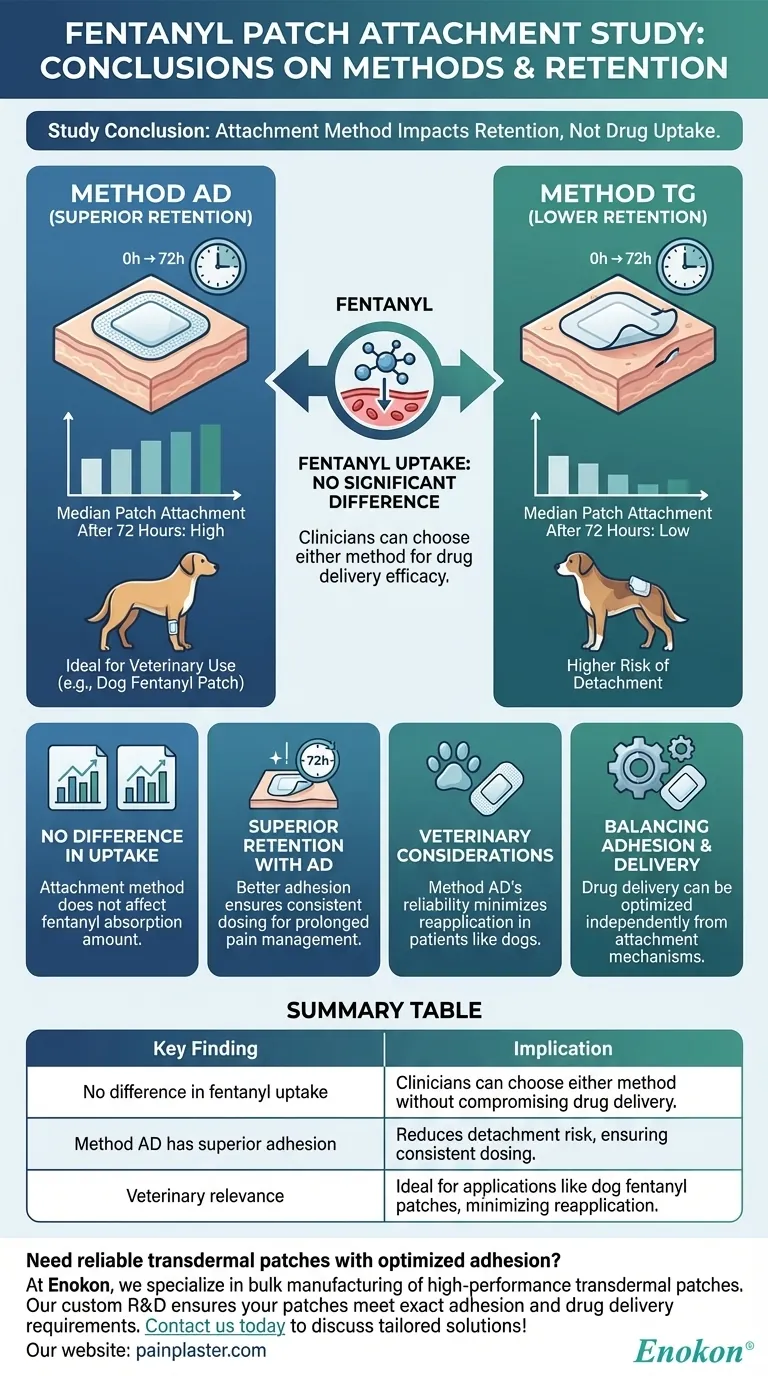
The study on fentanyl patch attachment methods revealed that while the method of attachment did not significantly impact fentanyl uptake, Method AD demonstrated superior patch retention over a 72-hour period compared to Method TG. This suggests that while both methods deliver the drug effectively, Method AD may be more reliable for long-term adherence, which could be particularly relevant in veterinary applications like the dog fentanyl patch.
Key Points Explained:
-
No Significant Difference in Fentanyl Uptake
- The study concluded that the attachment method (AD vs. TG) did not affect how much fentanyl was absorbed from the patches.
- Implication: Clinicians can choose either method without worrying about compromising drug delivery efficacy.
-
Superior Patch Retention with Method AD
- Method AD showed a higher median proportion of patch attachment after 72 hours compared to Method TG.
- Why this matters: Better adhesion reduces the risk of patch detachment, ensuring consistent dosing—critical for pain management in prolonged treatments.
-
Practical Considerations for Veterinary Use
- For applications like the dog fentanyl patch, Method AD’s reliability in long-term adhesion could minimize the need for reapplication, improving patient comfort and caregiver convenience.
- Reflection: Could this finding extend to other transdermal patches where adhesion is a common challenge?
-
Balancing Adhesion and Drug Delivery
- While adhesion differed, the study highlights that drug delivery systems can be optimized separately from attachment mechanisms.
- Takeaway: Future designs might focus on enhancing adhesion without altering pharmaceutical performance.
This research quietly underscores how small engineering choices in medical devices can shape real-world outcomes, from human clinics to veterinary care.
Summary Table:
| Key Finding | Implication |
|---|---|
| No difference in fentanyl uptake | Clinicians can choose either attachment method without compromising drug delivery. |
| Method AD has superior adhesion | Reduces detachment risk, ensuring consistent dosing for prolonged treatments. |
| Veterinary relevance | Ideal for applications like dog fentanyl patches, minimizing reapplication needs. |
Need reliable transdermal patches with optimized adhesion?
At Enokon, we specialize in bulk manufacturing of high-performance transdermal patches, including pain plasters and veterinary solutions. Our expertise in custom R&D ensures your patches meet exact adhesion and drug delivery requirements.
Contact us today to discuss tailored solutions for your clinical or veterinary needs!
Visual Guide
Related Products
- Menthol Gel Pain Relief Patch
- Icy Hot Menthol Medicine Pain Relief Patch
- Lidocaine Hydrogel Pain Relief Patch for Pain Relief
- Far Infrared Pain Patch Relief Pain Reliever for Back
- Far Infrared Heat Pain Relief Patches Transdermal Patches
People Also Ask
- How effective are pain relief patches for muscle pain? Target Localized Pain with Transdermal Delivery
- How do pain relief patches compare to other pain relief methods? Discover Targeted, Long-Lasting Relief
- Who should consult a healthcare professional before using pain relief patches? Ensure Your Safety with Medical Advice
- How do drug loading and permeation enhancers ensure patch efficacy? Achieve Superior Clinical-Grade Pain Relief.
- What are some common applications of pain relief patches? Effective Relief for Muscle & Joint Pain



















